Author: Sagarika Mani

  • Shah Rukh Khan Net Worth: The Bollywood Billionaire

    Shah Rukh Khan Net Worth: The Bollywood Billionaire

    Shah Rukh Khan, the charming heartthrob of Bollywood, has not just ruled the silver screen but also conquered the financial arena. 

    Beyond his cinematic achievements, there’s an aspect of his career that often sparks curiosity among fans and enthusiasts – his net worth.

    You wouldn’t say no if I said he’s like the desi Tom Cruise!

    Let’s take a joyride through the journey of Shah Rukh Khan’s net worth, sprinkled with a bit of stardust.

    The Early Struggles and Triumphs:

    Born in 1965 in Delhi, Shah Rukh Khan’s initial years in the industry were a bit of a rollercoaster. His debut in “Deewana” (1992) marked the beginning of something big, but success didn’t come knocking immediately.

    He didn’t become the richest like Bill Gates or strongest like Dwayne Johnson in a fe weels!

    Battling financial challenges, Khan persevered, taking on roles that showcased his versatility and, eventually, his bank balance and celebrity net worth began to mirror his rising fame.

    The ’90s: The Golden Era

    The ’90s and early 2000s catapulted Shah Rukh Khan into superstardom. Blockbusters like “Dilwale Dulhania Le Jayenge” (1995) and “Kuch Kuch Hota Hai” (1998) established him as a star.

    With each hit, his net worth soared, and he danced his way into the hearts of fans worldwide.

    Beyond the Screen: The Business Maestro

    Shah Rukh Khan’s entrepreneurial spirit extended beyond the realms of film. In 2008, he became the face of Tag Heuer, a luxury watch brand.

    Additionally, he endorsed brands like Pepsi, Nokia, and Hyundai, further bolstering his income. His association with these high-profile brands not only added to his net worth but also solidified his status as a brand ambassador par excellence.

    But star SRK wasn’t content with just acting. In 2002, he launched Red Chillies Entertainment, his production company. Fast forward, and it’s not just a production house – it’s a money-making machine. From films to visual effects to IPL cricket with Kolkata Knight Riders, Shah Rukh Khan became a Bollywood mogul.

    Numbers Check: Red Chillies Entertainment’s estimated value is a whopping $300 million.

    The Power Couple: Shah Rukh and Gauri Khan’s Entrepreneurial Expertise

    Gauri Khan Designs: Gauri’s journey into interior designing isn’t merely a business venture; it’s a testament to the couple’s collective entrepreneurial spirit.

    Diverse Ventures: From film production to interior design, the Khan family’s diverse ventures underscore their resilience and adaptability in the ever-evolving business landscape.

    Analyzing SRK’s Investment Decisions and Financial Planning

    A closer look at Shah Rukh Khan’s investment decisions reveals a thoughtful approach to wealth management.

    Star Khan has invested in diverse sectors, including sports, entertainment, and real estate. His co-ownership of the Team Kolkata Knight Riders in the Indian Premier League showcases his penchant for backing promising ventures. The investing in the cricket team, rather Ipl team surely was a dicey incestement! But, we cannot forget Red Chillies Entertainment.

    Additionally, his real estate investments, including the iconic Mannat, highlight a long-term view on property as an asset class.

    Khan’s financial planning is marked by a balance between traditional and contemporary investments.

    He is a bit like Dwayne Johnson indeed! He understands the importance of staying abreast of market trends and technology, evident in his involvement with tech startups.

    This adaptability showcases a keen understanding of the evolving landscape of wealth creation.

    Branding Brilliance:

    Shah Rukh Khan wasn’t just an actor; he was a brand.

    Heuer, Pepsi, Nokia – you name it, he endorsed it. These brand partnerships established him, a star, as the face of luxury and coolness.

    Numbers Check: His endorsement deals rake in around $10-15 million annually.

    Tech and Education: The Byju’s Bet

    In 2016, Shah Rukh Khan took a plunge into the world of startups, investing in Byju’s – The Learning App. This move wasn’t just about the numbers; it showcased Khan’s foresight into the merging landscapes of technology and education.

    Numbers Check: His investment in Byju’s is estimated to be around $3 million.

    Lights, Camera, Global Action:

    SRK’s charisma isn’t confined to Indian shores. Hollywood beckoned, and he answered with films like “My Name is Khan” (2010). His wax statue at Madame Tussauds, international collaborations, and global recognitions positioned him as not just a Bollywood star but a global icon.

    Red Chillies Entertainment: The Money Magnet

    His production house didn’t just produce films; it ventured into visual effects and digital content. Red Chillies VFX became a powerhouse, working on movies like “Ra.One” (2011), showcasing not just Bollywood drama but also Hollywood-grade effects.

    The Global Reach:

    The Star Shah Rukh Khan’s popularity transcends geographical boundaries. His foray into Hollywood with films like “My Name is Khan” (2010) and collaborations with international stars demonstrated his global appeal. Additionally, his wax statue at Madame Tussauds and his recognition as a global icon by several international organizations further elevated his status.

    International projects, brand endorsements, and appearances on global platforms contributed substantially to Shah Rukh Khan’s net worth.

    The actor’s association with international events, such as the World Economic Forum, positioned him not just as a global influencer. He really is like a Bollywood version of Tom Cruise!

    The Stumbles:

    But, like every hero, SRK faced setbacks. Some film choices, like “Zero” (2018), didn’t quite hit the jackpot. The actor faced criticism for certain film choices that did not fare well at the box office. Films like “Zero” (2018) received mixed reviews, impacting both his professional standing and, to some extent, his net worth.

    The COVID-19 pandemic hit the pause button on the entertainment industry, affecting releases and revenues, including Khan’s.

    Insights into SRK’s Thoughts on Investing and Wealth Building

    Calculated Risks

    “Don’t be a philosopher or a guide to life; be a joke, because jokes are the only things that save you from life’s disappointments.” – SRK’s witty take on risk-taking reveals his belief in approaching challenges with a positive and lighthearted mindset.

    Continuous Learning

    “I truly believe my job is to make sure people smile.” – Beyond just financial success, SRK views his career as a means to bring joy to people, emphasizing the importance of continuous learning and evolving for the audience’s sake.

    Wealth as a Tool

    Rukh shared “I don’t write cheques anymore because I end up signing them ‘With Love, Shah Rukh.”.

    This humorous take on charity reflects his belief that wealth is not just about accumulation but a means to spread love and make a positive impact.

    Sports and Entertainment

    “I have no interest in being the most famous person. I want to be the most loved person.” revealed the star. This was on co-owning KKR in the IPL aligns with SRK’s strategic investments in areas that resonate with his passion and the public.

    Real Estate Ventures

    “Every time I fail, I try something new again.” – The iconic Mannat stands as a symbol of Khan’s resilience, his willingness to learn from setbacks, and his belief in the long-term stability of real estate.

    Diversification

    “I truly believe that women should be financially independent.” – Khan’s investments across sectors indicate a deliberate strategy of diversification for financial resilience.

    Technology and Startups

    “I have never tried to compare myself to anyone else.” – SRK’s involvement with tech startups mirrors his forward-thinking approach, embracing innovation without comparing himself to industry 

    The Bottom Line: A Cool $750 Million

    As of now, Shah Rukh Khan’s net worth stands at an estimated $750 million. It’s not just a figure; it’s a testament to his journey from a middle-class boy in Delhi to the King of Bollywood.

    In a world where fame is fickle, Shah Rukh Khan’s story is a reminder that success isn’t just about acting talent; it’s about resilience, smart business moves, and a knack for staying relevant. His net worth isn’t just a number; it’s the echoes of the cheers from fans and the clinking of coins from successful ventures.

    So, the next time you see Shah Rukh Khan on the screen or on a brand ad, remember, it’s not just entertainment; it’s a masterclass in turning dreams into a billion-dollar reality.


  • 8 money lessons to learn from Warren Buffett Letters to Investors

    8 money lessons to learn from Warren Buffett Letters to Investors

    Meet Warren Buffett, the money maestro known as the “Oracle of Omaha.”

    He’s like the superhero of investments, steering the ship at Berkshire Hathaway and piling up riches with his smart money moves. What’s his secret sauce?

    Well, lucky for us, he spills the beans in his yearly letters to Berkshire Hathaway shareholders. These letters are like a goldmine of money smarts, filled with nuggets of wisdom and insights from Buffett’s journey.

    In this blog post, we’re unraveling eight cool money lessons straight from the letters of the financial guru.

    Lesson 1 from Warren Buffett: Think Long-Term, Be Chill

    Buffett’s big on patience. It’s like waiting for your favorite biryani to cook – good things take time. He suggests we don’t get all jumpy with short-term investments.

    Instead, he wants us to pick quality businesses and hold onto them for a long time. Think of it as investing in a friendship; the longer, the better!

    In a world where the stock market can be characterized by short-term volatility and speculation, Buffett’s commitment to the long game stands out.

    By focusing on the underlying value of businesses and their growth potential over time, investors can avoid being swayed by short-term market fluctuations and make more informed decisions.

    Buffett’s letters stress the importance of patience, emphasizing that successful investing requires a disciplined approach and a willingness to ride out market downturns.

    This lesson encourages investors to resist the urge to react impulsively to market fluctuations and instead maintain confidence in their investment decisions over the long haul.

    Lesson 2: Stick to What You Know – Your Comfort Zone

    Ever heard of a “circle of competence”? Buffett says stay in it. Imagine your favorite Bollywood genre – you get it, right? Stick to what you know best. Buffett doesn’t want you investing in things you don’t understand. It’s like asking someone who loves romance to explain rocket science – not a great idea!

    Buffett often talks about staying within one’s “circle of competence” in his letters. This concept encourages investors to stick to industries and businesses they understand well.

    By avoiding investments in areas outside their expertise, individuals can make more informed decisions based on a deep understanding of the underlying factors that drive a particular business or industry.

    Buffett’s success is largely attributed to his ability to focus on businesses within his circle of competence, such as insurance, consumer goods, and finance.

    Investors can apply this lesson by conducting thorough research and only investing in businesses they can confidently evaluate. This approach reduces the risk of making uninformed decisions based on market trends or external factors.

    Lesson 3: Quality Over Quantity – Go for the Gold

    Buffett’s not into cheap stuff. He says it’s better to pay a bit more for a fantastic company than grab a deal on a mediocre one. It’s like choosing between a fancy smartphone and a bunch of cheap ones. Quality wins!

    Warren Buffett is famous for his mantra, “It’s better to buy a wonderful company at a fair price than a fair company at a wonderful price.” This philosophy underscores the importance of quality in investment decisions.

    Rather than chasing after cheap stocks, investors should focus on the intrinsic value of a company. Buffett’s approach encourages a careful evaluation of a company’s fundamentals, including its competitive position, economic moats, and potential for long-term success.

    By prioritizing quality over quantity, investors can build a more resilient and profitable portfolio.

    Lesson 4: The Magic of Compounding – Plant Your Money Tree

    Buffett loves this compounding thing. It’s like planting a money tree – your money grows, and then it grows on what it’s grown. The longer you let it grow, the more money you make. It’s like a Bollywood plot twist for your wallet!

    Compounding refers to the ability of an investment to generate earnings, which are then reinvested to generate additional earnings over time. Buffett often uses vivid examples in his letters to illustrate the remarkable impact of compounding on wealth creation.

    Investors can apply this lesson by starting early, being patient, and reinvesting dividends and returns to take full advantage of the compounding effect.

    By understanding the power of compounding, individuals can make more informed decisions about long-term investments and appreciate the exponential growth that can occur over time.

    Lesson 5 from Warren Buffett:

    Play it Safe, Bollywood Style – Risk Management

    Buffett’s not a daredevil. He wants us to manage risks. Picture this – it’s like wearing a seatbelt during a Bollywood car chase. Keeps you safe from unexpected turns and twists.

    While Buffett is known for his bold investment decisions, his letters underscore the importance of risk management and the concept of a margin of safety.

    Buffett advises investors to approach each investment with a mindset that considers potential downsides and minimizes the risk of permanent capital loss

    Lesson 6: Stay Smart, Keep Learning – Be the Money Nerd

    Buffett is all about being a forever learner. Stay smart, stay informed – it’s like updating your favorite app. The more you know, the smoother things run.

    Even though Warren Buffett has been successful for a long time, he still believes in always learning and being flexible.

    His letters show that he’s open to new ideas and changes in how he invests. This willingness to learn is a big reason Buffett has stayed successful for so many years.

    So, for us, it means staying up-to-date on what’s happening in the stock market, the economy, and different industries.

    By being open to new information and adjusting our plans when needed, we can handle the tricky parts of the financial world better.

    Lesson 7: Cool, Calm, and Collected – No Drama, Please

    Warren Buffett doesn’t like drama. He says no to emotional decisions. It’s like playing cricket – keep your cool, focus on the game, and you’ll score big. Don’t let fear and greed mess up your game plan.

    Buffett often cautions against emotional decision-making in his letters. He acknowledges the impact of fear and greed on investor behavior and emphasizes the importance of maintaining emotional discipline.

    Successful investing, according to Buffett, requires a rational and level-headed approach, particularly during periods of market volatility.

    Investors can benefit from this lesson by avoiding impulsive decisions driven by emotions. Whether facing market downturns or surges, maintaining a calm and rational mindset allows investors to make decisions based on sound analysis rather than reacting to short-term market sentiment.

    Lesson 8: Trust is the Key – Pick Your Road Trip Buddy Wisely

    Buffett believes in honest and capable leaders. It’s like picking a buddy for a road trip – you want someone reliable who won’t get you lost. Same goes for your investments. Trustworthy leaders mean fewer wrong turns. Parents got to trust their kids will learn about money if they want to teach them about saving.

    Warren Buffett places a strong emphasis on the transparency and trustworthiness of a company’s management in his letters. He believes that investing in businesses with ethical and competent leadership is crucial for long-term success.

    By choosing companies with management teams that prioritize shareholder interests and communicate transparently, investors can mitigate risks and enhance the potential for positive returns.

    Warren Buffett letters highlight the importance of evaluating not only a company’s financial performance but also the integrity and competence of its leadership.

    This lesson encourages investors to prioritize businesses with management teams that align with their values and demonstrate a commitment to long-term shareholder value.

    In Summary

    So, there you have it – Warren Buffett money tips transformed into your very own Bollywood blockbuster.

    Grab some popcorn (or samosas), let these lessons sink in, and get ready for your financial blockbuster! Investing can be fun and profitable – happy investing, folks! 🚀💰

  • What is Crypto and how does it work?

    What is Crypto and how does it work?

    Imagine a world where money isn’t tied to banks or governments but exists on a decentralized network, safeguarded by advanced cryptography – CRYPTO.

    That’s the world of cryptocurrency, a place where transactions happen at the speed of light, across borders and without exorbitant fees.

    But why should you care about this seemingly abstract digital concept called crypto? Because, understanding cryptocurrency isn’t just about a new way to pay—it’s knowing about a new-age force in the way we trade, invest, and even think about money.

    In this fast-paced era where one year we’re coming to terms with demonitisation and getting used to using new notes, on the other hand the government declares the new 2000 rupee note invalid. Things are changing at a frightening pace!

    So, staying ahead means understanding the dynamics and implications of every new innovation in the world of finance. One such development that’s been standing out is cryptocurrency.

    It’s not just about finance; it’s about grasping the very essence of a financial revolution that’s already underway.

    The Foundation of Cryptocurrency

    At its core, cryptocurrency is a decentralized form of digital or virtual currency that leverages cryptography for secure financial transactions.

    Unlike traditional currencies issued by central authorities like governments or banks, cryptocurrencies operate on decentralized networks using blockchain technology. 

    It empowers users with control over their finances, eliminating the need for intermediaries like central bank digital or governments.

    Let’s break down the concept of cyrpto in an easier manner. Imagine a vast digital ledger, the blockchain, which records all transactions across a network of computers.

    Each block in this chain contains a bundle of transactions, cryptographically linked to the preceding block.

    This process ensures transparency and security, making it exceedingly difficult for anyone to alter transaction data, providing a high level of trust and integrity.

    Decentralization and Blockchain Technology:

    Decentralization

    This concept forms the core of cryptocurrencies, meaning there’s no central authority like Reserve bank governing transactions.

    Blockchain, a decentralized and distributed ledger, records and verifies all transactions across a network of computers.

    Each block, a bundle of transactions, is linked through cryptography to the previous one, ensuring transparency and security.

    Cryptography in Transactions

    Cryptography ensures secure transactions. Each transaction is verified and encrypted, allowing secure peer-to-peer transactions without the need for a trusted intermediary.

    The Cryptocurrency Landscape

    Bitcoin and Altcoins:

    As the pioneer, Bitcoin introduced the concept of a decentralized, digital currency. However, numerous other cryptocurrencies, termed “altcoins,” have emerged with different features and purposes.

    Exploring the unique propositions of these altcoins can shed light on the varied applications of blockchain and decentralized finance.

    Bitcoin, the pioneer of cryptocurrencies, emerged in 2009, introducing the world to the concept of a peer-to-peer electronic cash system.

    Since then, a plethora of other cryptocurrencies have emerged, each with its unique features and purposes. 

    So, instead of wallet that you’d carry cash in, you have these crypto coins that act as bank digital currency.

    Perception vs. Reality: Public Views on Cryptocurrency

    Volatility and Risks

    The concerns regarding the volatile nature of cryptocurrencies are a major influence on public perception. The performing risk associated with such volatility and its impact on investment strategies, leaves the common man wondering if the cons outweigh the pros.

    It might be confusing to not understand the cryptocurrency price movements and jump in to invest in crypto.

    Recent Incidents and Regulatory Responses:

    Specific incidents such as the latest case involving Sam Bankman-Fried, while isolated, can influence public perception.

    The significance of regulatory responses in maintaining market integrity is key today. There’s no magical answer that makes it all right, but trusting in this new age digital currency and talking to security professionals always helps.

    Public perception of cryptocurrencies is diverse and often influenced by a range of factors. While some believe crypto is the future of finance, others remain skeptical due to its association with volatility and illegal activities.

    As mentioned above, the most recent news is about FTX founder Sam Bankman-Fried being found guilty on all seven counts of fraud, conspiracy and money laundering.

    “Sam Bankman-Fried perpetrated one of the biggest frauds in American history” said a U.S. attorney about Sam. He further added that “Bankman had design a multibillion-dollar scheme designed to make him the king of crypto”.

    Debunking Myths Surrounding Cryptocurrency

    One prevalent myth is the misconception that cryptocurrencies are predominantly used for illicit activities. However, the transparent nature of blockchain technology actually makes it easier to trace transactions. Hence, potentially making it less appealing for criminal purposes compared to traditional cash transactions.

    Another myth is the notion that cryptocurrencies lack intrinsic value. In reality, factors like utility, scarcity, and public trust and adoption contribute to their value, much like any other asset in the market.

    Use in Illicit Activities:

    The transparency of blockchain technology and how, contrary to popular belief, can facilitate traceability, potentially reducing its appeal for illicit activities compared to traditional cash transactions.

    Intrinsic Value of Cryptocurrencies:

    The factors contributing to the value of cryptocurrencies, such as utility, scarcity, and the role of public trust and adoption play a key role in shaping their worth.

    The underlying coins of crypto in your digital wallet, be it bitcoin or alto, are becoming increasingly popular. Their value, over time looks promising, but that doesn’t mean you’re not cautious today.

    Caution in the Crypto Realm

    Volatility is a defining feature of the crypto market. Prices can fluctuate significantly within short periods, leading to substantial gains or losses for investors.

    This volatility, influenced by factors such as market demand, regulatory changes, and social media trends, is a critical consideration for potential investors. The public internet talks widely about this.

    Moreover, the lack of regulation in the crypto space poses risks. The market is relatively unregulated, making it susceptible to fraud, hacking, and market manipulation.

    Understanding the policy implications and thorough research and diligence are crucial for anyone considering investing in cryptocurrencies.

    The Importance and Caution in the Crypto Space

    However, the significance of cryptocurrencies cannot be overstated. They offer financial inclusion to the un-banked, allowing access to financial services without a traditional bank account.

    The underlying blockchain technology also holds applications beyond finance, such as in supply chain management, voting systems, and healthcare.

    The evolving regulatory landscape acknowledges the potential of digital currencies. Governments and financial institutions are contemplating regulatory frameworks to ensure consumer protection and market stability.

    Regulatory Challenges and Lack of Oversight:

    The risks associated with the lack of regulation, such as susceptibility to fraud, hacking, and market manipulation are why caution is important.

    We emphasize on the importance of thorough research and due diligence before investing.

    The Future of Cryptocurrency

    As understanding and adoption of cryptocurrencies grow, so does the need for a comprehensive regulatory framework. Governments and institutions are recognizing the potential of digital currencies and are working toward regulatory structures to ensure consumer protection and market stability.

    Evolution of Understanding and Adoption:

    Highlight the increasing understanding and adoption of cryptocurrencies, blockchain, paralleled by the need for a comprehensive regulatory framework.

    Balancing Potential and Risks:

    We reiterate, the balanced approach required in navigating the evolving cryptocurrency ecosystem to leverage its potential while mitigating associated risks when you invest in crypto.

    The world of cryptocurrency is a complex and multifaceted realm that holds immense potential for reshaping finance and technology.

    Understanding its workings, debunking myths, and embracing caution in its volatile landscape are crucial steps toward navigating this evolving ecosystem when you invest your hard-earned money in it.

    As we bear witness to the digital revolution, staying informed and aware of the dynamic nature of cryptocurrency is vital.

    With its promises and perils, this emerging financial landscape demands a balanced approach that leverages its potential while mitigating risks. The future of money is evolving, and cryptocurrency stands at the forefront of this evolution.

    In Summary

    Cryptocurrency is more than just a buzzword; it’s a groundbreaking technology that’s transforming the way we think about money and finance.

    At its core lies a combination of powerful elements: blockchain, cryptography, and decentralization. But what does this all mean, and why should it matter to you?

    In summary, think of cryptocurrency as digital money. Instead of being controlled by a central authority like a government or a bank, it operates on a decentralized network of computers.

    This network, secured by cutting-edge cryptography, keeps a transparent and unchangeable record of all transactions. This record is the blockchain, a chain of blocks, each containing a list of transactions. Each block is linked to the previous one, creating a secure and unalterable history of transactions.

    This innovation holds immense promise. For starters, it enables faster and cheaper cross-border transactions.

    Traditional banking systems often come with delays and hefty fees when sending money across borders. Cryptocurrency changes that game, allowing near-instant transfers at a fraction of the cost.

    But the impact doesn’t stop at payments. Blockchain technology is being explored across various industries, from healthcare to supply chain management.

    Its ability to create tamper-proof records has the potential to revolutionize how data is stored and shared, ensuring transparency, security, and efficiency.

    However, this digital revolution isn’t without its challenges. The volatility of cryptocurrency values can make your head spin.

    One day, a coin’s value might skyrocket, and the next, it could plummet. This volatility is something to tread carefully around, especially for those new to the crypto space wanting to explore the word of bitcoin.

    Security is another crucial aspect. While the blockchain itself is secure, the means of storing and accessing your digital assets can be vulnerable.

    Stories of hacked exchanges or lost passwords leading to fortunes vanishing overnight serve as cautionary tales. Hence, understanding safe storage practices, such as hardware wallets or cold storage, is essential.

    Navigating the cryptocurrency landscape requires an informed approach. Education is your best armor. Stay updated on market trends, technological advancements, and regulatory changes. It’s a dynamic environment that demands constant learning and adaptation.

    Ultimately, the potential benefits are immense. Cryptocurrency opens doors for financial inclusion, giving access to banking services to those who were previously excluded. It fosters innovation, inviting entrepreneurs to develop new applications and solutions. A

    As this digital frontier continues to evolve, it’s crucial to stay vigilant and informed. Embrace the opportunities but be mindful of the risks.

    The key is not just to follow the trend blindly but to comprehend the technology and its implications.

    By doing so, you’ll be better equipped to make informed decisions and potentially benefit from the vast opportunities that lie ahead in the ever-evolving landscape of cryptocurrency.

    Stay informed, stay cautious, and act with careful steps, you might find yourself navigating the waves of this digital revolution more adeptly than you ever imagined.

  • The Domino Effect: How War Impacts Our Economy

    The Domino Effect: How War Impacts Our Economy

    War is a word that evokes a multitude of emotions, from fear and anger to sorrow and despair. It affects not only individuals’ lives but also nations’ broader socio-economic fabric.

    In this blog, we will explore the complex and interconnected ways in which war can impact an economy, breaking down the domino effect that follows conflict.

    Decreased Productivity

    War often disrupts the normal functioning of a society. Factories may be destroyed, farms left untended, and workers conscripted into military service.

    This results in a significant drop in productivity, which, in turn, hampers the economy. People who are focused on survival and protection cannot contribute to economic growth.

    Infrastructure Destruction

    One of the most visible impacts of war is the destruction of infrastructure – roads, bridges, power plants, and more. This makes it difficult for businesses to operate and transport goods.

    Rebuilding these vital structures takes time and resources that could otherwise be invested in economic development.

    Inflation

    War often leads to an increase in government spending on defense and a decrease in revenue due to decreased economic activity. This imbalance can result in inflation as governments print more money to cover their expenses.

    Inflation, in turn, erodes the purchasing power of individuals and can lead to decreased consumer confidence and spending.

    Displacement and Human Capital Loss

    War forces people to flee their homes and communities, often leading to a displacement crisis. This mass movement of people disrupts labor markets, causes a loss of skilled workers, and creates social and economic instability.

    The loss of human capital can have long-lasting effects on a country’s ability to recover and prosper.

    Resource Scarcity

    War can disrupt the production and distribution of essential resources, such as oil, minerals, and agricultural products.

    This can lead to scarcity and price fluctuations, impacting businesses and consumers. Resource-dependent economies are particularly vulnerable to these shocks.

    Budget Constraints

    Governments need to divert significant resources to fund the war effort, which often means cuts to other sectors, such as education, healthcare, and infrastructure.

    This can hinder long-term economic development and limit opportunities for future growth.

    Uncertainty and Investor Confidence

    War creates an environment of uncertainty, which is unfavorable for investment and business development. Investors are hesitant to commit resources in a volatile environment, and this lack of confidence can lead to a slowdown in economic growth.

    Long-term Debt

    Funding wars through borrowing can lead to the accumulation of substantial debt. High levels of debt can place a heavy burden on a country’s finances for many years after the conflict has ended, diverting resources away from other essential needs.

    Impact of War in real-time: Israel-Hamas War

    In the complex world of international relations, the ongoing conflict between Israel and Hamas is more than just a distant event—it’s a series of dominos causing a ripple effect around the globe. Let’s take a closer look and understand the real-time consequences unfolding before us.

    As we navigate through this intricate situation, we’ll explore how this clash isn’t confined to the borders of the Middle East.

    Instead, it’s a catalyst for a chain reaction affecting economies, military strategies, political relationships, and the very nature of modern warfare.

    Join me in unraveling the layers of this conflict, gaining insights into the interconnected world we live in, and appreciating the broader impact that extends far beyond the headlines.

    Global Economic Shock

    • World Bank warns of a potential global economic shock from Israel-Gaza conflict.
    • Possibility of oil prices soaring to $150 a barrel and increased food prices.
    • Parallels drawn to the 1973 oil crisis triggered by the Arab OPEC members.

    Military Vulnerability

    • U.S. deploys forces to the Middle East, facing the risk of unintended escalation.
    • Pentagon reports 23 attacks by Iranian proxies on U.S. forces.
    • Historical reference to the 1983 Marine barracks bombing in Lebanon, emphasizing potential dangers.

    Political Realignment

    • War’s impact on global polarization, reaching distant continents and college campuses.
    • Rise in antisemitism and pro-Palestinian demonstrations worldwide.
    • NATO allies, like the U.S. and Turkey, show differing stances on the conflict.

    New Strategic Challenges

    • China emerges as a potential “winner” amid U.S. commitments to Israel and Russia’s focus on Ukraine.
    • China exploits sympathy for Palestine to garner support for its global leadership among developing nations.
    • Long-term objective to degrade Washington’s global standing and advance Chinese positions.

    Nature of Warfare

    • Shift from conventional wars to conflicts with non-state actors.
    • Challenges posed by well-armed militias, drawing parallels to U.S. experiences in Iraq and Afghanistan.
    • Highlighting the changing dynamics between big armies and smaller, unconventional forces.

    In a world where conflicts extend beyond borders, the Israel-Hamas war serves as a stark reminder of the far-reaching consequences— from economic shocks to political divides and evolving military strategies.

    As we witness this complex interplay, it becomes evident that the impacts of war are not confined to the immediate battleground but reverberate globally, shaping the course of nations and alliances.

    As we wrap up our journey through the Israel-Hamas situation, what happens next is a bit uncertain. We’ve seen how this conflict is like a big puzzle affecting lots of things globally. So, what could happen in the future?

    Well, it’s a bit like looking into a crystal ball—we can’t be sure. But, we might see more changes in how money works, how countries protect themselves, and how they get along. Will leaders find a way to make things more stable, or will things stay bumpy?

    It’s like we’re all watching a movie, and the next scenes are a bit of a mystery. The lessons from this conflict will stick with us, shaping how different countries and groups interact. So, let’s stay tuned, keep an eye on the world stage, and see what unfolds in this ongoing story.


    In Conclusion

    The impact of war on an economy is far-reaching, touching various aspects of society and commerce. It disrupts the normal functioning of an economy, destroys infrastructure, and leads to inflation, displacement, and resource scarcity.

    The consequences can be long-lasting, affecting generations to come. Recognizing these impacts is essential to making informed decisions about war and peace, and to mitigate the negative consequences on our economies and societies.

    The ultimate cost of war goes beyond the battlefield and leaves a profound imprint on the economic well-being of nations.

  • Diwali Shopping Hacks: 10 tips to save more money!

    Diwali Shopping Hacks: 10 tips to save more money!

    Diwali, the festival of lights, is just around the corner, and you can almost smell the sweet aroma of homemade sweets and hear the laughter of friends and family. But Diwali also comes with a never-ending shopping list that can make your wallet cringe in fear. Fear not! We’re here with some Diwali shopping hacks. Hacks, that will not just save you money but also make your festive shopping experience enjoyable and stress-free.

    Let’s unravel the 10 secrets to making your Diwali shopping spree a breeze.

    Start Early, Win Big 

    The early bird gets the worm, or in this case, the best deals! As the season approaches, diwali shopping isn’t something you should leave to the last minute. Starting early allows you to take advantage of pre-festival discounts and promotions. Many online and offline stores offer early-bird discounts in the weeks leading up to Diwali. So, put on your detective hat and start scouting for deals as soon as possible. 

    For example, imagine you start your Diwali shopping in October. You find a great deal on decorative lights online, saving 30% off the regular price. By contrast, your friend who starts shopping a few days before Diwali ends up paying full price for the same lights. Starting early can save you a significant amount.

    Make a List and Stick to It  

    This is one of the classic tips that always comes in handy. Making a shopping list is essential to avoid impulse buying. Before you start shopping, create a comprehensive list of all the items you need for Diwali. This includes gifts, decorations, clothing, new home appliances and the ingredients for those mouthwatering sweets. Stick to your list and avoid deviating from it. This will help you stay on budget and prevent you from buying things you don’t really need.

    For example, You create a shopping list that includes gifts for your family members, decorative items, and sweets for Diwali. While shopping, you come across a tempting gadget on sale, but you remind yourself of your list and stick to it, ensuring you don’t overspend on unnecessary items.

    Budget Smartly 

    One of the key Diwali shopping hacks is creating budget and stick to it. Determine how much you can afford to spend on the festivities and then allocate specific amounts for different categories. Having a clear budget in mind will prevent overspending and keep your finances in check. Also consider using budgeting apps to keep track of your expenses throughout the shopping process.

    For example, you decide to allocate a budget of ₹5000 for Diwali shopping. By planning ahead and budgeting, you make sure that you don’t exceed this limit, allowing you to celebrate the festival without straining your finances.

    Online vs. Offline Shopping 

    Choosing between online and offline shopping can be a tough decision. Each has its own advantages. Online shopping offers convenience, a wide variety of options, and the ability to compare prices easily. Offline shopping, on the other hand, allows you to physically inspect items, get personalized assistance, and experience the festive ambiance of brick-and-mortar stores. To maximize your benefits, consider a mix of both. Online shopping can be great for bulk purchases, while you can enjoy the charm of in-store shopping for select items.

    For example, you can opt to buy clothes in-store to ensure they fit perfectly. You can opt for online shopping when purchasing bulk items like Diwali sweets, as it’s more convenient and provides a broader selection.

    Hunt for Discounts and Coupons

    Diwali is the season of discounts and coupons. Keep your eyes peeled for special Diwali offers, both online and offline. Retailers, e-commerce websites, and even local stores often roll out discounts, cashback offers, and promotional codes to attract shoppers during this festive period. Subscribe to newsletters, follow your favorite stores on social media, and use coupon websites to find the best deals. There’s a treasure trove of discounts waiting for you. If you’re curious to understand the psychology of spending versus saving, read here.

    For example, you can sign up for newsletters from your favorite online stores, and you receive a 20% discount code for your first Diwali purchase. This code allows you to save money on the beautiful rangoli stencil you’ve been eyeing.

    Group Shopping for More Savings

    Why shop alone when you can shop with friends or family? Group shopping is not only fun but can also be a money-saving adventure. Retailers often offer discounts for bulk purchases, so combine your shopping lists with others and buy in larger quantities. This is especially useful for items like dry fruits, sweets, or decorative items. Plus, you get to enjoy the company of loved ones while scoring some great deals.

    For example, you and your friends plan to buy Diwali decorations together. You negotiate a bulk discount on decorative candles, saving everyone some money, and you all get to enjoy decorating your homes together.

    DIY Decorations and Gifts 

    Adding a personal touch to your Diwali celebration can be incredibly satisfying and cost-effective. Consider making your own decorations and gifts. DIY decorations, such as paper lanterns, rangoli designs, and candles, can not only save you money but also adds a unique, creative touch to your home. Handcrafted gifts, like homemade sweets or personalized cards, are not only heartfelt but also budget-friendly. Embrace your inner artist and enjoy the process of creating something special for your loved ones.

    For example, you decide to get creative and make your own toran for the front door. This homemade touch not only adds a personal flair to your home decor but also saves you money.

    Second-hand and Thrift Stores 

    One of the favourite aspects of the traditional Diwali celebrations is getting to dress up in new clothes! So, when you’re looking to do unique and budget-friendly Diwali shopping, don’t overlook second-hand and thrift stores. You’d be surprised at the hidden gems you can find in these places. Vintage decor items, traditional clothing, and even antique gifts may be hiding in plain sight. Thrifting is not only an environmentally friendly choice but can also save you a lot of money while adding a touch of nostalgia to your Diwali celebration.

    For example, you can visit a thrift store and find a stunning vintage silk saree at a fraction of the price you would pay for a new one. This unique and budget-friendly find becomes your Diwali outfit, making you stand out in style.

    Gift Exchange and Secret Santa 

    One of the most enjoyable Diwali shopping hacks is to organize a gift exchange or play Secret Santa with your family and friends. Instead of buying individual gifts for everyone, set a budget and draw names for a Secret Santa exchange. This way, you’ll only need to buy one thoughtful gift, and you’ll receive one in return. It adds an element of surprise and fun to your celebrations while keeping your expenses in check.

    For example, instead of buying individual gifts for all your extended family members, you organize a Secret Santa gift exchange. You draw your aunt’s name and choose a beautiful handcrafted jewellery set as her gift, staying within the budget. In return, you receive a thoughtful present from another family member.

    Don’t Forget to Bargain 

    Bargaining is a time-honored tradition, especially in open markets and smaller shops. Don’t shy away from bargaining for a better deal. Politeness and a friendly demeanor go a long way. Even in online shopping, you can often negotiate with the seller for a better price or additional perks. So, put on your haggling hat and watch the prices drop.

    For example, you’re shopping in a local market for Diwali decorations and manage to negotiate a 30% discount on the beautiful brass diya set you’ve had your eye on. Your bargaining skills help you get a great deal and leave the shop with a smile.

    Conclusion

    Diwali shopping doesn’t have to be a financial burden. With these fun and engaging Diwali shopping hacks, you can not only save money but also enjoy the process of preparing for the festival. Start early, make a list, budget wisely, and explore both online and offline options. Hunt for discounts, shop with friends, and consider DIY items. Thrift stores and gift exchanges are additional ways to make your Diwali shopping memorable and affordable.

    Don’t forget to haggle, and most importantly, savour the joy of celebrating Diwali with your loved ones without the stress of overspending. Happy Diwali!

  • How to achieve FIRE – Financial Independence Retirement Early

    How to achieve FIRE – Financial Independence Retirement Early

    Picture this: You’re 35 years old, and you no longer have to work for money. You have the freedom to choose how you spend your days, whether it’s traveling the world, pursuing your passion projects, or simply enjoying more time with your loved ones. 

    This isn’t just a dream; it’s a goal for many individuals who follow the Financial Independence, Retire Early (FIRE) movement.

    FIRE is a lifestyle and financial movement that has gained significant traction in recent years. It revolves around achieving financial independence and early retirement by saving and investing a substantial portion of your income while maintaining an economical lifestyle. In this blog, we’ll explore the FIRE movement, its principles, and the steps you can take to achieve FIRE.

    Understanding the FIRE Movement

    The FIRE movement isn’t just about quitting your job as soon as possible; it’s about gaining financial freedom and the flexibility to live life on your terms. 

    The movement has two key components:

    Financial Independence (FI): Achieving a level of savings and investments that can sustain your desired lifestyle without relying on a traditional 9-to-5 job.

    Retire Early (RE): While “retirement” in this context often means quitting your traditional job, it doesn’t necessarily imply a life of leisure. FIRE advocates early retirement to pursue your passions, work on your terms, or engage in meaningful projects.

    The ultimate goal of FIRE is to find happiness and fulfillment outside the confines of traditional employment.

    The FIRE Principles

    To achieve FIRE, you’ll need to adhere to some key principles

    Aggressive Savings

    One of the core tenets of FIRE is saving a significant portion of your income—typically 50% or more. This requires strict budgeting and living well below your means.

    Investing Wisely

    Simply saving money won’t be enough. Investing is a crucial aspect of FIRE. Most followers choose a combination of stocks, bonds, real estate, and other income-generating assets to build their wealth over time.

    Frugal Living

    FIRE enthusiasts embrace minimalism and frugality to keep their expenses in check. This involves conscious spending, cutting unnecessary costs, and focusing on essentials.

    Increasing Income

    Many FIRE followers look for ways to boost their income through side hustles, freelance work, or entrepreneurship. The more you earn, the faster you can reach your FIRE goals.

    Reducing Debt

    Reducing or eliminating high-interest debt is a crucial part of achieving FIRE. It frees up more of your income for saving and investing.

    The Steps to Achieve FIRE

    Reaching financial independence and early retirement is a challenging but achievable goal. Here’s a step-by-step guide to help you get there:

    Set Clear Financial Goals

    To succeed in achieving FIRE, you need clear, well-defined goals. Consider factors such as your desired annual expenses, your expected retirement age, and the amount you need to save and invest to reach your financial independence target.

    Create a Budget

    The cornerstone of the FIRE movement is a strict budget. Track your expenses, create a budget, and find ways to cut unnecessary costs. Every dollar saved can bring you closer to your FIRE goal.

    Increase Your Income

    Look for opportunities to boost your income. This might involve negotiating a raise at your current job, taking on a part-time job, or starting a side hustle. The more you earn, the faster you can save and invest.

    Reduce Debt

    High-interest debt, such as credit card debt, can be a significant barrier to achieving FIRE. Focus on paying off these debts as quickly as possible to free up your income for saving and investing.

    Build an Emergency Fund

    Before you start investing, ensure you have an emergency fund to cover unexpected expenses. Having this safety net can prevent you from dipping into your investments during challenging times.

    Invest Aggressively

    It’s crucial to adopt an aggressive investment strategy. You should consider building a well-diversified portfolio that includes Indian stocks, bonds, and real estate. Additionally, aim to maximize your contributions to tax-efficient investment accounts like the Employees’ Provident Fund (EPF), Public Provident Fund (PPF), and National Pension System (NPS).

    Track Your Progress

    Regularly monitor your progress toward your financial independence goal. Adjust your strategy as needed, and stay motivated by seeing your wealth grow.

    Embrace Frugality:

    The more frugal your lifestyle, the less you need to save to achieve FIRE. Cut expenses on housing, transportation, and food. Find creative ways to save money while still enjoying life.

    Retirement Withdrawal Strategy

    When you reach your FIRE goal, you’ll need a strategy for withdrawing funds from your investments to cover your expenses. The 4% rule is a common guideline, suggesting you can withdraw 4% of your portfolio annually without depleting it.

    Reevaluate and Adjust:

    Life circumstances change, and so do your goals. Periodically reassess your situation and adjust your plan as needed.

    The Benefits of Achieving FIRE

    While FIRE is undoubtedly challenging, the rewards can be life-changing:

    Freedom to Pursue Passions

    Achieving FIRE means you can follow your dreams and passions without the constraints of a traditional job.

    Increased Flexibility

    FIRE provides you with the flexibility to choose how you spend your time, including more time with family and friends.

    Reduced Stress

    The financial security that comes with FIRE reduces the stress associated with job security and financial concerns.

    Early Retirement

    You get to enjoy the benefits of retirement while you’re still young and healthy.

    Wealth Legacy

    FIRE can also enable you to leave a financial legacy for your loved ones or support charitable causes you’re passionate about.

    The FIRE Movement Is About Freedom

    Financial independence, retire early (FIRE) isn’t just about quitting your job as soon as possible. It’s a lifestyle that prioritizes financial freedom, flexibility, and the pursuit of happiness. While achieving FIRE is a lofty goal, it’s achievable with careful planning, discipline, and a commitment to the principles of the movement.

    Remember that the journey to FIRE is a marathon, not a sprint. It may take several years of careful planning, discipline, and a commitment to the principles of the movement. Remember that the journey to FIRE is a marathon, not a sprint. It may take several years of hard work and sacrifice, but the rewards are worth it. Here are some final thoughts to keep in mind on your journey to FIRE:

    • Stay Motivated: It’s easy to become discouraged along the way, especially when you’re making significant sacrifices. Keep your long-term goals in mind and remind yourself why you’re pursuing FIRE. Visualize the freedom and opportunities it will provide.
    • Continuous Learning: The world of finance and investing is constantly evolving. Stay informed, seek out new opportunities, and adjust your strategy as needed to maximize your returns.
    • Community Support: The FIRE movement has a strong online community with countless resources and support. Engage with like-minded individuals, share your experiences, and learn from others who have achieved FIRE or are on the same journey.
    • Balance: While the pursuit of FIRE is a priority, remember to maintain a balance in your life. Don’t sacrifice your well-being or relationships in the quest for financial independence.
    • Consider Alternate Paths: Achieving FIRE doesn’t mean you have to stop working altogether. You can explore part-time work, freelancing, or entrepreneurship that aligns with your interests and passions.

    Conclusion

    In conclusion, FIRE is an ambitious goal, but it’s within reach for those willing to commit to a frugal lifestyle, aggressive saving and investing, and disciplined financial planning. It’s a path to financial freedom, flexibility, and the ability to live life on your terms. Whether you reach FIRE by 35 or later, the principles and practices you adopt along the way can provide you with a more secure and fulfilling future. So, take the first step on your journey to FIRE today, and you might be surprised at how quickly you start seeing the results of your efforts.

  • How to Save for Your Dream Car

    How to Save for Your Dream Car

    Picture the exhilarating feeling of cruising in your dream car, the wind in your hair and the open road ahead. It’s a vision that many of us hold close to our hearts, but making it a reality takes more than just a dream – it takes a solid financial strategy.

    If you’re wondering how to save up for a car, you’re in the right place.

    In this blog, we’ll walk you through the important steps to help you make a plan, manage your money, and start building your car fund. So, let’s get started on your journey to turn buying your dream car into reality.

    1. Budgeting

    Your journey to car ownership begins with budgeting. It is very important to gain a comprehensive understanding of your financial situation. Calculate your monthly income and expenses meticulously, leaving no stone unturned. This will help you discern how much you can allocate toward your car savings.

    Consider your monthly expenses such as rent or loan EMIs, utility bills, groceries, and other essential costs. Once you’ve got a clear picture of your financial landscape, you can identify areas where you can trim spending. Such as dining out less, canceling unused subscriptions, or reducing impulse purchases. The money saved from these cutbacks can be channeled directly into your car fund.

    Create a Detailed Budget Plan:

    A comprehensive budget plan can be your best friend on the path to owning a brand-new car. Start by listing all your sources of income, including your salary, any side hustles, or passive income sources. Then, list all your monthly expenses, separating them into categories such as housing, utilities, transportation, groceries, entertainment, and savings.

    By tracking your expenses in detail, you can identify areas where you can cut costs. For instance, consider making your own coffee at home instead of buying it daily, using public transportation, or carpooling to reduce fuel expenses. Cooking at home instead of dining out frequently. Every saved rupee is a step closer to your dream car.

    Let’s see how you can do this with the help of an example:

    Monthly Income:

    • Salary: ₹50,000
    • Side Hustle: ₹5,000
    • Passive Income: ₹3,000
    • Total: ₹58,000

    Monthly Expenses:

    • Housing, Utilities, Transportation, Groceries: ₹26,000
    • Entertainment, Other Expenses: ₹8,000
    • Savings (Emergency Fund and Car Down Payment): ₹10,000
    • Total: ₹44,000

    Car Down Payment Goal:

    • Aim for ₹1,60,000 (20% of ₹8,00,000 car cost)

    Budget Adjustments:

    • Reduce entertainment and dining out: Save ₹1,000 per month.
    • Use public transport or carpool: Save ₹1,000 per month.
    • Cook at home more: Save ₹1,000 per month.

    Revised Monthly Budget:

    • New Total Monthly Expenses: ₹41,000
    • Monthly Savings Toward Car Down Payment: ₹17,000 (₹10,000 from savings and ₹7,000 from expense adjustments)

    By following this budget, you can save the required ₹1,20,000 for the car down payment in about 7 months, bringing you closer to your car ownership goal.

    2. Down Payment

    When considering how to save for a car, deciding on the down payment is a pivotal step. As a general rule, aim to put down at least 20% of the car’s price for a new car and 10% for a used one. A larger down payment not only reduces the principal amount you need to finance but also helps you secure more favorable loan terms.

    Let’s see an example to learn the importance of a down payment:

    Buy a New Car (₹8,00,000 total cost):

    Recommended Down Payment (20%): ₹1,60,000

    Benefits: Lower monthly payments, better loan terms, reduced interest costs.

    Buy a Used Car (₹5,00,000 total cost):

    Recommended Down Payment (10%): ₹50,000

    Benefits: Lower monthly payments, and reduced overall interest payments.

    In both cases, a down payment significantly influences the car loan amount, monthly payments, and overall savings. Making a substantial down payment is advantageous for securing favorable loan terms and managing your finances effectively.

    Understanding Down Payments:

    The down payment serves as your initial investment in the car and plays a significant role in the overall cost of car ownership. It not only lowers your monthly payments but also saves you money on interest in the long run. A substantial down payment can also open the door to better financing terms and lower interest rates.

    Consider that you might need to save a considerable amount to reach your desired down payment. It’s essential to set a specific goal and create a timeline to achieve it. Patience and discipline are your best friends.

    3. Choosing the Right Car:

    Research various car models and consider factors such as fuel efficiency, reliability, maintenance costs, and insurance rates. It’s essential to choose a vehicle that not only suits your needs and preferences but also fits your budget. Opting for a fuel-efficient car can lead to significant long-term savings.

    Furthermore, exploring the option of pre-owned cars can be an excellent way to save money without sacrificing quality. Remember that the car you choose should satisfy both your utility and comfort requirements while staying within your budget.

    4. Car-Related Expenses

    The cost of a car goes beyond its price tag. It’s vital to select a vehicle that aligns with your budget, needs, and lifestyle. Consider factors like mileage, fuel efficiency, and insurance rates. The choice between petrol, diesel, or CNG can also impact your overall car-related expenses.

    Ongoing Car Expenses:

    When it comes to car-related expenses, don’t forget to account for ongoing costs such as maintenance, repairs, and registration fees, even maintenance of tires. It’s essential to factor in these expenses to ensure that your dream car doesn’t become a financial burden down the road.

    Routine Maintenance:

    Regular maintenance is key to keeping your car running smoothly and preventing costly breakdowns. Allocate a portion of your car budget for regular check-ups, oil changes, and any necessary repairs like tires maintenance. Consider learning some basic car maintenance skills to save money on minor repairs you can handle yourself.

    5. Insurance Costs

    Car insurance is a non-negotiable expense. The cost of insurance can vary significantly depending on the type of car you own, your driving history, and your location. Shop around for the best insurance rates, and consider bundling your auto insurance with other policies like home insurance for potential discounts.

    6. Emergency Fund

    In addition to routine maintenance and insurance, it’s crucial to have an emergency fund specifically for unexpected car-related expenses. Cars can break down at the most inconvenient times, and having funds set aside for these situations can prevent financial stress.

    Setting Up a Dependable Financial Plan

    Since the monthly payments for your new car will become a regular part of your financial life, it’s crucial to establish a sturdy financial foundation for you to buy a car. A dependable financial plan will help you make those payments without straining your finances.

    7. Creating a Car Savings Account

    One way to achieve this is by opening a separate Savings Account specifically for your car savings. This will ensure that your car fund remains untouched and prevents you from dipping into funds earmarked for other expenses. A Savings Account provides a safe and accessible way to save money consistently and watch your savings grow over time.

    Consider setting up automatic transfers from your main bank account to your car savings account. This way, you won’t forget to save each month, and the process becomes more streamlined. This systematic approach not only ensures regular savings but also reinforces your commitment to your goal.

    8. Investing for Your Dream Car

    If you’re looking for ways to grow your car fund more quickly, consider exploring investment options. While it’s important to maintain a conservative approach to investments to protect your savings, you can still explore low-risk investment opportunities.

    Deciding on the right asset classes to invest in, based on your timeline for buying your dream car, is a critical step in your investment strategy. 

    The choice of asset classes depends on your time horizon, risk tolerance, and financial goals. Here’s a rough way how you can determine the best asset classes to invest in depending on when you plan to buy your car:

    Short-term (1-2 years): 

    • Prioritise safety and liquidity 
    • Consider savings accounts, CDs, and money market funds. 

    Intermediate-Term (2-5 years): 

    • Diversify your investments
    • Think about bonds, short-term investment funds 

    Long-Term (5+ years): 

    • Embrace higher potential returns 
    • Explore stocks, ETFs and real estate.

    Consult a financial advisor to discuss investment strategies that align with your goals and risk tolerance.

    9. Dealing with Debt

    Before committing to a buy new car, it’s wise to evaluate your existing debt. High-interest debt can drain your financial resources and make it challenging to save for a car. Consider paying down high-interest debts, such as credit card balances, before taking on a car loan. This will free up more of your monthly budget for your new car.

    Conclusion

    Saving for a new car isn’t just about money; it’s a journey toward a great reward. By being smart with your budget, setting clear goals for your initial payment, thinking about all the car costs, and creating a solid money plan, you can make your dream car real.

    Remember, being patient and disciplined is key. With the right plan and determination, you’ll get that special car sooner than you think. Happy saving! If you follow these steps carefully, you’ll be well on your way to owning your dream car, all while keeping your finances in good shape and secure.

    To sum it up, getting a car involves a lot of steps like planning, budgeting, and saving carefully. By following what we talked about in this guide and making smart financial choices, you’ll get closer to the day when you can happily drive your dream car. So, set your goals, stick to your plan, and enjoy the journey to car ownership!

  • How to do Retirement Planning in your 30s?

    How to do Retirement Planning in your 30s?

    Retirement might seem like a distant dream when you’re in your 30s, but it’s a crucial financial milestone that requires careful planning. The earlier you start, the more financially secure and comfortable your retirement will be.

    In this blog, we’ll walk you through the key steps to create a strong retirement plan that will suit your needs. We want to help you enjoy your retirement without worrying about money. So, let’s get started on this journey together!

    Assess Your Current Financial Situation

    a. Income

    This is how much money you make each year. It includes your salary, any extra payments you receive (like bonuses), and any other ways you earn money. It’s important to keep in mind that you’ll need to pay taxes on your income in India.

    b. Expenses

    These are the things you spend your money on every month. It could be rent, electricity bills, water bills, and other things like your groceries, and the cost of transportation, like bus or train tickets.

    c. Assets

    Think of assets as the things you own that are worth money. It could be money in your bank account, investments you’ve made, like stocks, a house or apartment, and retirement accounts. Which are special savings accounts for when you’re not working anymore. In India, some common ones are the Employees’ Provident Fund (EPF) and the Public Provident Fund (PPF).

    d. Debts

    Debts are the money you owe to other people or companies. This could be a loan you took out to buy a house (a home loan), borrowings for personal reasons (personal loans), or money you owe on your credit card.

    e. Emergency Fund

    This is like a savings account but specifically for unexpected situations. It’s a good idea to have enough money in your emergency fund to cover your living expenses for 3-6 months. This is especially important in India, where unexpected financial events can happen.

    These steps help you understand where you are financially, so you can make a plan for a comfortable retirement. It’s like knowing your starting point on a map before you begin a journey.

    Set Clear Retirement Goals

    Once you have a clear understanding of your current financial situation, it’s time to set specific retirement goals tailored to your Indian context. Ask yourself questions like:

    • When do I want to retire?
    • What kind of lifestyle do I want in retirement?
    • Where do I want to live during retirement (considering the cost of living in various cities)?
    • Do I have any specific retirement dreams, like traveling within India or abroad?

    These goals will guide your retirement planning efforts and help you determine how much money you’ll need in retirement, keeping in mind the evolving economic landscape.

    Estimate Your Retirement Expenses

    To set a realistic retirement savings target, you need to estimate your future expenses. While some expenses may decrease in retirement, like commuting or work-related costs. Other expenses such as healthcare and leisure activities, may increase.

    Consider the following when estimating your retirement expenses:

    a. Basic Living Expenses

    This includes housing, utilities, food, and transportation, which may vary significantly depending on where you plan to retire in India.

    b. Healthcare

    Healthcare costs tend to rise with age, so ensure you have a plan in place, such as a health insurance policy and a separate health savings fund (like a Mediclaim policy).

    c. Leisure and Travel

    Factor in the activities and travel you plan to enjoy during retirement, considering India’s rich cultural diversity and tourist destinations.

    d. Debts

    Ideally, you should aim to be debt-free by retirement. Focus on paying off home loans and other high-interest debts.

    e. Inflation

    Don’t forget to account for inflation, which can be especially significant in India.

    Save Aggressively

    The key to successful retirement planning in your 30s in India is saving aggressively. Since you have time on your side, you can benefit from the power of compounding. Maximize your retirement contributions in tax-advantaged accounts like the Employees’ Provident Fund (EPF), Public Provident Fund (PPF), and the National Pension Scheme (NPS).

    Here’s how:

    a. EPF and PPF

    Contribute the maximum allowed amount to your EPF (Employee Provident Fund) and PPF(Public Provident Fund) accounts, as these are safe and tax-efficient savings options for Indian residents.

    b. NPS

    Consider contributing to the NPS (National Pension System) for an additional retirement corpus, which comes with various investment choices.

    c. Automated Savings

    Set up automated contributions to your retirement accounts in India, so you’re consistently saving without having to think about it.

    d. Increase Contributions Over Time

    As your income grows, increase your retirement contributions to match your financial progress, taking advantage of the Indian income tax benefits available.

    Diversify Your Investments

    To make your money work harder for you in the Indian context, it’s crucial to diversify your investments. Diversification spreads your risk and can potentially yield higher returns over the long term. Consider the following investment options:

    a. Stocks

    Equities offer the potential for high returns but come with higher risk. Consider investing in Indian stocks through mutual funds or directly in the stock market.

    b. Fixed Deposits

    Fixed deposits offer safety and predictable returns, although they may have lower returns compared to other investment options.

    c. Real Estate

    Real estate can be a valuable addition to your investment portfolio, with options like investing in residential or commercial properties.

    d. Mutual Funds

    Mutual funds in India allow you to invest in a diversified portfolio managed by professionals, often tailored to different risk appetites.

    Stay on Top of Your Debt

    Carrying high-interest debt into retirement can be a significant financial burden in India. It’s vital to pay off high-interest debts as soon as possible to free up more money for retirement savings. Here’s how:

    a. Prioritize Debt Repayment

    Focus on paying off high-interest debts, such as credit card balances and personal loans, by creating a structured repayment plan.

    b. Consider Tax Benefits

    In India, some loans, like home loans, offer tax benefits. Make sure to utilize these benefits while repaying your loans.

    c. Be Cautious with Gold Loans

    While gold loans are common, be cautious about their interest rates and consider other debt repayment options.

    Consult a Financial Expert

    Consider consulting a financial advisor well-versed to create an investment strategy tailored to your retirement goals and risk tolerance. A financial advisor can guide you through the complex tax regulations. They can help you with personalized retirement planning, optimize investments, manage risks, minimize taxes, and adapt to unexpected changes. They’ll guide you to ensure you achieve financial stability and help you grow your wealth over time. It’s a valuable investment in your future financial well-being.

    In Conclusion

    Retirement planning in your 30s in India is essential for a secure and comfortable future.

    By assessing your financial situation, setting clear goals, estimating expenses, saving aggressively, diversifying investments, and managing debt wisely, you can ensure a financially stable retirement in the diverse and evolving Indian economic landscape.

    Start early and stay committed to your retirement plan, and you’ll be well on your way to enjoying your golden years with confidence and peace of mind.

  • What is the difference between NSE & BSE?

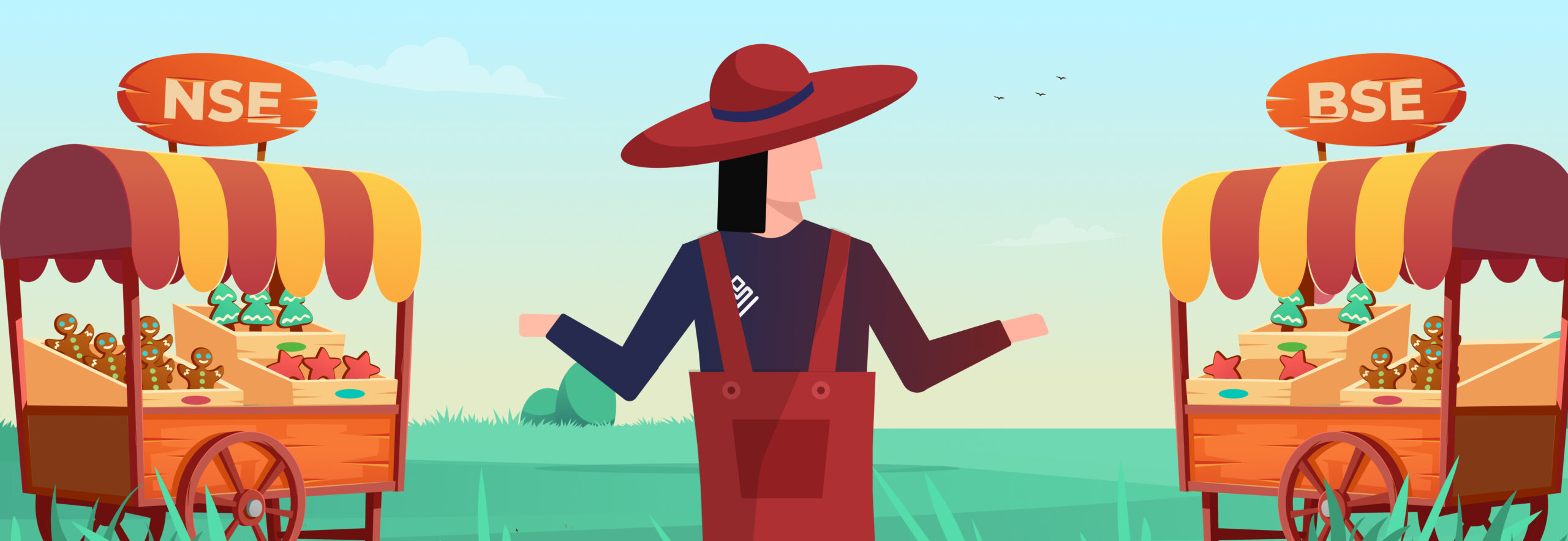
    What is the difference between NSE & BSE?

    India’s stock market is a dynamic and vibrant hub that attracts both domestic and international investors. 

    Within this bustling ecosystem, the National Stock Exchange (NSE) and the Bombay Stock Exchange (BSE) stand out as the two primary stock exchanges. While they share a common goal of facilitating the buying and selling of securities, these institutions differ in various ways. 

    In this blog, we will discuss the main difference between NSE and BSE in India, offering you a comprehensive understanding of the Indian stock market landscape.

    The History of NSE and BSE

    Before we get into the nitty-gritty details, let’s explore the historical backgrounds of these two iconic exchanges:

    Bombay Stock Exchange (BSE)

    Imagine a time when stock trading in India happened under a banyan tree. That was in the 1850s. As the demand for a more formal exchange grew, the Bombay Stock Exchange was founded in 1875. It’s the oldest exchange in Asia and the first-ever stock exchange in India. Today, BSE is located in Mumbai and houses thousands of companies.

    National Stock Exchange (NSE)

    The NSE, on the other hand, is a more recent arrival, established in 1992. The Indian government wanted to modernize the stock exchange system, leading to the birth of NSE. It quickly became a significant player in the Indian stock market, and its headquarters are also in Mumbai.

    Key Differences

    Ownership and Governance:

    BSE is a corporatized and demutualized exchange, meaning it is run by a corporate entity and no longer owned by trading members.

    NSE, on the other hand, follows a similar structure and is also a demutualized exchange.

    Trading Platform:

    BSE’s trading platform is known as BOLT (BSE OnLine Trading), while NSE uses NEAT (National Exchange for Automated Trading) and NOW (NSE’s trading software).

    Benchmark Indices

    BSE: BSE’s most famous index is the SENSEX (Sensitivity Index). It consists of 30 of the largest and most actively traded stocks on the BSE. The SENSEX is like a thermometer for the overall health of the Indian stock market.

    NSE: NSE’s equivalent to the SENSEX is the Nifty 50 or Nifty. It is a benchmark index that includes 50 of the largest and most liquid stocks listed on the NSE. These indices help investors gauge the performance of the stock market as a whole.

    Technology and Infrastructure:

    NSE is widely popular for its cutting-edge technology infrastructure and high-speed order execution, making it a preferred choice for many active traders.

    BSE has made significant technological advancements in recent years, but it has historically lagged behind NSE in terms of technology.

    Listing and Securities:

    Both exchanges facilitate the listing of various financial instruments, including equities, derivatives, mutual funds, and debt securities.

    BSE has more regional presence with a significant number of companies from Western India, while NSE is more dominant in Northern and Southern India.

    Trading Hours:

    BSE: BSE opens for trading at 9:15 AM and closes at 3:30 PM. There’s also a pre-open session from 9:00 AM to 9:15 AM.

    NSE: NSE has similar trading hours, starting at 9:15 AM and closing at 3:30 PM. The pre-open session runs from 9:00 AM to 9:15 AM, in line with BSE.

    Retail vs. Institutional Focus

    BSE: Historically, BSE has had a stronger retail investor base due to its longer presence in the market. It’s seen as more traditional and appealing to individual investors.

    NSE: NSE has positioned itself as an exchange that caters to both retail and institutional investors. Its advanced trading technology and services have attracted a wide range of market participants.

    Market Capitalisation

    BSE: The Bombay Stock Exchange (BSE) has been around for a long time and is an important part of India’s financial world. It’s like a home for many famous companies. In the latest data we have, BSE is worth about 140 lakh crore rupees.

    NSE: The National Stock Exchange (NSE), even though it’s newer, has become really popular and has lots of big companies, too. It’s worth around 182 lakh crore rupees, according to the most recent data we have.

    Popularity and Trade Volumes

    BSE: The Bombay Stock Exchange, given its history, has a broad investor base, including many retail investors and traders. However, it has a smaller share of the trading volume compared to NSE.

    NSE: The National Stock Exchange has grown to become the preferred choice for many traders and institutional investors due to its robust and efficient trading platform. It generally enjoys higher trade volumes compared to BSE.

    Regulatory Oversight:

    The Securities and Exchange Board of India (SEBI) regulates both NSE & BSE.

    Global Recognition:

    NSE is often recognized more globally due to its advanced trading systems and the Nifty 50’s international appeal.

    Which Exchange Should You Choose?

    The choice between NSE and BSE ultimately depends on your investment preferences and goals. Here are some considerations to help you decide:

    • Liquidity and Trading Speed: If you prefer highly liquid markets with faster order execution, NSE may be your go-to choice.
    • Historical Data and Research: BSE with its rich historical data and the Sensex, is a valuable resource for investors who prioritize historical analysis and trends.
    • Geographic Preference: Consider the regional presence of companies listed on each exchange. BSE has a more significant presence in Western India, while NSE is dominant in other regions.
    • Sectoral Diversification: Examine the sectoral composition of indices. BSE Sensex represents a different set of sectors compared to the Nifty 50, so your choice may depend on sectoral diversification preferences.
    • Technology and Trading Experience: If you are an active trader looking for advanced trading technology and a seamless trading experience, NSE might be more appealing.

    Conclusion

    NSE and BSE, though both critical players in India’s stock market, have distinct characteristics and histories. Your choice between the two should align with your investment objectives, trading style, and the specific features that matter most to you.

    Whether you prefer the established legacy of BSE or the cutting-edge technology of NSE, both exchanges contribute significantly to India’s robust and thriving financial market.

    In the end, as an investor, your focus should be on your individual financial goals. Like how you would decide whether to invest in mutual funds or stocks, you should be thinking about the performance of the specific securities you wish to trade or invest in, rather than the exchange on which they are listed.

  • Understanding the psychology of spending v/s saving money

    Understanding the psychology of spending v/s saving money

    Money plays a crucial role in our lives, shaping how we navigate the world. It’s a bit like a tug-of-war between two mindsets: the desire for instant enjoyment and the discipline of saving for the future.

    In this blog, we’ll dive into the fascinating psychology of saving versus spending money. Let’s understand what factors drive these contrasting financial behaviors and show you how understanding them can lead to smarter money choices.

    The Psychology of Spending Money

    1. Instant Gratification and Dopamine Rush

    As humans, we’re wired to want things right now. It’s like when you treat yourself to something nice, like buying cool new shoes, the latest smartphone, or enjoying a delicious meal. These actions trigger a special chemical reaction in your brain. When you make that purchase, your brain goes, “Hey, I like this,” and it releases a bunch of a neurotransmitter called dopamine. This dopamine is like a little happiness messenger in your brain, making you feel good. It’s why spending money feels so satisfying.

    The allure of immediate rewards can be particularly problematic when it leads to impulse buying. In these moments, our rational thinking often takes a back seat as the desire for instant gratification reigns supreme.

    2. Emotional Spending as a Coping Mechanism

    Let’s talk about how our feelings and spending go hand in hand. Many of us use shopping to deal with our emotions. It’s like a secret weapon for coping with different moods. For some, it’s like a stress-relief strategy, and for others, it’s a way to have fun or feel better when they’re not in a great mood. We call this “emotional spending” or “retail therapy.”

    Retail Therapy – The Mood Booster: Imagine you’re feeling a bit down or worried. Going shopping can be like a little adventure that makes you feel better, at least for a little while. It’s like a mood lifter. But here’s the catch: if you’re not careful, it can lead to spending too much money.

    The Key to Regaining Control: So, the trick is to understand what makes you shop when you’re not feeling your best. Once you know your emotional triggers, you can be in charge of your spending, instead of letting it controlling you. This is a crucial step in managing your money wisely and avoiding a spending spree you might later regret.

    3. Social Influences and Peer Pressure

    Social pressures and comparisons can exert a powerful influence on our spending behaviors. The fear of missing out (FOMO) is a psychological driver that can lead to spending on experiences or possessions simply because others in your social circle are doing the same. This might include purchasing trendy fashion items, dining at expensive restaurants, or going on lavish vacations to keep up with peers.

    Similarly, peer pressure can also come into play. Friends or family members may indirectly encourage spending by sharing their own indulgent purchases or making you feel obligated to spend on shared experiences.

    4. The Art of Persuasion: Marketing and Advertising

    In today’s consumer-driven world, marketers and advertisers are experts at tapping into our psychological vulnerabilities. They employ a wide array of persuasive techniques to create a sense of urgency and desire for their products or services. This can include limited-time offers or flashy advertisements.

    Moreover, the rise of e-commerce and targeted online advertising has made it even easier for businesses to reach potential consumers with tailored messages. Understanding the psychological tactics used in marketing can help you become a more informed shopper.

    The Psychology of Saving Money

    1. Delayed Gratification and Future Rewards

    In contrast to the satisfaction of instant gratification, saving money often involves delaying immediate rewards for future benefits. This requires a great deal of self-control and discipline, as it can be challenging to skip spending on something enjoyable today in favor of saving for an uncertain future.

    The ability to resist the temptation of spending now in pursuit of long-term financial goals is a fundamental aspect of saving psychology. Developing this skill can lead to significant financial security and a sense of accomplishment.

    2. Financial Security and Peace of Mind

    Putting money aside gives you a feeling of safety and peace about your finances. It’s like having a cushion to fall back on if something unexpected happens. This can help you worry less and feel better overall.

    Why Security Helps You Save: Knowing that you have this financial safety net encourages you to save more. It’s like having a shield against unexpected expenses, like a superhero with a secret power. So, saving money is not just about numbers; it’s about feeling more secure and prepared for whatever life throws your way.

    3. Goal Setting and Purposeful Saving

    Think of setting financial goals as having a target. It’s like saying, “I want to buy a house, start a business, or retire without money worries.” These goals give you a reason to save. It’s like having a purpose for putting money away for later.

    How Goals Help: When you know that your savings are going towards something important, it keeps you motivated and helps you stick to your savings plan. It’s like having a roadmap that guides you in the right direction. So, setting goals is like having a clear goalpost that makes saving money a lot more meaningful and doable.

    4. Habit Formation and Routine

    When you make saving a regular thing, it’s like building a habit. It becomes a part of your money routine, and it gets easier over time. This habit-building is like a secret weapon in your financial journey, helping you achieve long-term success. It’s all about doing it over and over until it feels natural. This habit formation is a powerful psychological tool that can lead to long-term financial success.

    Balancing Saving and Spending

    Finding the right balance between saving and spending is crucial for financial well-being. Here are some practical tips to help you strike that balance:

    1. Create a Detailed Budget

    Establishing a budget that outlines your income, expenses, and savings goals is the first step in achieving financial balance. This will help you allocate your financial resources effectively, ensuring that you cover essential expenses while also saving for the future.

    2. Prioritize Your Financial Goals

    Determine your financial priorities and allocate your resources accordingly. Start by saving for essential goals, such as an emergency fund or retirement, before considering discretionary spending on non-essential items.

    3. Practice Mindful Spending

    Be mindful of your emotional triggers for spending and practice conscious consumption. Before making a purchase, ask yourself if it aligns with your values and long-term goals. Will it bring lasting satisfaction, or is it merely a fleeting desire?

    4. Automate Your Savings

    Set up automatic transfers to your savings account to make saving a habit. When money is transferred automatically, you’re less likely to spend it impulsively. This can be particularly effective for saving for specific goals, such as a down payment on a house or a vacation fund.

    5. Seek Financial Education

    Invest in your financial literacy by educating yourself about personal finance and investment options. The more you know, the better equipped you’ll be to make informed decisions. This knowledge can empower you to grow your wealth and make more strategic choices regarding saving and spending.

    In Conclusion

    Learning why we save or spend money is like having a secret weapon for understanding our financial habits. Spending and saving aren’t just about buying things or putting money aside. They connect with our emotions and what we want. Spending can make us happy right now while saving gives us a sense of safety and hope for the future.

    The real trick in handling your finances is to find the right balance between spending and saving. This balance is like the key to a strong financial foundation, allowing you to meet your current needs and dreams without putting your future security at risk.

    To take control of your financial future, start by understanding why you want to save or spend money and by making smart money choices in your daily life. This journey is your way to financial freedom, where you can live life your way and feel really content. It’s not just about money; it’s about the kind of life you want and the good things you can leave behind. So, get on this path, find the right balance, and create a secure, satisfying, and truly unique life for yourself.