Category: General

  • Why is Tax Planning Important?

    Why is Tax Planning Important?

    Are you concerned about being smart with your taxes? Tax planning ahead of time can save you a lot of headaches and money in the long run. 

    Tax planning doesn’t have to be as complicated as you think it is. It is a well-defined process ideally done throughout the year, that helps you save your hard-earned money. 

    You cannot avoid filing taxes every year, but that doesn’t mean you also avoid the choice to save money when filing your taxes. 

    We are not asking you to spend your weekends over this either. All you need to spend is some quality time consistently every month. What do you do? You review your current investments and expenses and check where you can move them to make them tax-friendly.

    You are not in this alone. You can take help of financial experts like Vittae, that will guide you every step of the way.

    Let’s demystify tax planning and also understand why it is important, and how we can help you!

    What is Tax Planning? 

    Tax planning refers to the process of analyzing the financial status of an entity or individual to increase tax savings. 

    The main purpose of tax planning is to build tax efficiency. This means you have to ensure that all the elements of your financial plan are in line. This helps in an overall reduction of your tax burden and increases your tax deductions.

    Tax planning is not a one-time action! It continues throughout the year so that you make the most of it by the end of the financial year. 

    You must file taxes and returns during the assessment period after March 31st. However, you must make tax planning decisions across the financial year. 

    If you are still wondering if you really need tax planning, let’s dig a little deeper. 

    Why is tax planning important?

    Minimizing tax liability

    Tax planning helps individuals and businesses legally minimize the tax amount they owe. This is done by taking advantage of available tax deductions, credits, and exemptions.

    Maximizing cash flow

    When taxes are minimized, the funds saved can be used for other purposes. Such as investing, saving, or paying off debt, which can help increase cash flow.

    Avoiding penalties and interest

    Proper tax planning can help taxpayers avoid penalties and interest for underpayment or late payment of taxes.

    Risk mitigation

    Tax laws and regulations can be complex and constantly changing. Tax planning can help reduce the risk of non-compliance with tax laws and regulations. This saves you from paying hefty penalties or dealing with legal issues. 

    Planning for the future

    Tax planning can help individuals and businesses plan for the future. By considering the tax implications of future actions and decisions, you are not only saving money but also securing your future. 

    Benefits of Tax Planning

    Reduction of tax liability

    Tax planning helps individuals and businesses to legally reduce their tax liability, which can increase their take-home income or profits. This is a given that most folks fail to see. You often see all the forms and paperwork and forget how in the long term, the benefit is yours. 

    Improved cash flow

    By reducing tax liability, tax planning can help individuals and businesses to free up cash. As the logic goes, this cash can be used for other purposes such as investment, saving, or debt repayment.

    Better financial management

    Proper tax planning can help individuals and businesses to better manage finances. This is done by forecasting your tax liability and designing a tax-efficient strategy. The aim of this strategy is to minimize the impact of taxes on your personal or business finances.

    Avoidance of penalties and interest

    When you plan ahead, as a taxpayer you can avoid or minimize penalties. You won’t have to pay interest for underpayment, late payment, or non-compliance with tax laws and regulations.

    Better business decisions

    Tax planning can help businesses to make better decisions by considering the tax implications of potential business transactions or investment opportunities. This allows you to make informed decisions that align with their overall financial goals. 

    Tax Saving Instruments

    The following instruments and expenses will help you increase your tax savings.

    House Rent Allowance

    A salaried individual having rented accommodation can get the benefit of HRA (House Rent Allowance). This could be totally or partially exempted from income tax.

    Leave Travel 

    Domestic travel can be claimed as LTA. Only travel costs can be claimed. The modes of such travel must be either railway, air travel, or public transport.

    LTA can be claimed twice in a block of four years. In case an individual doesn’t use this exemption within a block, he/she could carry the same to the next block.

    Children’s Education & Hostel Allowance

    Children’s Educational Allowance: An allowance of ₹100 per month is allowed per child for up to two children studying in an educational institution.

    Hostel Expenditure Allowance: An allowance of ₹ 300 per month per child for up to two children is given to those staying in hostels.

    Telephone & Broadband allowance

    The income tax law allows an employee to claim a tax-free reimbursement of expenses incurred.

    If you are an employee, you can claim reimbursement of the actual bill amount paid or the amount provided in the salary package, whichever is lower.

    Car Maintenance Allowance 

    Maintenance and fuel expenses are reimbursed by the employer. If the employee owns the car (used for official and personal use), an exemption of

    ₹ 1,800 per month ( + 900 per month if the driver is provided) 

    (for cars with engine capacity up to 1,600 cc)

    or

    ₹ 2,400 per month ( + 900 per month if the driver is provided)

     (for cars with engine capacity of more than 1,600 cc)

    Housing Loan

    Interest on House Loan repayment can be claimed up to ₹ 200,000 under Section 24(b).

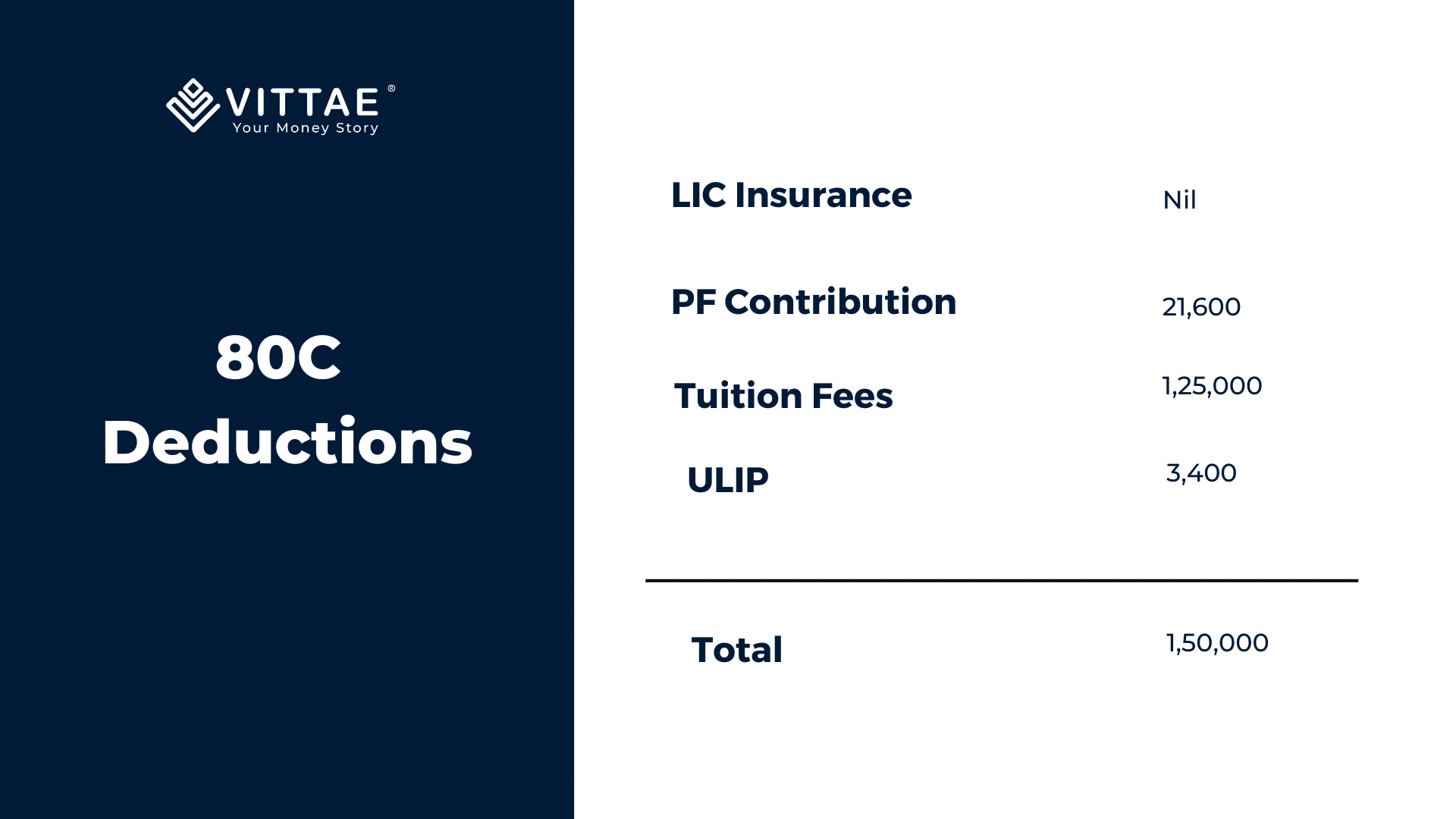
    Investments under Section 80C

    Public Provident Fund, Employee Provident Fund, Voluntary Provident Fund, Five-Year Post Office Time Deposit, and ELSS (Equity Linked Savings Scheme) are some of the investments that will save you money under Section 80C.

    80C Tax Deductions

    The following expenses qualify for tax deduction under 80C:

    • Life Insurance Policy premium payments
    • Children’s tuition fees
    • Repayment of principal amount on home loan

    Medical Insurance 80 D

    Section 80D of the Income Tax Act permits deductions on the amount spent by an individual towards the premium of a health insurance policy.

    This includes payment made on behalf of a spouse, children, parents, or self to a Central Government Notified health plan.

    Donation 80 G

    Section 80G encourages taxpayers to donate to funds and charitable institutions, offering tax benefits on monetary donations. All assesses are eligible for this deduction, subject to them providing proof of payment.

    Steps To Follow When Doing Tax Planning:

    Evaluate your tax situation

    Take a closer look at your income streams, sources of income, and taxable income to determine how much tax you owe.

    Identify tax deductions and credits

    Determine what deductions and credits you qualify for, such as charitable contributions, mortgage interest, property taxes, and education expenses. Check how they can impact your tax liability.

    Consider retirement account

    Saving for retirement in a tax-advantaged account can also reduce your taxable income and help you plan for your financial future.

    Plan for itemized deductions

    Determine if the total amount of itemized deductions will exceed the standard deduction by calculating and comparing both. Make strategic moves to maximize your deductions.

    Keep track of receipts and expenses

    Keep accurate records of your expenses, receipts, and documents. Doing this can support your deductions and credit claims (in the case of an audit).

    Consult a tax professional

    A tax professional can help you navigate the tax code, maximize your tax savings, and identify opportunities for tax planning that you might have missed on your own.

    At Vittae, we’ll file your taxes for free. Not just that, we’ll help you with a detailed Tax Report that guides you on your tax planning strategies. 

    Review and adjust your tax plan

    Make sure to review your tax plan annually. This will reflect changes in your income, expenses, tax laws, and regulations. You must further adjust it accordingly to ensure your tax plan is aligned with your financial goals.

    Tax Planning vs. Tax Filing 

    Tax planning is strategizing and optimizing your financial affairs to minimize your tax liability. 

    In contrast, tax filing involves completing and submitting your tax returns. This includes reporting your income, expenses, credits, and deductions, paying your taxes, or asking for a refund.

    Below are various factors that differentiate tax planning from tax filing: 

    Timing

    Tax planning typically occurs throughout the year, as taxpayers aim to take advantage of tax benefits and avoid overpaying taxes. In contrast, tax filing occurs annually.

    Goal

    The goal of tax planning is to minimize tax liability while planning for financial goals or achieving a favorable tax position. 

    Tax filing aims to comply with tax laws and regulations and accurately report your income, expenses, credits, and deductions.

    Complexity

    Tax planning is often more complex than tax filing. It involves designing and implementing strategies that consider your entire financial situation. 

    Tax filing, on the other hand, is often a straightforward task of filling out tax forms and submitting them with accuracy.

    Professional assistance

    Tax planning may require the expertise of tax professionals such as accountants, financial planners, or tax attorneys to evaluate the options and execute the strategies. 

    Tax filing can be done without professional help, although it is often advisable to seek assistance if you have a complicated tax situation.

    In Conclusion 

    Every financial plan is better when you include tax planning. It helps optimize your tax liability within the framework of legal regulations. It is important that you make tax planning an essential aspect of your financial plan as well.

    Effective tax planning can minimize the tax burden and maximize deductions. This ultimately leads to significant savings and improved financial stability.

    By staying up-to-date with tax laws and regulations you can avoid penalties and other legal consequences of non-compliance.

    For example, if you invest in certain tax-saving financial instruments such as Public Provident Fund (PPF), National Pension System (NPS), or Equity-Linked Savings Scheme (ELSS), you can claim deductions from your taxable income. 

    If you are a business owner, you can claim deductions for expenses. Such as salaries, rent, and depreciation. This can reduce your taxable income and lower your overall tax liability.

    In simple words, tax planning is important and unavoidable. It can help you keep more of your hard-earned money in your pocket.


  • Money Habits for Long Term Benefits

    Money Habits for Long Term Benefits

    Is there a habit you want to break? Such as eating junk food or spending more time on social media? We’re positive you do. Today, let’s talk about making new habits. Money Habits. These are good money practices that you can develop for your long-term benefit. 

    According to Behavioural Finance, a habit is also a type of bias. This is because, people prefer sticking to an action or a practice and not changing it. 

    The same applies to money habits as well. It is biased behaviour towards certain money actions. For example, your spending pattern towards shopping every month. 

    Did you know around 40-45% of your daily actions are habits? That means you function on autopilot for almost half of your day!

    We’ve all at some point tried to improve our health with better sleep, regular exercise, or a healthy diet. According to a research, stated in Forbes, on average it takes around 66 days to develop a behaviour, or in other words – a habit. 

    It boils down to which habits you choose to let go of and which you pick up. With one money habit at a time, you can even achieve financial freedom.

    Are you looking to stay ahead of the curve when it comes to your money habits? Whether you’re just starting out or have been managing your finances for years, understanding why money habits are important in the long haul, is key to achieving financial success.

    We agree it may be difficult to get out of a bad money habit, but not impossible. 

    There are plenty of hacks online on how to quit a bad habit or pick a good habit. The underlining statement in all is that focused commitment is key to building a new habit. 

    Before we talk about money habits for you to work on, let’s start with financial goals. These short-term and long-term financial goals are the foundation of your money habits. 

    Money habits are essentially recurring actions that will help you achieve these financial goals. 

    Why Are Financial Goals Important? 

    Provide direction

    Financial goals give you a clear direction and a purpose for your money. They help you focus on what’s important to you. This in turn gives you motivation to work towards achieving them.

    Help you prioritize

    Having financial goals helps you prioritize your spending and avoid overspending on non-essential items.

    Measure progress

    Financial goals help you track your progress toward your financial objectives. By monitoring your progress, you can stay on track and make adjustments as needed.

    Provide a sense of accomplishment

    Achieving financial goals gives you a sense of accomplishment. This further pushes you to continue working towards your next goal.

    Provide a safety net

    Saving for an emergency fund or retirement is also a financial goal. This provides a safety net and financial security in case of unforeseen circumstances.

    Improved financial well-being

    By setting and achieving financial goals, you can improve your overall financial well-being and reduce financial stress.

    Financial goals offer a purpose and direction for your financial decisions. They help you choose your money habits for the long run.

    For example, Sharan has a financial goal to buy his own car in 18 months. But, he has a bad money habit of playing online rummy. He spends approx. 5,000-7,000 INR. every month.

    The ideal next step for Sharan is, to stop gambling and invest this in a SIP that will contribute to his car payment.

    Money Habits help prioritize your spending and provide a sense of security. They also help you track your progress toward achieving the financial future you envision.

    Ten money habits for Long-term Benefits

    Create and stick to a budget

    Creating a budget helps you track your expenses and ensure you are living within your means.

    Save regularly

    Even if it’s a small amount each week, saving regularly can help you build up a solid financial cushion.

    Invest for the long-term

    Rather than trying to get rich quickly, invest for the long term and let the power of compounding work in your favour.

    Avoid debt as much as possible

    High-interest debt can quickly spiral out of control and limit your financial options.

    Live below your means

    Spending less than you earn can help you save more and avoid living pay-check to pay-check.

    Regularly review your financial goals

    A review of your finances and goals helps you stay on track and make any necessary adjustments to your financial plan.

    Track your net worth

    This helps you understand your overall financial health and can be a good metric for measuring progress.

    Increase your financial literacy

    Learning more about personal finance and investing can help you make better financial decisions.

    Automate your financial life

    This can help you save time and ensure that you are consistently taking steps to improve your financial well-being. Set automatic transfers into FDs and SIPs every month. Even though you may forget, the money gets automatically transferred.

    Be mindful of your spending habits

    Always ask yourself whether a purchase is truly necessary or not. Determining whether you’re spending on a need or want depends on whether you are spending on things that align with your goals.

    Long-Term Benefits of Good Money Habits:

    Financial stability

    By living within your means, avoiding excessive debt, and saving regularly, you can build financial stability.

    Reduced financial stress

    Consistently making good money habits a part of your life can help reduce financial stress and anxiety.

    Improved financial standing

    Good money habits can improve your credit score. This can help you qualify for loans with better rates, as well as renting an apartment.

    Flexibility

    Having sufficient savings and financial resources can give you flexibility. When it comes to life decisions such as when to retire, you have the flexible choice to decide.

    Increased wealth

    Consistently saving and investing your money over the long term can help you grow your wealth. This gives you the financial freedom to pursue the things you care about.

    Improved quality of life

    Having good money habits can improve your overall quality of life, enabling you to prioritize the things that truly matter to you.

    Good money habits can have a profound effect on your life. From financial security and flexibility to overall quality of life, good money practices add up over time.

    By making these practices habits, with regular action, you can build a solid financial foundation that will benefit you for many years to come.

    Sticking to these good money habits requires discipline and consistency. Here are some tips to help you make the journey easier.

    Tips to help you stick to Money Habits

    Set clear goals

    Define specific financial goals and the steps needed to achieve them. Keep these goals visible and review them regularly.

    Track your progress

    Monitor your spending and savings regularly to make sure you are staying on track. There are a number of apps and tools that can help with this.

    Hold yourself accountable

    Find someone who will hold you accountable for your financial goals. This could be a friend, family member, or financial advisor. Or the best idea would be to hold yourself accountable.

    Celebrate small wins

    Celebrate when you reach a savings milestone or when you make progress toward your financial goals. This can help motivate you to continue.

    When an action included in a routine is rewarded, it in turn acts as a “cue” or a push to perform the action again. This is a cycle that shows the relationship between routine, reward, and action.

    Apply it to any money habit to understand the importance of rewards.

    For example, if you set your reward for starting a SIP as going out for coffee with a friend, you are more likely to look forward to that quality time every month.

    Avoid temptation

    Stay away from situations that might tempt you to overspend or make impulsive purchases. This could be as simple as avoiding the mall or unsubscribing from promotional emails.

    Practice mindfulness

    Take time to reflect on your spending habits and ask yourself whether you’ve done enough to achieve your financial goals.

    Ultimately, sticking to money habits requires commitment and a willingness to prioritize your long-term financial health over short-term gratification

    In a nutshell

    Setting, following, and sticking to money habits might seem challenging, but in reality, is not. It all starts with a single step.

    They say every drop makes the mighty ocean. Similarly, small actions and habits over time result in big money benefits over time.

    Any long-term change is going to take time. Don’t forget to be kind to yourself as you get on this journey of financial stability and growth. There might be ups and downs. At times, you won’t be as consistent as you’d hope to be. Remind yourself that you are prepared with the tips at hand, and you’ll keep going.

    Let the action points you’ve learned today be your guiding path. Stay on track and accomplish every financial goal you set off to tick off. What’s better? You’ve got Vittae to guide you.

    Now, go get started.

    .

  • UPI: The Future of Digital Payments

    UPI: The Future of Digital Payments

    In the last decade, we’ve all moved from long queues at the ATM for cash to instant cards or UPI payments. Have you ever wondered if we’d still use cash by 2033?

    Most of us are still trying to decode cryptocurrency, the world going cashless still seems like a ‘way into the future’ situation. Doesn’t it?

    In FY 22, UPI accounted for 52 percent of the total 8,840 crore financial digital transactions. The total value of these UPI transactions was ₹126 lakh crores.

    Like how we upgrade to “smarter” phones every year, we also upgrade how we handle money. Hard cash in the wallet evolved into plastic money like debit/credit cards. Now, it is the era of UPI.

    The data below clearly indicates how UPI payments have almost doubled from 2021 to 2022. As mentioned, it’s winning the race against debit or credit cards.

    Total monthly transactions via UPI, Credit & Debit cards.
    Total monthly transactions via UPI, Credit & Debit cards.

    It is important for us to adapt to these evolving times.

    In this blog, you’ll learn how to create a UPI account, the steps in a UPI transaction, the advantages of UPI apps, and what the future holds for UPI.

    What is UPI?

    UPI stands for Unified Payments Interface. It is a digital payment system in India developed by the National Payments Corporation of India (NPCI).

    UPI payments allow you and me to make instant transactions, transfer money and pay bills through a mobile app. All this without the need to share bank account details, IFSC codes, or other sensitive information.

    UPI payment enables users to send and receive money from their linked bank accounts in real-time through a simple and secure platform. Users can create a UPI virtual payment address (VPA) linked to their bank account, which can be used to make transactions.

    UPI enables peer-to-peer transactions, as well as transactions with merchants, bill payments, and mobile, recharges. This means you can directly transfer money to your friend or also instantly pay the shopkeeper after getting groceries.

    It is interoperable across different banks. You can also do UPI payments through popular mobile apps such as Google Pay, PhonePe, Paytm, etc.

    There are no Sundays off like at a bank or the dreadful “no cash” message like in ATMs. UPI payment can be made 24×7. It is extremely convenient for us as users.

    It is a secure and efficient mode of digital payment, making it a popular choice among users in India.

    UPI (Unified Payments Interface) has revolutionized the digital payment ecosystem in our country.

    To put it in simple words, UPI payments make sending and receiving money easier, quicker, and more secure.

    Considering its popularity, UPI has been dubbed the future of digital transactions in India. It has disrupted traditional payment methods and has paved the way for a cashless economy.

    How to create a UPI account

    To open a UPI account, you can follow these steps:

    1. Download a UPI-enabled mobile app from the app store such as BHIM, PhonePe or Google Pay.

    2. Register your mobile number with the app.

    3. Create a UPI ID or VPA (Virtual Payment Address), which will be used for sending and receiving money.

    You can choose a unique name such as your name or mobile number followed by @bankname.

    4. Link your bank account with the UPI app by choosing the bank name and account number. You will receive an OTP (One time password) for authentication.

    5. Once the bank account is linked, you can set up a UPI PIN for making transactions. This PIN will be required to authorize all transactions.

    6. You can now start using your UPI account to send and receive money, pay bills, and make other transactions.

    Please note that the steps may vary slightly depending on the UPI app you are using.

    Example of a UPI transaction

    Suppose you need to pay your friend Akash ₹1000 after splitting a bill. You can use the UPI-enabled mobile app on your phone to initiate a UPI transaction.

    Here’s how the transaction will work:

    • Open the UPI app on your phone and log in using your UPI ID and PIN.
    • Select the “Send Money” option and enter Akash’s UPI ID or mobile number.
    • Enter the amount you want to transfer (₹1000 in this case) and a remark,

    such as “Dinner at Dhaba Express”

    • Confirm the details entered are correct and enter your UPI PIN to authorize the transaction.
    • Once the transaction is complete, both you and Akash will receive a confirmation message on your phones indicating that the transaction has been successfully processed.

    The transferred amount of ₹1000 will be debited from your linked bank account and credited to Akash’s linked bank account instantly using the UPI platform.

    Benefits of UPI

    UPI (Unified Payments Interface) has several benefits that make it a convenient and efficient mode of digital payment in India.

    Instant money transfer

    UPI payments enable instant money transfers from one bank account to another with only a few taps on a phone screen. This makes it a quick and efficient way to transfer money through a mobile app without delays.

    Easy to use

    UPI payment is very user-friendly. All you need is a smartphone, a bank account, and a UPI ID to get started with UPI payments. All you have to do is follow the steps and viola! you’re acing digital transactions.

    Safe and secure

    UPI payment requires two-factor authentication, i.e. you need to enter the phone password followed by the UPI PIN, set by you. This makes UPI transactions secure and less prone to fraud.

    Interoperability

    UPI payments can be used across different banks, making it an interoperable platform. This enables users to transfer money without having to add the beneficiary’s bank details to their account.

    Low transaction fees

    Many banks and UPI-enabled apps provide free transactions on UPI. This makes it a cost-effective option for people who frequently transfer small amounts of money.

    However, merchant transactions where the merchant country is different from the billing country will charge a 1% fee in Google Pay.

    Versatility

    UPI offers a wide range of services, including mobile recharges, paying bills, booking tickets, and even buying insurance! This makes it a versatile mode of digital payment. It also has fun perks like cashback that are available as scratchcards on the app. You can use them and get free coupons. At times recharge or freecharge is also gifted. The most popular is cashback which sends money directly to your account.

    UPI payment has transformed the way people transact and made digital payments more accessible and convenient for people across India. We hope to see how UPI is adopted by rural India as well to make their daily life easier.

    Top UPI companies in India

    Google Pay

    Google Pay is a UPI-enabled mobile payment app that is available on both Android and iOS platforms. It has quickly become one of the most popular UPI payment apps in India since its launch in 2017. As of August 2021, Google Pay has over 100 million monthly active users in India.

    PhonePe

    PhonePe is another popular UPI-enabled mobile payment app in India. It allows users to send and receive money, pay bills, and make other transactions. PhonePe claims to have over 300 million registered users. Ithas processed more than a billion transactions per month on its platform.

    Paytm

    Paytm is known for its digital wallet service, but also its UPI payment feature. Paytm has over 350 million registered users and claims to have processed over 1.4 billion transactions in a quarter in 2021.

    BHIM

    BHIM (Bharat Interface for Money) is a UPI payment app developed by the National Payments Corporation of India (NPCI). BHIM has over 400 million downloads and has processed over 3 billion transactions since its launch in 2016.

    Amazon Pay

    Amazon Pay is another UPI-enabled mobile payment app that offers users a seamless payment experience. It allows users to send and receive money, pay bills, and make other transactions. It has over 65 million registered users in India.

    Market share of UPI apps by transaction volume
    Market share of UPI apps

    You must have come how Paytm markets its app through multiple ads on television with the tagline “Paytm karo”. UPI companies in India have experienced significant growth in the past few years, indicating that UPI has gained wider acceptance among users as a preferred mode of payment.

    UPI vs. Debit Cards

    UPI (Unified Payments Interface) and Debit cards both facilitate digital transactions. Both are revolutionary methods of digital payments that have wide popularity. Here’s how they compare:

    Convenience

    The major advantage of making a UPI payment is that you do not need to carry a physical card or remember PINs and CVVs. UPI is a more convenient method. Debit cards require you to carry a physical card and enter the correct PIN to complete transactions.

    Security

    UPI uses a two-factor authentication process (Phone password & UPI PIN), making it more secure and less prone to fraud. On the other hand, debit cards are prone to risks such as skimming, phishing attacks, and counterfeit cards. This puts the user at risk for fraud.

    Interoperability

    UPI payments are interoperable across different banks, whereas debit cards can only be used to transact with the bank that issued them.

    Transaction fees

    UPI transactions are free or have minimal fees for most banks and UPI-enabled apps. However, debit cards usually have transaction fees, especially for certain transactions like ATM withdrawals and foreign currency transactions.

    Speed

    UPI payments facilitate instant transfers between bank accounts, while it takes some time for debit card transactions to be processed.

    Transaction limits

    UPI payments have varying transaction limits depending on the bank or app. However, Debit card transactions are usually subject to withdrawal and spending limits.

    UPI payment is gaining popularity as a cost-effective mode of digital payment than a conventional bank debit card. However, debit cards are still widely used, and it may take some time for UPI to completely replace debit card use.

    Future of UPI

    UPI has revolutionized the digital payment landscape in India since its launch in 2016. Today, UPI is rapidly gaining popularity as a preferred mode of payment. This stands true for both, individuals and businesses.

    Encouraging more transactions

    UPI payments have increased almost five-fold in just two years, and are expected to continue growing in the future. More people are switching to UPI-based payments from cash transactions or other traditional methods.

    Integration with new technologies

    With the Indian government’s push for digital payments and the emergence of new technologies like voice-activated payments, UPI is expected to integrate with new technologies, making payments even more convenient.

    Example:

    In April 2023, ICICI Bank introduced easy EMI facility for UPI payments made by scanning QR codes. Customers eligible for PayLater, the Bank’s ‘buy now, pay later’ service can avail of the EMI facility in an instant, easy and seamless manner.

    ICICI customers can now instantly buy products or services by scanning the required merchant QR code at a store and making payments in EMIs.

    Support for small businesses

    UPI payment can be especially beneficial for small and medium-sized businesses that do not have access to traditional payment gateways. With UPI, businesses can accept payments easily and efficiently, leading to lower transaction costs.

    Security

    UPI is highly secure with its two-factor authentication process, and this coupling with its speed and ease of use is expected to drive its growth in the future.

    The Way Forward

    A significant percentage of people still prefer the old-school method of cash and don’t want to go beyond the debit card. The choice is yours.

    Making instant transactions with a simple QR code scan or a few quick taps on your phone has become the new norm.

    UPI is expected to continue its upward trajectory, making it a preferred mode of transaction among people and businesses in India.

    Now that you know how to create a UPI account you have an easier way to spend as well as manage your spending. It’s the perfect time to start your journey toward financial growth.

    Download Vittae today and unlock your financial freedom in just 30 minutes.

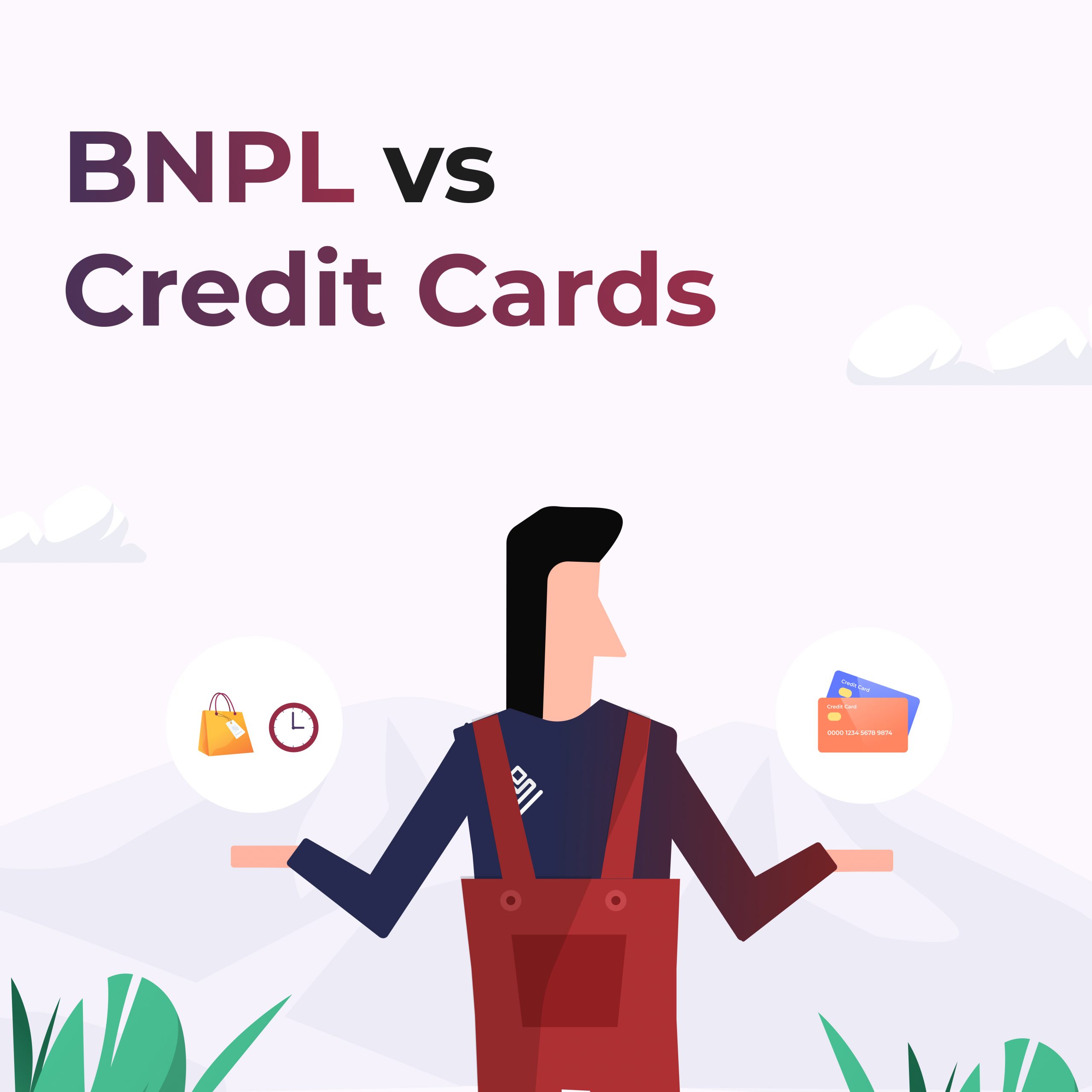
  • BNPL v/s Credit Cards: Which is better for you?

    BNPL v/s Credit Cards: Which is better for you?

    It’s finally the weekend, and you’re relaxing at home. You added a new pair of branded shoes to your online cart. But, you’re too lazy to grab your wallet and opt for the BNPL payment instead. 

    We’ve all been there, done that. 

    You’ve chosen the easier way out – The buy now, pay later method. The question is, would you pick your credit card to pay instead? 

    Let’s change the scenario. 

    It’s the end of the month and the weekend. You’re staring at your computer screen trying to check if you’ve got the budget for a last-minute road trip. Turns out you do! 

    You’re about to call your friend to confirm when you get a mobile notification. It’s an alert message from the BNPL company that you are delayed in your payment. You have to pay back the money plus interest to avoid an extra penalty. Seems like the trip might not happen after all. 

    It’s a known fact that if you had paid via cash or a debit card, you wouldn’t have to owe any money. But, would the scenario have been different if you had chosen a credit card instead of BNPL? 

    Let’s dig a little deeper and understand what BNPL and Credit Cards are. We’ll also elaborate on their pros and cons, and help you decide which is the better option for you. 

    What is Buy Now Pay Later? 

    Buy Now Pay Later (BNPL) is a financial service that allows customers to purchase products and services upfront and pay for them later in installments. BNPL literally is buying a product now, and promising to pay later.

    It might seem like a method where you get to buy something for 0 rupees at the time of purchase. But in reality, you’re taking a tiny BNPL loan to own this product and owe money in the near future.

    In India, BNPL services have gained popularity in recent years, particularly among younger consumers who are looking for flexible payment options.

    There are several BNPL service providers in India, including Simpl, LazyPay, and ZestMoney, among others. These BNPL apps are gaining more popularity by the day. These services are usually integrated with e-commerce platforms and allow customers to make purchases on credit.

    When using a BNPL service, customers can choose to pay for their purchase in installments over a period of time, typically ranging from 3 to 12 months. 

    The exact terms and conditions of the installment plan will vary depending on the service provider and the amount of the purchase.

    Some BNPL services may also charge interest on the installment payments, while others offer interest-free options.

    Additionally, customers may be required to undergo a credit check before they are approved for a BNPL plan. A BNPL service in India provides consumers with a convenient and flexible way to make purchases and manage their finances. 

    However, it is important for customers to carefully read and understand the terms and conditions of the BNPL service before using it.

    BNPL process in 4 steps
    The BNPL Process in 4 steps

    BNPL Process

    • Pick any item and add it to your online cart.
    • When you check out, choose the buy now, pay later option.
    • The BNPL app/service will ask you to pay a small down payment (usually 25%) if you’re eligible.
    • You can then pay the pending amount in installments.
    • The amount can also get deducted directly from your bank account, credit, or debit card.

    Example of BNPL

    Let us look at a buy now, pay later example to understand the concept.

    Ravi is a chef. He wants to upgrade his kitchen with the latest appliances but doesn’t have enough funds.

    He found some affordable appliances online. So, he opted to buy now and pay later at the checkout point.

    He was able to purchase the ₹80,000 convection oven, after browsing through BNPL apps. He had to pay a down payment of ₹20,000 to the bnpl lenders. Furthermore, he needs to pay the rest of the ₹60,000 within 30–45 days.

    If he fails to pay the amount of time, Ravi might be charged a late fee.

    The below image is a bar graph showing how 4 different generations of people use the BNPL method. It also predicts the percentage of users in 2025. It can be seen how almost half of the youngest sector of the population, Gen Z, is likely to use BNPL in 2025.

    Percentage of GenZ, Millenials, Genx, Baby Boomers using BNPL in 2021, 2023 & 2025
    Percentage of 4 generations using BNPL in 2021, 2023 & 2025

    How does the Credit Card work? 

    Long before UPI (Unified Payments Interface) options like Gpay or Paytm became popular, hard cash in our wallets was replaced by plastic money. Though plastic money can mean debit or credit card, today we’ll discuss the latter.

    A credit card is a plastic card issued by a financial institution, such as a bank or a credit union. In simple words, the credit card allows the cardholder to borrow money on credit.

    The cardholder can use the card to make purchases or withdraw cash up to a certain limit, known as the credit limit. When a credit card is used to make a purchase, the cardholder is essentially borrowing money from the financial institution (bank) that issued the card.

    The cardholder is expected to pay back the borrowed amount, usually with interest, within a certain period of time, generally at the end of each month.

    If the cardholder fails to make the required payments on time, they may be charged additional fees and their credit score may be negatively affected.  A credit score determines how likely you are to pay a loan back on time, based on information from your credit reports.

    Though a consumer might face extra pressure to pay up these “extra” fees, more and more people are opting the credit card. Below is a comparison of credit card and debit card transactions in crores.

    Comparison of Credit Card & Debit Card Payments (in crores)
    Comparison of Credit Card & Debit Card Payments (in crores) in March 2023

    It can be seen how online credit card payments are almost 3 times more than online debit card payments. Ease of payment is the main cause of this. However, we’d like to remind that the process isn’t all risk-free.

    Credit cards work by establishing a revolving line of credit. This means the cardholder must make payments on time and stay within the credit limit. This is a key factor that allows them to continue to borrow money on credit.

    The interest rate charged on credit card balances can vary depending on factors such as the cardholder’s credit score and the type of card they have.

    Credit cards also often come with additional features and benefits. There are rewards programs that offer cashback or points for purchases, travel insurance, and fraud protection.

    However, it’s important for cardholders to use credit cards responsibly and only borrow what they can afford to pay back to avoid accumulating debt and damaging their credit score.

    Credit Cards have become immensely popular with increasing lifestyle choices. Today, even a fresh graduate wants to buy a high-end mobile, even if it is on EMI. Tools like credit cards help them get these products with ease.

    The below image shows the number of credit cards in use in India. The number has doubled from 29 million in 2017 to 62 million in 2021.

    Number of Credit Cards in India from 2017-2021
    Number of Credit Cards in India from 2017-2021

    According to RBI data, in March 2021, India with a population of 1.3 billion had 62 million credit cards active. This means five cards per every 100 people. Let’s also look at how to use this popular payment mode.

    How to use a credit card

    • Choose the right credit card
    • Verify your credit limit:
    • Make a purchase
    • Verify the amount
    • Pay your credit card bill

    Example of Credit Card Use:

    Sneha is at a grocery store and wants to buy groceries worth ₹4000. This is how she would use her credit card:

    • Choose the right credit card: Sneha has a XYZ credit card that offers 1% cashback on all purchases.
    • Verify credit limit: She checks that her credit limit is ₹50,000.
    • Make a purchase: She shows her card to the cashier and makes the payment.
    • Verify the amount: She confirms that the amount is credited to the store ₹4000 only
    • Pay credit card bill: At the end of the billing cycle, Sneha will receive a statement that she owes ₹4000 on her credit card.

    She can pay the bill online through the credit card company’s website. Since her card had a 1% cashback, she will earn ₹40 as a reward.

    Buy Now, Pay Later vs. Credit Cards: Key Differences

    BNPL (Buy Now Pay Later) and credit cards are two different payment methods that offer consumers different advantages and disadvantages.

    Buy Now Pay Later (BNPL) is a payment method that allows customers to purchase goods or services and pay for them in installments over a period of time.

    Credit cards, on the other hand, are a payment method that allows customers to borrow money from a lender (usually a bank). Credit cards also charge interest on any outstanding balances, which can vary depending on the card and the individual’s credit score.

    10 major differences between BNPL & Credit Card

    Payment Terms

    The most significant difference between buy now, pay later (BNPL) and credit cards is the payment terms. BNPL allows users to make purchases and delay payments for a set period. Whereas credit cards require immediate payment or carry over balances with interest charges.

    Credit Checks

    BNPL services do not require a credit check to use, whereas credit card companies often require a credit check to determine if an applicant qualifies for a card.

    Interest Rates

    Credit cards typically charge interest rates on balances carried over from month to month. BNPL services usually offer interest-free repayment options.

    Repayment Period

    BNPL services usually offer a shorter repayment period than credit cards. It often ranges from a few weeks to a few months, whereas credit cards allow for longer repayment periods, depending on the amount owed.

    Fees

    Credit cards often charge fees such as annual fees, late payment fees, and cash advance fees. BNPL services may charge fees for late payments or missed payments

    Credit Score Impact

    Using a BNPL service does not typically impact a user’s credit score. Whereas applying for and using a credit card can have an impact on credit score.

    Credit Limit

    Credit cards usually come with a credit limit that determines how much a user can borrow. BNPL services often offer a fixed amount of credit for each purchase.

    Rewards and Perks

    Credit cards often come with rewards and perks such as cashback, points, or airline miles. BNPL services usually do not offer such perks or incentives.

    Merchant Acceptance

    Credit cards are widely accepted by merchants. BNPL services may have limited merchant acceptance.

    Purchase Amount

    BNPL services are typically used for smaller purchases. Credit cards are used for larger purchases or to manage ongoing expenses.

    Overall, both BNPL and credit cards can be useful payment methods, depending on the customer’s financial situation and spending habits. We suggest you consider your individual needs and preferences when deciding which payment method to use.

    Is there a minimum age for BNPL?

    Yes, there is a minimum age limit for BNPL (Buy Now Pay Later) services, which is 18 years old. The specific age limit can vary depending on the provider and the country, but it is usually 18 years old.

    This is because individuals under the age of 18 are considered minors and may not have the legal capacity to enter financial contracts.

    Additionally, BNPL services often require a credit check or access to financial information, which may not be available to minors.

    It’s always important to read and understand the terms and conditions before using any financial service, including BNPL.

    Is BNPL replacing the Credit Card?

    It’s unlikely that Buy Now Pay Later (BNPL) options will completely replace credit cards. Both payment methods serve different purposes and have their own advantages and disadvantages.

    While BNPL services have gained popularity in recent years, particularly among younger consumers, credit cards are still widely used and accepted as a form of payment. In fact, many BNPL services require users to link a credit or debit card to their account for payment processing.

    Ultimately, it’s possible that BNPL services could become a popular alternative to credit cards. This applies to certain types of purchases or to consumers who prefer to avoid debt or interest charges. However, it’s unlikely that they will replace credit cards, which offer more flexibility and benefits for many users.

    In a nutshell

    Whether you’re planning your personal finance or figuring out how you can afford a costly product, your spending habits are a deciding factor if you choose BNPL or Credit Card.

    At Vittae, we want you to make an informed choice about your money decisions. Now, that you’re aware of both the pros and cons of BNPL and credit cards, you have to re-think why you choose a specific payment method.

    BNPL would be a great fit for those who want to avoid interest and are regular in paying back on time. But you also need to be cautious to not pile up BNPL loans.

    Credit cards can be a nice option if you have a regular income to pay off the credit card bill every month. You can also build a good credit score that might help with bigger loans. You are also at risk of paying extra (interest) if you fail to pay on time.

    Financial Experts at Vittae can help guide you in making the right money decisions. Unlock your financial freedom today.

  • Dior Fashion 2023 in India: Global with Local

    Dior Fashion 2023 in India: Global with Local

    Did you happen to see international fashion models walking the ramp at the Gateway of India on your Instagram reels and YouTube Shorts?

    Not just that, they’re wearing Dior Fashion inspired from India while live-classical Indian music plays in the background.

    Did you keep scrolling and forget about it, or did you wonder how Fashion has evolved since the 90s to 2023?

    In 2023, for the first time in history, the Dior Pre-Fall Collection was showcased in India. 

    There were numerous Dior collections in the past, inspired from Indian motifs. It was a surprise to everyone in the fashion industry that Dior was coming to India. This time, not for inspiration but for a collection reveal.

    The surprise doesn’t end there! This year, the collection was curated by Maria Grazia Chiuri, but created by Indian Women artists from Chanakya School of Craft. 

    On March 30th 2023, Dior, a French Fashion brand hosted the much-awaited Dior Fashion Fall collection of 2023 in India. They showcased the season’s collection at an outdoor setting near the iconic Gateway of India in Mumbai.

    Dior is an iconic brand that’s been in the Fashion World for decades. Dior is a French brand that gained immense popularity across the world. 

    In the 1940s, Christian Dior moved from France to the USA to bring his much-loved collections to the women of New York, United States of America.

    Maria Grazia Chiuri shared, “I am doing this show for the love of this country, and how much they support my creativity. It is really something very personal.” on her visit to Mumbai.

    Before we go in-detail about the Dior Collection, let’s understand how Fashion, as an industry contributes to a country’s economy. As it is said in Hindi, a person’s basic needs are ‘roti, kapda and makaan’. This means food, clothing and shelter. Beyond all the glam and glitter, the clothing industry is a major contributor to lifestyle choices.

    How does the fashion industry contribute to a country’s economy?

    Job Creation

    The fashion industry is a labor-intensive industry, and it requires a large workforce. This means that the industry can create jobs in various sectors such as design, manufacturing, and retail.

    From the manufacturing unit in the city outskirts to a mall with the display of clothes, every big brand hires hundreds of thousands of people. 

    For example: Ramraj Cotton employs over 4000 employees across its offices, factories and showrooms. (source: Ramraj Cotton Website) 

    Exports

    The fashion industry is an export-oriented industry. This means that countries can export their fashion products to other countries. This generates foreign exchange and enhances a country’s balance of payments. In simple words, a balance of payments is like a country’s cash flow in an official statement.

    According to India Brand Equity Foundation, India’s silk and silk products exports were valued at US$ 248.56 million in FY 21-22. Now, that’s a big number for just one category of clothing. This means overall the textile industry handles more exports on an yearly basis.

    Contribution to GDP

    The fashion industry contributes significantly to a country’s Gross Domestic Product (GDP) through various activities, such as production, retail sales, and exports. A country’s GDP is the monetary value of products within a country.

    Clothing is a category of product that are consumed by you and me irrespective of how different we might be.

    This is one of the reasons why the fashion industry is different from the ‘fashion world’ that’s mistaken to be all about branded clothes.

    Global brands like Dior or Gucci are only a part of it, but don’t control the fashion industry.

    According to Invest India, the domestic apparel & textile industry in India contributes approx. 2% to the country’s GDP.

    Tax revenue

    The fashion industry generates tax revenue for the government through various channels such as import duties, sales taxes, and income taxes paid by employees and businesses in the industry.

    We’ve already seen examples on how the fashion industry contributes to exports and GDP. Clearly, this means they generate huge income for themselves that means great tax revenue for the government.

    Branding and Tourism

    The fashion industry helps promote a country’s brand image and attract tourists. Fashion events, shows, and exhibitions help promote a country’s cultural identity and attract foreign tourists. This in-turn contributes to the growth of the country’s tourism industry.

    The Dior Pre-Fall Collection is a live-example on how international artists and personalities from across the world came to India for the event. It indirectly resulted in the exchange of culture and traditions.

    The fashion industry is always evolving, and the Dior pre-fall collection 2023 is all the proof you need. The collection is a beautiful mix of traditional Indian culture and modern Western aesthetics. It is set to make waves in the fashion industry. 

    Let’s take a closer look at the Dior pre-fall collection 2023 in India and how it will impact the fashion economy.

    The Dior Fall Collection 2023

    The Dior collection 2023 draws inspiration from the vibrant and colorful Indian culture, with bold prints, intricate embroideries, and striking colors.

    The collection includes a range of garments, from sarees and lehengas to tailored suits and coats. The pieces are all designed to be versatile, making them perfect for both formal and casual occasions.

    The collection was unveiled at a grand event in Mumbai, which saw celebrities and fashion enthusiasts from all over the country in attendance. The creative director Maria’s collaboration with Mumbai-based atelier Chanakya was truly memorable.

    Besides celebrated Indian actresses like Anushka Sharma and Sonam Kapoor, international personalities like Simone Ashley, Cara Delevingne and Beatrice Borromeo were also present. Virat Kohli and Ananya Pandey attended the event too.

    There was a perfect unity of Indian vibrancy and Dior couture. It was heart-warming to see a luxury brand Dior, highlight the incomparable craft of our Indian artisans.

    The event was a huge success, and the collection received widespread praise across the audience.

    How will the Dior Collection Impact the Indian Fashion Economy?

    All eyes on Indian Artisans

    It will bring more attention to the Indian fashion industry as a whole.

    When Dior, a global luxury brand, showcases its collection in India (Mumbai), it puts the spotlight on local designers and artisans like Chanakya Women Artisans. These women work tirelessly to create beautiful and unique pieces.

    The Dior pre-fall collection 2023 will also create new job opportunities in the fashion industry, from models and stylists to production and manufacturing.

    Create new job opportunities in the fashion industry

    The collection will require skilled artisans to create the intricate embroideries and prints that are a hallmark of Indian fashion, which will boost the local economy. 

    Other popular brands might approach Chanakya School of Fashion for further collaborations.

    Drive sales for local businesses 

    The collection will drive sales for local businesses that cater to the fashion industry. These include local businesses such as fabric and textile suppliers, tailors, and boutique owners.

    The increased demand for Indian textiles and designs will also benefit small-scale artisans and weavers who may have been struggling in the past.

    According to Indian Brand Equity Foundation, the hand loom industry is the country’s largest cottage industry, with 23.77 lakh looms.

    It is also the second-largest employment provider in the rural region. The Hand loom industry employs more than 3 million people.

    When local artists get recognized, unorganized sectors like these get more business. 

    The Dior pre-fall collection 2023 in India is a perfect example of how fashion can bring together different cultures and create something beautiful.

    This boosts the local fashion industry. It also creates new job opportunities that benefit small-scale artisans and weavers. 

    As per data by Euromonitor International, the Indian luxury goods market was worth ₹4,609.85 crore in 2022. It is likely to increase to ₹6,282 crore in 2024.

    Have you ever wondered how global luxury brands like Christian Dior generate revenue in the fashion industry? 

    Learn about Dior’s Revenue Model

    Dior is a luxury fashion and beauty brand that operates on a multichannel revenue model. Let’s see how.

    Retail Sales

    Dior generates a significant portion of its revenue through its network of retail stores.

    The company operates over 200 boutiques and stores globally. It sells a range of luxury products such as ready-to-wear, leather goods, accessories, shoes, and fragrances.

    Wholesale

    Dior also generates revenue through wholesale channels by selling its products to high-end department stores, specialty stores, and duty-free shops.

    The company has strategic partnerships with various luxury retailers, including Harrods, Neiman Marcus, and Bloomingdale’s.

    E-commerce

    Dior has a robust e-commerce platform that allows customers to shop online for its products.

    The company sells its products through its official website, as well as through third-party e-commerce marketplaces like Farfetch, MyTheresa, and Net-a-Porter.

    Licensing

    In addition to its core product offerings, Dior generates revenue through licensing agreements.

    The company licenses its brand name and logo to third-party companies. They do this for the production and sale of products such as eyewear, watches, and perfumes.

    Now that we understand how global brands make money in the fashion industry, let’s try to understand why such a luxurious high-end brand like Dior collaborated with Chanakya, a local school of fashion? 

    Chanakya is a non-profit organization formed in 2017 that enables traditional artisan women from low economic households. The organization empowers these women to not only earn a living, but contribute to creating art.

    Formed by Monica Shah and Karishma Swali, Chanakya is on a mission to support female artists to protect the crafts that are a part of India’s traditional legacy.

    This isn’t the first time Chanakya collaborated with Dior. They’ve worked on numerous occasions and projects in the past. 

    Previously, the school worked with Maria Grazia Chiuri, the creative director of Dior for set design of runway shows.

    They helped produce embroideries for Dior’s craft-focused collections as well. For example, Dior had a limited collection of bright pink sling bag or a “Rajasthani jholi”. The bag was a sold as an accessory for traditional attire, and was soon sold out!

    4 reasons why global brands collaborate with local artisans: 

    Unique designs and craftsmanship

    Local artisans often have unique skills and knowledge that can’t be replicated by machinery. Collaborating with them allows global fashion brands to access their unique designs and craftsmanship.

    Supporting local communities

    Collaborating with local artisans provides an opportunity for global fashion brands to support local communities and preserve traditional craftsmanship.

    This helps sustain the local economy. Not just that, it also ensures that these traditional techniques and practices become a legacy for generations to come.

    Environmental sustainability

    Working with local artisans can help reduce the carbon footprint of global fashion brands. By doing this, they avoid the need to transport materials and finished products across long distances.

    It also helps to promote sustainable practices in the production of clothing and accessories. Sustainability goes hand in hand with style of fashion today. A customer has become aware to choose products like cotton over leather.

    Brand differentiation

    Collaborating with local artisans can differentiate global fashion brands from their competitors. It allows them to create unique products that tell a story and connect with consumers on a deeper level.

    One of the most popular bias when shopping, in behavioural finance, is recency bias. A customer makes choices on his/her most recent information.

    This makes it all the more important for a brand to stand out from the rest to attract their customers.

    A Fashionable Conclusion

    The fashion industry plays a crucial role in the economic growth of a country. It contributes significantly to a country’s GDP and job creation.

    The fashion industry also promotes innovation and creativity in various fields, such as design, manufacturing, marketing, and retail. 

    In today’s day and age, the fashion industry has the potential to promote sustainable practices, ethical values, and cultural diversity. These factors are important for the overall development of society.

    The Dior Pre-Fall Collection in India is a bold reminder on how vibrantly the industry has evolved. However, it’s also important to make sustainable choices for the future of the planet.

    Next time you make a fashion choice, strike a balance between style and sustainability. Pick clothing that is not only fashionable but also eco-friendly!

  • Personal Financial Plan for 2023-24

    Personal Financial Plan for 2023-24

    Did you ever wonder how long an average New Year’s Resolution lasts? According to Forbes, a 2020 survey reveals that 55% of respondents keep their New Year’s resolution for less than a year. 

    Of the 55%, 

    14% stick to their resolutions for at least three months, 

    while 19% follow them for only a month. 

    We’ve already finished a quarter of 2023, and it’s time to see how far we’ve come in sticking to our resolutions. Spoiler alert! This is not a blog about how to stick to your new year’s resolutions. Yes, we’d love for you to follow through on your fitness resolutions, but more importantly, we want to introduce you to Financial New Year Resolutions. This twist to new year’s resolutions is to help you set financial goals to kick-start your financial planning.

    Financial New Year Resolutions are the resolutions you make to stick to your financial plan. These will be the building blocks to a solid personal financial plan that will lead to financial growth. Why are we talking about this now in April 2023? A financial year in India starts on April 1st of the current year and ends on March 31st of the next year.

    Financial Planning is not rocket science. You can start financial planning today, with the right guidance. We want you to start this Financial New Year on the right note, so you earn more ‘notes’. Unlike other resolutions where you shrug it off with “I’ll do it next year,” Financial Resolutions have the power to bring you financial freedom.

    Financial Planning for the New Financial Year 2023-24 is essential to achieving financial independence and securing your future. With the changing economic environment, having a well-defined financial plan in place is crucial to help you achieve your financial goals and manage your money effectively.

    A step-by-step guide to plan your finances

    Here are 11 steps on how to create a financial plan in 2023:

    Step 1: Assess Your Current Financial Situation

    When you start making a financial plan, don’t be confused with the planning process. Take it one step at a time.

    The first step to making a financial plan for the new financial year is to assess your current financial situation. This involves reviewing your income, expenses, debts, and assets. Take note of your income sources, including your salary, bonuses, and other income streams.

    Next, identify all your expenses, including bills, groceries, transportation, and any other regular expenses. Ensure that you factor in any irregular expenses, such as vacation costs, medical bills, or home repairs.

    Lastly, determine your total debt, including credit card debt, student loans, and any other outstanding loans. By analyzing all the above information, you’ll get a clear picture of where you stand financially. More importantly, you can identify areas that need improvement. These steps are the building blocks to financial planning.

    Step 2: Define Your Financial Goals

    The next step in creating your financial plan is to define your financial goals for the upcoming year. Your goals should be specific, measurable, achievable, relevant, and time-bound (SMART). Define what you want to achieve and by when. 

    This could include saving for a down payment on a home, paying off debt, investing for retirement, or starting a business. Your financial goals should align with your long-term financial plan and help you achieve financial stability. It is these good practices that set you on the right track to achieving your financial goals. With the right financial planning, these good practices will become a part of your everyday life.

    At Vittae, this is our first step in learning about you. We understand your financial goals and current financial situation to determine a personalized financial plan to help you achieve them.

    Step 3: Create a Budget

    Once you have identified your financial goals, the next step is to create a budget that aligns with your objectives. A budget helps you to manage your finances effectively and track your spending. When making a business plan, a person analyzes his/her balance sheet to determine if he/she is making profit or loss. Much like that, creating a budget is like analyzing your personal balance sheet to ensure you make the best financial plan for yourself.

    Start by listing all your income sources and expenses, including fixed and variable costs. Ensure that you factor in any savings, investments, and debt repayments. Making a note of your everyday expenses is also a suggested practice to make your financial plan more practical. Remember, financial planning included both planning for the future and also acting on your current financial situation.

    Make adjustments to your spending to ensure that you are living within your means and saving enough to achieve your financial goals. These simple tips will help you while financial planning for your future.

    Step 4: Automate Your Savings

    An effective way of saving money is to automate your savings. This involves setting up automatic transfers to your savings account, investment account, or debt repayment account. If you were handling a business, you wouldn’t be tracking your expenses in bills and receipts but also make a digital note of all your expenses for ease. Similarly, when making your financial plan, don’t miss out on using the technology at hand.

    By automating your savings, you can ensure that you are putting aside money regularly and consistently. Features like these will help make financial planning easier and faster. This in turn will help you to achieve your financial goals faster and more efficiently. It is a rather simple step but proves to be effective in most cases.

    Step 5: Reduce Your Debt

    If you have any outstanding debt, the next step is to work on reducing it. This includes credit card debt, student loans, and any other outstanding loans. 

    Start by prioritizing high-interest debt, which tends to snowball into larger amounts faster. Look for ways to reduce your interest payments, such as negotiating with your creditors or consolidating your debt. Financial Planning as mentioned, isn’t about short term goals but about saving for the future while managing the present finances.

    Consider adopting a debt repayment strategy, such as the snowball or avalanche method, to pay off your debts efficiently.

    How the debt snowball method works
    How the debt snowball method works

    Step 6: Review Your Investments

    Reviewing your investment portfolio is crucial in ensuring that you are on track to achieving your financial goals. Evaluate your investment performance and determine if you need to make any adjustments. This is an important step that will tell you what’s going wrong and how to make adjustments to your financial plan and also your approach to the financial planning process. Remember, the goal is to achieve your financial goals while being tension-free.

    Consider diversifying your investments, including stocks, bonds, and other securities, to reduce your risks. You may also want to invest in low-cost index funds or exchange-traded funds (ETFs) to minimize fees and maximize returns. Keep in mind these pointers while creating an idea financial plan for you.

    Step 7: Plan for Taxes

    Ensure that you plan for taxes throughout the year, and not last minute at tax time. A financial plan ideally focuses on planning for taxes rather than filing taxes. Filing ITR is the actual action of filling the required forms and filing the amount needed to the government. Whereas, planning for taxes involves investing in tax saving products to save money while filing ITR. It is the latter, planning for taxes that you need to focus on when making your financial plan.

    It is also a popular opinion that filing ITR is a very tough process. We’re here to tell you otherwise. Filing ITR is an organized step-by-step process that is simple to follow. Even so, our certified financial experts can help you file your taxes for free. We can also help you with a Tax Report to plan tax-saving investments.

    This involves setting up a tax-free savings account or contributing to a registered retirement savings plan (RRSP). Planning for taxes throughout the year, as a part of your financial plan, can reduce your tax liability and keep more of your hard-earned money.

    Step 8: Build an Emergency Fund

    An emergency fund is essential in case of unexpected expenses or job loss. Aim to save three to six months’ worth of expenses/income in an easily accessible account. Including the emergency fund in your financial planning is a step that you cannot miss!

    The amount you need to start building an emergency fund can be determined by factors such as your current income, existing liabilities, etc. Vittae suggests the exact amount of Emergency Fund(s) you need, to easily add to your financial plan.

    Why planning for an emergency fund is important
    Why planning for an emergency fund is important

    Step 9: Consider Insurance

    Evaluate your insurance coverage, including life, health, disability, and home insurance. Ensure that you have adequate coverage to protect yourself and your assets from financial risk/loss. When you are making a financial plan, it’s important that you consider your partner/family in it too.

    How you add a nominee to your bank account, consider the goals of your family members as well. For example, an international summer vacation, planning for a master’s degree education, etc.

    Insurance plans will help you during medical emergencies, and family loss. Some plans also help secure your child’s future in terms of his/her education. Often overseen, this is also an important step that needs to be taken after thorough research and added to your financial plan.

    Step 10: Save for Retirement

    Planning for retirement is one of the most important aspects of financial planning. You should start saving as early as possible to take advantage of the power of compounding and build a large corpus for your golden years.

    You can also use various retirement schemes such as NPS (National Pension System), PPF (Public Provident Fund), and EPF (Employees’ Provident Fund). Furthermore, you should also diversify your retirement portfolio across different asset classes such as equity, debt, gold, etc. Considering these schemes makes your financial plan more secure, for your future.

    Diversifying doesn’t mean more risk due to different financial products. It is a financial good practice to balance both risks and returns across different asset classes. It is important to include this as a part of your saving in your financial plan.

    VITTAE TIP: Change your money mindset

    Your money mindset is the way you think and feel about money. It influences your financial decisions and behavior. Upgrade to a growth mindset and ensure to pick up good financial practices. This helps build your financial discipline.

    STEP 11: Track your progress

    Finally, track your progress throughout the year. Monitor your income, expenses, savings, and investments. This will help you stay on track and make adjustments as needed. This final step can’t be taken lightly, as it is a regular check on your financial plan and determines how you can make it better. A financial plan is not locked in cement. It is flexible according to your changing needs. Remember to keep updating and upgrading it with your increasing finances.

    By following these steps, you can effectively plan your personal finances for the New Financial Year 2023-24 and achieve your financial goals.

    Making new resolutions and creating good habits takes time and energy. What is guaranteed is that you are sure to enjoy the benefits. Start creating your financial plan today and keep pushing yourself to move up the ladder. Take up these Financial Resolutions with a strong commitment and a positive mindset.

    Being mindful and taking responsibility will help you focus your actions toward your financial growth. Vittae will help you create your actionable financial plan and stay on the right track in your journey toward financial freedom.

  • Introduction to Taxes & Tax Filing

    Introduction to Taxes & Tax Filing

    In school, most of us dreaded mathematics, yet had no choice but to write the exam. Similarly, understanding taxes and tax filing may feel like an intimidating task, but it cannot be avoided. 

    When you don’t prepare well for the exam, the worst case would be scoring less or even failing. With tax filing, this last-minute approach won’t work. The consequence is paying tax penalties.

    Despite what most people might say, cramming the entire syllabus one night before the exam never got us great results. We don’t want you all to file your taxes one day before the last date!

    Learning about taxes is an important part of your financial growth. It is crucial to know both – how to pay taxes and how to file tax returns. 

    With the help of our Vittae Financial Experts, we’ve broken down taxation into simple chunks that make it easy to both understand and apply in your life. We’re going to learn what are taxes, why we pay taxes, when to file taxes, and an overview of how to file taxes. 

    What are Taxes?

    Taxes are the charges collected by the government on the income of individuals, businesses, and other entities. Taxes are important for the government to fund various public services, including healthcare, education, transportation, and infrastructure development. 

    In India, taxes are collected by the Central Board of Direct Taxes (CBDT) and the Central Board of Indirect Taxes and Customs (CBIC).

    The CBDT is responsible for collecting direct taxes, which include income tax, corporate tax, and wealth tax. The CBIC collects indirect taxes, which include goods and services tax (GST), customs duty, and excise duty.

    Who Needs to Pay Taxes?

    In India, all individuals including salaried employees, self-employed individuals, and business owners, are required to pay taxes if their incomes exceed specified brackets.

    The income bracket varies, depending on the age and status of the taxpayer.

     For example, for the financial year 2021-22

    •  Individuals under 60 years of age are required to pay taxes if their annual income exceeds ₹2.5 lakhs. 
    • Senior citizens (aged between 60 and 80 years) are required to pay taxes if their annual income exceeds ₹3 lakhs
    •  Super senior citizens (above 80 years of age) are required to pay taxes if their annual income exceeds ₹5 lakhs.

    Apart from individuals, businesses, and other entities that earn income are also required to pay taxes.

    The tax rate for businesses and other entities varies depending on the type of entity and the nature of the income earned.

    As educated citizens, it is our responsibility to file taxes every year, and on time.

    What is Tax Filing? 

    Tax filing is the process of reporting your income and taxes paid to the government. Tax Filing is to be done annually.

    The financial year ends on March 31st. In India, the last date to file taxes is July 31st.

    You must file your taxes for the financial year 2022-23 by 31st July 23. However, if you plan to make tax-saving investments, you must do so by 31st March to claim tax deductions.

    Tax returns can be filed online or offline, and the process has become much simpler with the introduction of e-filing. To file tax returns, you first need to determine your taxable income.

    What is Taxable Income?

    Taxable income is the income that is subject to taxes. To calculate taxable income, you need to deduct all the allowable deductions from your total income.

    Allowable deductions include expenses such as home loan interest, medical expenses, donations to charity, and investments in certain tax-saving instruments.

    Calculation of Taxable Income

    Sum of all Income = Gross Income

    Gross Income – Deductions = Taxable Income

    As you can see, the higher the deductions, the lower your taxable income will be. Once you have calculated your taxable income, you can use the income tax slabs to determine the tax payable. 

    What is Tax Slab? 

    In simple words, Tax Slab is an index with different tax rates that are applicable to different income ranges.

    Like how a larger amount of investment gives you a bigger return, the tax rate also increases with an increase in the income of the taxpayer. 

    In India, the tax slab system ensures fair taxation.

    The tax slabs are based on your annual income and range from a minimum of 0% to a maximum of 30%. 

    The following are the varying tax slabs and tax rates of the Old Tax Regime and the New Tax Regime.

    SLAB (₹)Old Tax RegimeNew Tax Regime
    0 – 2.5 lakhExemptExempt
    2.5 – 5 lakh5%15%
    5 – 7.5 lakh20%10%
    7.5 – 10 lakh20%15%
    10 – 12.5 lakh30%20%
    12.5 – 15 lakh30%25%
    Above 15 lakh30%30%
    Tax rates of Old Tax Regime & New Tax Regime.

    How to File Taxes?

    To file your tax returns, you need to fill out Form 16 and submit it to the Income Tax Department. Form 16 is a statement that shows the amount of tax deducted by your employer from your salary. At times, you might have additional sources of income such as rent. In that case, you need to fill out additional forms such as Form 26AS and Form 16A.

    Apart from these forms, you will also need to submit other documents such as your PAN card, bank statements, and investment statements. It is important to ensure that all the information provided in the forms and documents is accurate and up-to-date.

    What is ITR?

    Income Tax Return (ITR) is a document that taxpayers file with the income tax department, declaring their income and tax liability for a specific financial year. This information is used to calculate the taxes payable and determine whether any refunds are due.

    How to file ITR?

    Filing an ITR is a straightforward process. Here’s a step-by-step guide:

    Step 1

    Gather your financial documents such as salary slips, bank statements, and investment proof.

    Step 2

    Visit the income tax department’s website or a trusted tax filing website and register yourself as a taxpayer.

    Step 3

    Choose the relevant ITR form, based on your income source and category.

    Step 4

    Fill in the required details such as personal information, income, and tax payable. Ensure that all the information is accurate and up-to-date.

    Step 5

    Verify and submit the ITR form. You can do this electronically using your Aadhaar number, net banking, or a physical verification code.

    Benefits of Filing Tax Returns

    Filing tax returns not only helps you avoid legal issues and penalties, but it also offers several other benefits. Some of the benefits of filing tax returns are:

    Claiming Refunds

    If you have paid excess taxes, you can claim a refund by filing your tax returns.

    Easy Access to Loans

    Banks and other financial institutions require tax returns as proof

    Why do we not file taxes on time? 

    There could be various reasons why people may not file their taxes on time. Some of the common causes are below:

    Procrastination

    Many people tend to put off filing their taxes until the last minute, which can result in delays and errors in filing.

    Lack of awareness

    Some people may not be aware of the deadlines for filing taxes or the consequences of not filing on time.

    Financial difficulties

    If a person is facing financial difficulties or is unable to pay their taxes, they may delay filing their taxes.

    Complexity of the tax system

    The tax system can be quite complex, and some people may find it difficult to understand or navigate the process of filing taxes.

    Fear of audits or penalties

    Some people may be afraid of being audited or facing penalties for filing taxes late, which can cause them to delay filing.

    Regardless of the reason, it is important to file taxes on time to avoid penalties and other consequences. It is always a good idea to seek professional help if you are unsure about the tax filing process or have any questions or concerns. At Vittae, we’ll help file your taxes for FREE.

    Let’s see how a Tax Report can help you: 

    Apart from filing your ITR, it is essential to keep track of your tax profile. This is where a Tax Report comes in handy.

    A Tax Report is a comprehensive document that provides a detailed overview of your tax status, including your tax liability, exemptions, and deductions. It can also help you identify areas where you can save taxes and optimize your finances.

    Below is a sample of Vittae Tax Report:

    Tax Deductions
    Tax Deductions
    Taxable Capital Gain & Tax Liability
    Taxable Capital Gain & Tax Liability
    Old Tax Regime v/s New Tax Regime
    Old Tax Regime v/s New Tax Regime
    Vittae CA Team Pointers
    Vittae CA Team Pointers

    Benefits of a Tax Report

    • Identifying potential tax-saving opportunities

    • Ensuring abidance with tax laws and regulations

    • Avoiding penalties and interest charges

    • Providing a clear picture of your financial position

    • Streamlining your tax-related paperwork

    Download Vittae App Now

    Now that you understand the basics of taxes and tax filing, this year, don’t wait till the last minute to do your tax filing. Mathematics in school sure was all numbers, but taxes are all about numbers and money.

    We want to remind you of the importance of Tax Planning before you jump ahead to do the filing. It is an effective process that’ll help you save money when filing ITR and manage your spending throughout the year.

    Remember, there’s no need to be scared or intimidated by the process. With a little bit of knowledge and preparation, we can help you tackle tax season like a pro.

  • Budgeting 101: How to budget & track your expenses

    Budgeting 101: How to budget & track your expenses

    At the end of every month, are you relaxed with no worry or are you anxiously waiting for next month’s salary to be credited? Is a “reasonable” purchase in the first week now seeming like an “expensive” indulgence in the last week of the month?

    If you’ve answered yes to either of these questions, it’s a sign that you need help with expense tracking and money management.

    Have you noticed that when planning for finances, most of us start with saving more and don’t pay attention to spending less? We tend to focus on how to earn a six-figure income but avoid checking the four-figure monthly expenses.

    It’s common to know how much monthly EMI is getting debited. The question is, do you have an account of the money spent on chai/coffee every month? 

    We all know following a budget and tracking your expenses is a good practice, but not many of us actively do it. It’s like when a person looking for their phone, searches for it everywhere else but in their pocket (where they actually left it).

    Let’s understand the importance of budgeting, how to make a budget, the benefits of expense tracking, and how easy it is to apply these in your daily life.

    What is Budgeting? 

    Remember how your parents gave you pocket money when you were a kid? You would immediately get to planning how to spend it, or save up for something big. 

    A budget is the same plan you made then, only on a larger scale. 

    From wanting the biggest toy in the store to saving up for the latest phone in the market, not much has changed. However, how we perceive savings and budgeting has evolved over time. 

    Budgeting is creating a spending plan to help you understand how much money you can save, spend and also invest. 

    This simple process helps you immensely to prioritize your spending and increase your savings. 

    How to make a Personal Budget? 

    Let’s see how you can design your Personal Budget in four simple steps. 

    Check your account statements 

    No matter how small or big a task, you always start at the basics. This step includes two fundamental actions.

    • First, check your account balance. 
    • Next, check your account statements.

    An account statement is a summary of all your fixed and recurring expenses. For example, a fixed expense is a purchase of a new bike, whereas a recurring expense would be the monthly servicing/maintenance charges spent on it. 

    Keep a note of how much you’re spending on both types of expenses. 

    Categorize your expenses  

    Each of you leads a different lifestyle with varying expenses. Categorize your recurring expenses into three or more types. 

    A few common expenses to include in your budget are

    • Housing Expenses (Rent/Loan payment)
    • Groceries & essential items
    • Vehicle/Transportation costs
    • Internet & Cable
    • Entertainment & recreation
    • Healthcare (Insurance payment)

    Don’t forget to count your “impulse buys” that are a bit heavy on the pocket. 

    An impulse buy is an unplanned spending decision that occurs seconds before you buy the product/service.

    In simple words, it is a spur-of-the-moment purchase.

    For example, when waiting for billing at a supermarket counter, you tend to add chocolates/gum impulsively. They were most probably not on your grocery list, but you buy them anyway.

    Apply the 50/30/20 budgeting rule

    The 50/30/20 rule is an old yet practical rule. This method will help you manage your money in a smart and sustainable manner. 

    Follow this basic rule to divide your monthly income (after-tax) into three sections. 

    50% for needs

    Needs are the basic expenses that are necessary for survival such as rent, groceries, and education expenses.

    30% for wants 

    Wants are not crucial for survival, but are expenses that often bring joy such as dining out, shopping, and travelling.

    20% for savings/paying off debt

    Savings is the money you save for future needs such as emergency fund and insurance. Savings can also include the amount to pay off debt such as loan EMIs.

    Pictorial representation of 50/30/20 rule
    Follow the 50/30/20 rule to budget your monthly income

    Allocating the mentioned percentages of monthly income to needs, wants and savings helps you manage your money effectively. Dividing your income in this format helps you compare to what you should ideally do versus what you are currently doing.

    Organize, Prioritize & Cut

    Our parents constantly reminded us not to spend our pocket money all at once. Similarly, you’ve also got to stick to your budget to save more and spend less. This step determines how well you budget your money. 

    Organize – all your expenses into needs and wants. 

    Prioritize – your needs over wants (this is a deciding factor to decrease your spending) 

    Cut – your expenses by setting limits to each want (like shopping)

    After you’ve made the budget using these 4 steps, you now come to Expense Tracking.

    What is Expense Tracking?

    If you’ve figured out your monthly budget, then Expense Tracking is a piece of cake. It’s literally a track of the money that goes out of your pocket and of the time it went out.

    Example: Spent ₹500 buying Pizza on 15th March 2023.

    Expense Tracking is a simple tool to check the inflow and outflow of money from your account. That’s why it is important to create a detailed personal budget. Your personal budget becomes a guide that you’ll refer to while tracking expenses. Checking it from time to time will ensure you don’t cross your spending limits.

    Why is Expense Tracking Important? 

    Every month, you have recurring expenses from rent and groceries to unforeseen expenses like shopping. Have you ever wondered why you are never able to pinpoint exactly how much you have spent by the end of the month? 

    We agree you might have a rough estimate of the amount. That’s precisely our point. Most of us always seem to have only an estimated figure to calculate our spending. 

    For example, you spend ₹3000 per month (₹750 per week) on groceries. Let’s assume in reality you’re spending ₹5000 (₹1250 per week) per month. 

    That means you’re assuming you are spending only ₹36,000 a year, while in reality, your grocery expenses for an entire year are ₹60,000. 

    When you were thinking “oh! I spent just ₹2000 more this month”, 

    turns out to be “This year, I spent ₹24,000 extra!!

    This example is not to discuss inflation or the increasing rates of groceries. It’s to emphasize that because you don’t track expenses, you are losing out on savings and potential investment opportunities.

    Manage your expenses and plan your investments with Vittae
    Manage your expenses with Vittae

    How to track your expenses?

    Use an expense tracker app

    The old-school way was to write every daily expense in a book. In today’s day and age of technological advancement, expense tracking doesn’t require paper and a pen. A lot of folks also make an Excel spreadsheet of their monthly and annual budget.  

    Worry not, all you have to do is tap on your phone screen and viola, it’s done!

    There are multiple expense tracking apps in the market that allow you to update your daily/weekly/monthly expenses with just a few clicks on a screen. All you have to do is enter your details, select your expense categories, and start tracking!

    Use UPI for transactions 

    At times, updating about every spending throughout the day (at the time you spend it) seems inconvenient. Use your UPI apps to make the transactions, so you can refer to your expenses later. 

    Don’t forget to mention what the expense category is in the UPI app, at the time of making the payment.

    Expense Tracking tips to keep you ‘on track’

    Start with a weekly budget 

    There are two possibilities when you start with a monthly budget. 

    • First, you keep extensive track of every small expense to save big.
    • Second, you don’t stick to tracking every expense because you assumed you have 30 days to make up for it. 

    We suggest taking an extra five minutes, after making the monthly budget to create a weekly budget. It’s quicker to check and easier to track. 

    Stick to the budget

    If you’ve organized your wants and needs, and are aware of your spending limits, stick to them. Are you thinking “it’s easier said than done”?

    We’re sure you’ve set these limits after a thorough analysis, to prioritize your needs over wants. Remind yourself of those reasons and stay on track.  

    Develop good money habits

    Let’s say you’re at a mall with a friend, and you realize you’ve already crossed your weekly budget for shopping. This doesn’t give you permission to borrow from your friend to buy new jeans. 

    While tracking your expenses, ensure you don’t increase your debt. Remind yourself of the 50/30/20 budgeting rule. 

    In conclusion

    Simplify your money management with simple practices such as regular budgeting and daily expense tracking. These are the first steps that lead to financial stability. Being consistent and building financial discipline are key takeaways from these practices.

    We are confident, that in a few weeks, you’ll have a better understanding of your spending habits and saving potential. 

    If you’re thinking that this is a LOT to do all by yourself, don’t worry, we’ve got your back!

    Our Financial Experts can guide you on topics like cash flow management along with building your portfolio. At Vittae, we start with understanding your wants and needs to personalize your financial growth.

    Download the app today to unlock your financial freedom.

  • Mutual Funds Vs Thunivu

    Mutual Funds Vs Thunivu

    Traditionally, festivals are all about rituals accompanied by a delicious feast. For movie lovers, festivals are also about the awaited new movie release.

    This Pongal, the South Indian film industry saw a series of movies battling it out at the box office. In Tamil Nadu, Ajith’s latest movie Thunivu was one of the front-runners. 

    Hero Ajith’s action scenes stole everyone’s hearts, but that wasn’t the only highlight of the movie. The portrayal of Mutual Funds was a key takeaway for the audience.

    Popularly referred to as a money-heist inspiration, Thunivu is now also streaming on Netflix in 5 different languages – Tamil, Telugu, Malayalam, Kannada, and Hindi. 

    Thunvivu Spoilers Ahead!

    The film opens with a gang making a detailed plan to rob ₹500 cores from a big bank in Chennai. 

    The rest of the movie is a classic bank robbery themed, that has the audience on the edge of their seats. Ajith’s ‘anti-hero’ role confuses the audience whether he is a good or a bad guy. It is soon revealed that by fooling the robber’s gang, he was pulling off his own secret robbery within the bank. 

    Ajith talks about the bank’s elaborate scheme that’s in reality a scam to make more money. Like a typical hero, he saves the day and brings down the real villain (bank owner) who lures customers to invest in illegal companies. 

    In the climax, Ajith discloses a scam worth ₹25,000 crores. He warns the audience to not trust Mutual Funds and the banking world. 

    Did Thunivu make money at the box office?

    Thunivu is said to have made ₹50 crores (worldwide) on the first day of release. In total, the film made an estimated ₹185–250 crores. 

    The movie received mixed reviews from both, the audience and critics. Though it was a commercial success in every way, an important question arises – At what cost?

    Did the audience take the negative portrayal of mutual funds and banks seriously? 

    What is the Public Opinion on Thunivu? 

    The following are excerpts of Twitter posts by the audience:

    #Thunivu has delivered wrong facts about mutual funds which are misleading many fans here. Why H.Vinoth?

    – Tweeted by @THM_OFF

    I must say a very uninformed portrayal of Mutual funds in #Thunivu

    – Tweeted by @varunm2112

    It’s important to note that the above comments were shared by the educated section of the audience who were aware of Mutual Funds. A certain percentage of moviegoers, who didn’t have any prior knowledge of Mutual Funds blindly believed the hero Ajith’s opinion in the movie. 

    Did the audience get influenced by Thunivu?

    In our opinion, films like Thunivu that show Mutual Funds in a bad light, disregard the awareness campaigns such as “Mutual Funds Sahi Hai” by the Association of Mutual Funds in India (AMFI). 

    These campaigns are designed over long periods of time to create awareness in the common public about the benefits of investing in mutual funds. In the face of entertainment, Mutual Funds got butchered negatively in Thunivu.

    On one hand, the audience loved the film and called it an Indian Money Heist. On the other hand, they were convinced that banks are not good and that mutual funds are not safe. 

    At Vittae, we’ve heard our prospective clients question us “Ajith in Thunivu told us Mutual Funds are not safe. How can we trust you?”.

    Our Financial Experts with a cumulative experience of 25 years corrected their assumptions on mutual funds. They helped them understand how mutual funds work and how not to fear them. 

    Cinema has the power to influence a huge number of people in a span of two to three hours. In India, the protagonist is seen as a ‘superhero’ who kills the villain and protects the public. This inspires blind faith in what the hero says in the audiences’ minds. 

    While the public enjoyed the movie, Thunivu’s take on Mutual Funds influenced a majority of them. 

    Why did the audience believe what Thunivu said about Mutual Funds? 

    It’s a common phenomenon for society to follow what the majority is doing. From the perspective of Behavioural Finance, the audience’s reaction to the movie is an example of Herding Bias.

    It is ironic that a significant part of the audience did not trust SEBI, the regulatory board of securities.

    A herding bias occurs when an individual follows the crowd instead of making independent decisions. When someone has the tendency to follow the actions of a larger group, they are basing their choices on a ‘herd’ that results in the possibility of a rational or irrational decision.

    An excerpt from a dialogue in the movie:

    “I invested in ten different companies, and it incurred a loss.”

    The majority of the audience applied the herding bias and didn’t question the above statement made in the movie.

    This is of concern as finance is a universal subject that applies to everyone. We deal with money on an everyday basis. When a movie with a vast audience, voices out incorrect information, it puts the audience at risk.

    Hypothetically, out of 100 people, at least 20 people who planned to start investing in Mutual Funds might have backed out after seeing the movie.

    What could the Thunivu Team have done differently?

    Thunivu marks hero Ajith’s third collaboration with director H Vinoth and producer Boney Kapoor. In our opinion, the team should have been mindful of an important subject like Mutual Funds. The following are our thoughts on how they could have done so:

    A clear and loud disclaimer 

    The team’s lack of homework portrays Mutual Funds at the same risk level as individual stocks. The overload of information about Financial Scams goes to a point where it instills fear in the audience.

    Create awareness on Mutual Funds

    With many people showing up at pre-release events and post-success functions, the Thunivu Team should have created awareness about Mutual Funds then. 

    What are Mutual Funds?

    We’re sure you’re familiar with the word ‘Mutual’ friend/follower on Facebook/Instagram. 

    A Mutual Friend is a common friend between two or more people. 

    Similarly, Mutual Funds are based on the concept of a common fund pooled by a group of people. 

    In financial terms, a mutual fund is an investment house where investors come together to pool their funds. The fund manager then invests the pooled-in funds in equities, bonds, real estate, gold, and other asset classes to generate higher returns. 

    The gains/losses incurred from such investments are mutually divided among the investors in the ratio of their investments. 

    Facts about Mutual Funds

    We are sure you’ve wondered what’s the truth about Mutual Funds? Below are important facts that clarify how Mutual Funds portrayed incorrectly in Thunivu.

    Experts manage mutual funds

    The job of mutual fund managers is to safeguard the wealth of investors. Your portfolio is managed by these certified experts who conduct extensive research on buying & selling of stocks

    Diversification of funds reduces risk

    Mutual funds diversify investments into different financial instruments. When one industry doesn’t perform well, the gains from other sectors can cover the losses from the other sectors.

    SEBI regulates mutual funds

    Mutual funds are regulated by the Securities and Exchange Board of India (SEBI), whose objective is to protect the interests of investors and regulate the securities market. 

    Anyone can afford mutual funds

    You can start investing in mutual funds with a minimum amount of ₹ 100 as well. 

    Mutual funds are highly liquid

    Liquidity is the ease of converting investment into cash. Liquidity is higher in Mutual Funds. You have the flexibility to sell investments and pull out money anytime.

    Is it all really No Guts No Glory?

    Social Media Platforms like Instagram and Twitter witnessed a lot of public slamming of the tagline of the Thunivu No Guts No Glory. 

    It ties back to the concept of talking negatively about Mutual Funds. 

    Does an investor also need to have the “guts” to invest his savings in Mutual Funds, to enjoy the “glory” of higher returns? 

    We agree that every audience member has the freedom to have their own opinion about the movie. However, we would like to remind you that by making multiple bad financial decisions, you’re missing out on Financial Freedom.

    Investing in Mutual Funds and other financial products like Systematic Investment Plans (SIP), are building blocks for sustainable financial growth. 

    Kindly don’t limit important financial decisions to advice from a source of entertainment. Plan your own financial goals and take the guidance of Financial Experts to help you get on track to financial growth.

    Thunivu sure is a blockbuster movie, don’t let it bust your plans to start your investment journey.

  • How to file Income Tax Returns in India

    How to file Income Tax Returns in India

    As a responsible citizen, filing your Income Tax Return (ITR) is a crucial responsibility. It is not only mandatory but also necessary for availing certain benefits and avoiding penalties. However, many individuals find the process intimidating and confusing.

    In this blog, we will give you an overview of tax filing, share a step-by-step guide on how to file ITR, and also tell you about the benefits of getting a Tax Report.

    Let’s dive into the basics of Tax Filing

    In India, taxes are filed annually, and the due date is usually July 31st of the following year. The tax filing process involves filling out a form that includes information about your income, deductions, and tax liability.

    The form can be filed online or in person. It is important to make sure you have all the necessary documents and information before getting started.

    The process of Tax Filing can be explained in 5 steps: 

    Get Your Documents in Order

    Before you begin filing your taxes, you’ll need to gather all the necessary documents.

    This includes your PAN card, Form 16 (provided by your employer), bank statements, investment documents, and any other relevant financial records.

    Determine Your Taxable Income

    Your taxable income is the total income you earned during the financial year minus any

    deductions or exemptions you’re eligible for.

    You might ask us how to calculate your gross income for the year 2022-23.

    Your gross income for the FY 2022-23 is the total income earned from April 1st 2022 to March 31st 2023.

    It is the total of income from all sources, such as salary, interest, rental income, and capital gains.

    Next, let’s see how to calculate your taxable income.

    Taxable Income = Gross Income – Deductions

    Allowable deductions include expenses such as home loan interest, medical expenses, donations to charity, and investments.

    Calculate Your Tax Liability

    Once you’ve determined your taxable income, you’ll need to calculate your tax liability.

    This can be done using the income tax slab rates for the current financial year, which vary depending on your income level.

    Claim Deductions and Exemptions

    There are several deductions and exemptions available to taxpayers in India, such as

    those for investments in certain savings schemes such as ELSS (Equity Linked Saving Scheme), medical expenses, and charitable donations. Be sure to take advantage of any deductions or exemptions you’re eligible for, as they can help reduce your tax liability.

    File Your Income Tax Return (ITR)

    After you’ve calculated your tax liability and claimed any deductions or exemptions, you’re ready to file your tax return. You can do this online using the Income Tax Department‘s e-filing portal, or by submitting a physical copy of your return to your nearest tax office.

    What is ITR?

    ITR is a document that taxpayers file with the income tax department, declaring their income and tax liability for a specific financial year. This information is used to calculate the taxes payable and determine whether any refunds are due.

    How to file ITR?

    Filing an ITR is a straightforward process. Here’s a step-by-step guide:

    Step 1:

    Gather your financial documents such as salary slips, bank statements, and investment proofs.

    Step 2:

    Visit the income tax department’s website or a trusted tax filing website and register yourself as a taxpayer.

    Step 3:

    Choose the relevant ITR form, based on your income source and category.

    Step 4:

    Fill in the required details such as personal information, income, and tax payable. Ensure that all the information is accurate and up-to-date.

    Step 5:

    Verify and submit the ITR form. You can do this electronically using your Aadhaar number, net banking, or a physical verification code.

    To e-file ITR on the Income Tax Department Website, you can follow these steps:

    • Visit the Income Tax Department website and register if you are a new user. Directly log in if you already have an account.
    • In the ‘e-File’ drop-down menu, select the ‘Income Tax Return’ option.
    • Select the applicable assessment year and submission mode.
    • To file a fresh ITR, click on ‘Start New Filing’.
    • Select your applicable status, i.e., whether you are an individual/HUF/Others, and click on ‘Continue’.
    • Choose an appropriate ITR Form to proceed.
    • Select the reason for which you are filing the ITR.
    • You will get your pre-filled return based on the information available from the Income Tax Department. 
    • Confirm/Validate the details in each section, including your personal information, gross total income, total deductions, taxes paid, and total tax liability to proceed further.
    • Fill in details that were not entered previously.
    • Confirm your return summary details.
    • Preview and finally, submit your ITR.

    Don’t want to do ITR? We’ll do it for you

    If you still find filing an ITR overwhelming or time-consuming, you can always seek professional help. Our team of experts can help you file your ITR quickly and accurately. All you need to do is provide us with the necessary information and leave the rest to us.

    We don’t stop there, we’ll also help you with a Tax Report that includes Tax Planning. Tax Planning helps you save your hard-earned money. Our certified experts can guide you in picking tax-saving investments that align with your financial goals.

    Tax Report

    Apart from filing your ITR, it is essential to keep track of your tax profile. This is where a Tax Report comes in handy. A Tax Report is a comprehensive document that provides a detailed overview of your tax status, including your tax liability, exemptions, and deductions. It can also help you identify areas where you can save taxes and optimize your finances.

    (INSERT TAX REPORT IMAGES)

    Benefits of Tax Report

    A Tax Report can provide many benefits, such as:

    • Identifying potential tax-saving opportunities

    • Ensuring compliance with tax laws and regulations

    • Avoiding penalties and interest charges

    • Providing a clear picture of your financial position

    • Streamlining your tax-related paperwork

    Many of our clients have found our services helpful in easing their tax-related burden.

    One of them benefited from our financial expert’s advice on tax planning and saved a significant amount of money this tax filing season.

    Below is the data on how we helped the client:

    Here’s what the client shared:

    “The tax planning exercise and the discussion I had with the Vittae Team were great as they were able to clearly explain the options that I have for reducing tax.” 

    In Conclusion

    Filing your taxes in India may seem complicated, but by following these basic steps, you can make the process a lot easier. Remember to keep your documents organized, calculate your taxable income and tax liability accurately, and claim any deductions or exemptions you’re eligible for.

    ITR filing and maintaining a Tax Report are essential aspects of financial planning. It is always better to seek professional help if you are unsure about the process or want to optimize your finances.

    Tax filing may seem like a huge task to tackle, but with the right preparation, it is a piece of cake. We suggest you start early and seek out help if you need it.

    A pro-tip is to stay organized throughout the year. Keep all your tax documents and receipts in one place so that you can easily access them. When it’s time to file, this will save you time and stress in the long run.

    Take the first step towards financial wellness today, and plan to file your ITR before July 31st.