Tag: Buy a House

  • Tips to Increase Your Home Loan Eligibility

    Tips to Increase Your Home Loan Eligibility

    Have you ever wanted to buy an iPhone as easily as groceries? Now, compare that iPhone to a huge financial investment like a house, or better yet, a ‘dream home’. Didn’t the amount multiply significantly? 

    After you’ve decided which iPhone model you want, the next step would be whether you can spend a huge amount in a go to purchase it. 

    The concept of Equated Monthly Instalment (EMI) helps you divide a big expense into tiny expenses over a specific period.

    Similarly, there’s a crucial step after you’ve decided on the “model” of your dream home. It is the step that takes you closer to owning your dream home – The Home Loan

    A house is a huge financial investment. To fulfill your dream to buy a home, the loan is, in most cases, an unavoidable step. The EMIs that you pay for the house, are mini-installments to pay back the lump sum home loan amount.

    We want to ensure that you don’t choose a home loan that might look great at first but later becomes heavy on the wallet. Here comes the home loan eligibility criteria that play a key role in determining your home loan EMI. 

    Let’s see how. 

    What is Home Loan Eligibility? 

    Simply put, it is the criteria that the lender considers ensuring you pay back the lump sum amount on time.  

    For example, you’re buying a high-end car and paying a monthly EMI for approximately six months. This amount was arrived at with the help of a car loan EMI calculator.

    But, to get your dream home, you’d have to pay this Home Loan EMI for a maximum tenure of almost thirty years. 

    Even the lowest tenure of a home loan goes on for five years. It’s precisely why calculating your home loan eligibility criteria is crucial. 

    Because the more eligible you are, the lesser the interest you have to pay. Remember, the home loan tenure includes many years even after you’re living in your dream home. The home loan eligibility calculator is technical in approach and considers numerical data. But, the home loan eligibility criteria are more tangible points that can help you get a lesser home loan EMI. 

    Home loan eligibility

    What are these factors that determine your Home Loan Eligibility Criteria

    Your current age

    The younger you are, the more likely you are to clear your loan with the interest on time. Why is that? Well, simple logic. The younger you are, the farther you are away from retirement. 

    This makes you and your partner more eligible to pay off the home loan on time. The same logic stands true for an individual who is closer to retirement and pays a bigger Home EMI plus interest on the home loan. 

    Your financial stability

    Like how every one of you wishes to have the home of your dreams, each borrower who goes to the lender has a different financial situation. 

    These financial institutions are extra careful to ensure that they get the borrower returns this lump sum home loan amount on time. They consider various factors like age, annual income, stability of income, etc. to get a clear understanding. This is one of the numerical factors, like monthly income, that is a key factor in calculating your home loan EMI. 

    Your credit history and scores 

    Do you recollect how back in college, your assignments would get fewer marks if you submitted them after the deadline? 

    Your credit score is literally the “marks” you get for paying back your debt on time. The more time you take to ‘submit’ your debt amount, the less credit score you get. 

    Credit history is how diligently you submitted all your previous debt “assignments”. No borrower wants to take the risk of giving a huge home loan at an affordable home loan EMI rate when you score well only in one exam!

    If you have any existing financial liabilities 

    Liability in simple terms is an existing financial burden. For example, a car loan EMI that you’d have to pay along with your home loan EMI. 

    Clearly, if there’s already a big payment you’re making, the Home Loan EMI is bound to become another huge liability. The lender wants to make sure that you don’t miss out on the home loan payment! Similar to the concept of BNPL, you can’t have too many liabilities that lower your points on the EMI calculator. 

    Your personal profile

    A profile in the finance world is additional personal information about you to have a better understanding of you. For example, you might not have an existing financial liability like a car loan, but you might have an elderly family member who depends on your income. This is another added factor that increases both, the risk to the home loan financier, and invariably the home loan EMI. 

    At Vittae, we learn about you in the very first step that helps our Financial experts to give you a personalized financial plan. Our finance experts give you advice that’s both professional and personalized, on matters like these. 

    Your dream home factor

    What makes a dream home dreamy? Prime location, quality amenities, and everything that you’ve always dreamed would be a part of your own home. 

    All these factors also play a role in determining the cost of the home of your dreams. The bigger this dream is, the costlier it gets.

    But the interest you pay on your home loan doesn’t have to be that costly too. Making a smart choice about buying the right home is important. 

    We also give you expert advice when making these long-term investments.

    How to calculate the Home Loan EMI? 

    The tool used by any financial institution is a Home Loan EMI calculator. It considers all the metrics to calculate how much money you’ll be spending every month on your housing loan. This helps you get a clear picture of how the amount was derived, and plan for the future. 

    The below image will give you a clear understanding of the parameters the home loan calculator considers while calculating your home loan EMI.
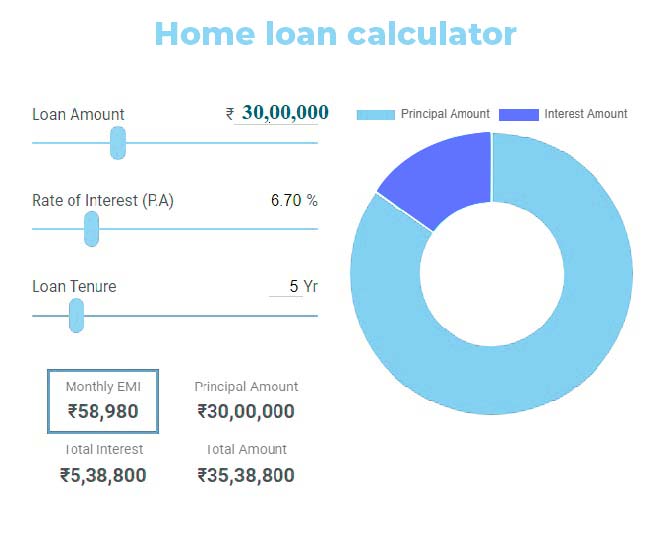
    Here are 5 easy tips to increase your home loan eligibility

    • Having a co-applicant helps the process

    When you include your spouse or an earning family member as a co-applicant, your credibility increases. You are more likely to pay off the home loan faster with a dual income and avail greater tax benefits.

    • Ensure you have a good credit score

    The credit score is a strong metric for calculating your home loan EMI. Having a higher credit score boosts your eligibility and helps give you a lower EMI. It’s no rocket science how you can do this. All you have to do is pay back your debts on time, consistently. You can’t trick the home loan eligibility calculator with a bad credit score and hope for a less home loan EMI. 

    • Be diligent about repaying any existing debts

    It is only natural for a household to have existing loans or debts. These debts can be existing loans like car loans or monthly installments like washing machine EMI.  

    This helps you not only manage your expenses but also gives a higher credibility. Repaying debts is also a subset of the BNPL mindset that helps you buy costly necessities like a car at an affordable EMI, like a car loan EMI. Remind yourself about the upcoming home loan EMI and that should help!

    • Pick a longer tenure to help you 

    It’s a common misconception that having a longer tenure will be like a longer burden to pay off the home loan. But it’s simple math that a longer tenure means lower interest for you and less risk for the lender. 

    It’s okay to choose a longer tenure. This gives you the assurance that the extra number of years help you count the home loan EMI as a recurring expense and not a burden. But that doesn’t mean you apply this on other payments like a car loan EMI and drag it forward. Pay off what you can, at the right time. 

    • Update about any additional income sources 

    Having an additional source of income adds a lot more weight to upgrade your home loan eligibility criteria, and gives you an affordable home loan EMI.

    It’s a given that any amount of additional flow of money like rental income increases your payment capacity and invariably gives you a better home loan. 

    These above-mentioned factors revolving around your finance management, are simple tips that will help you immensely when you make a big decision like buying a new home, or better, celebrating a beginning.

    But, given the chance to buy your dream home at a low home EMI, wouldn’t you grab the first deal you get? 

    Well, that’s the ‘buy now pay later’ (BNPL) mindset, that’s playing tricks on you.

    And, we want to ensure that you don’t fall prey to this BNPL mindset and choose the wrong loan. Essentially a wrong loan is not a bad choice, it’s not cost-effective considering the long number of years you have to pay off the home loan. 

    The ‘BNPL’ concept lets you shop, check out, choose a BNPL player, and then pay later. This allows the BNPL financier to pay on behalf of the customer. It’s as if the customer took a mini-loan for the purchase and can return the amount with zero interest, in most cases. This further affects their credit score too. 

    Quick online purchases let you add items to a cart at the click of a button or a tap on the screen. But, buying a house is a long-term investment that should not be made hastily. 

    We can attest that every rupee saved, is a rupee that can be invested, and grown. 

    Understanding these simple metrics helps you, as the borrower, get the most optimum home loan for you. Furthermore, these tips to improve your home loan eligibility criteria will make the drawn-out home loan EMI payments easier on the pocket. 

    Our Financial experts are both aware of the intricacies of the home loan process, and the current market conditions, to help you make the best choice for you. 

    Buying your own home is not a long-term investment but more importantly a memorable milestone. It’s often not a singular decision, but a collective call taken by a family who wants to own their dream home. 

    The home loan application process, with the home EMI calculation, and on top of that, the monthly payments (with interest) can be mentally taxing. We want your dream home to be more about your dream come true, than a home loan that feels like a burden. 

    With Vittae, you can understand, learn and make an informed decision. We enable you to grow financially and also help take tough financial decisions like these. Our experts will ensure that you don’t follow the herd mentality, but take a call that’s personalized to you, truly. You are only one step away from making the right decision for you, and your dream home.

  • Buying vs. Renting a House: Which is better for you?

    Buying vs. Renting a House: Which is better for you?

    Introduction 

    When it comes to finding a place to call home, a decision that often leaves us confused, is whether to Rent vs. Buy. 

    Both options have their pros and cons, and understanding the financial implications is crucial for your long-term financial well-being.

    In this blog, we’ll delve into the age-old debate of buying versus renting a house. We’ll explore various aspects such as financial planning, stability, flexibility, investment potential, and the benefits and drawbacks of each choice.

    By the end, you’ll have a better understanding of which option aligns with your personal circumstances and goals.

    Factors to consider when making the choice between Rent vs. Buy

    Financial Considerations

    Initial Costs

    When it comes to buying a house, the upfront costs can be substantial. Down payments, closing costs, and potential renovation expenses can significantly strain your finances. 

    On the other hand, you typically require a smaller initial investment when you rent. This investment consists mainly of a security deposit and the first month’s rent.

    Monthly Expenses

    Buying a house involves mortgage payments, property taxes, and insurance. Whereas renting usually requires only monthly rent payments.

    Depending on the housing market and interest rates, your monthly mortgage payment might be comparable to or even lower than the cost of renting. 


    However, renting provides more flexibility, as you can easily relocate if needed, without the financial burden of selling a property.

    Long-term Investment

    Buying a house is often seen as a long-term investment. Over time, the property may appreciate. This allows you to build equity. It also means you can gain a return on your investment when you sell. 

    On the other hand, renting does not provide the opportunity for equity growth. In this case, your monthly payments contribute to the landlord’s investment instead.

    Lifestyle Considerations

    Flexibility

    Renting provides a lot of flexibility. It is an attractive option for those who frequently move or have uncertain plans.

    Renters have the freedom to explore different neighborhoods or cities without the commitment of a long-term mortgage. 

    Buying a house, while offering stability, ties you down to a specific location, making it more challenging to relocate.

    Customization and Control

    An advantage when you buy a house is the ability to customize and modify your living space to suit your preferences.

    You have the freedom to paint the walls, renovate the kitchen, or make any other changes that enhance your comfort and satisfaction. 

    As a renter, you are often limited by the terms of your lease and must seek permission from the landlord for significant alterations.

    Considerations for Future Planning

    Stability and Security

    Buying a house provides a sense of stability and security. Once you have paid off your mortgage, you eliminate the monthly housing expense. This gives you more financial freedom in the long run.


    Buying a house also offers protection against rent increases. An own house provides a stable environment for raising a family or retiring.

    Maintenance Responsibilities

    Buying a house does not end as a one time activity! It requires maintenance and repair responsibilities. As a homeowner, you are responsible for the upkeep of your property, including repairs, landscaping, and maintenance costs.


    Renting, on the other hand, often places these responsibilities on the landlord, relieving you of the financial burden and time-consuming tasks associated with maintaining a property.

    Making an Informed Decision

    Assess Your Financial Situation

    Consider your financial health, including your income, savings, and credit score.

    Evaluate whether you can afford the upfront costs of buying a house and comfortably make monthly mortgage payments. 


    Compare these expenses with the cost of renting to determine what fits within your budget.

    Long-term Goals

    Consider your long-term goals and plans. Are you looking for stability and a place to settle down? Do you anticipate changes in your career or personal life that might require relocation? 

    Understanding your goals will help you determine which option aligns better with your plans.

    Personal Preferences

    Think about your lifestyle preferences and priorities. Are you someone who enjoys the freedom to customize and modify your living space? Do you prefer the convenience of having maintenance responsibilities taken care of by a landlord?

    Consider factors such as your desire for stability, control over your living environment, and the importance of building equity in a property.

    Seeking Professional Advice

    Consulting with a financial expert can provide valuable insights into your specific situation. You can also talk to a real estate professional. Their expertise can provide clarity and assist you in making an informed choice.

    They can help you with

    • Analyzing the local housing market
    • Assessing your financial readiness
    • Guide you through the decision-making process.

    Advantages of Buying a House

    Long-term Investment

    Buying a house allows you to build equity over time, potentially leading to a return on your investment when you sell.


    Stability and Security

    Owning a home provides stability and a sense of security. Since you’ll have control over your living space, you don’t have to deal with potential rent increases or evictions.


    Customization

    As a homeowner, you have the freedom to customize and modify your property to suit your preferences and lifestyle.


    Tax Benefits

    If you own a house, you can often benefit from tax deductions. Property tax deductions can help reduce overall tax liability.


    Potential Appreciation

    In a healthy real estate market, properties have the potential to appreciate in value, allowing homeowners to build wealth over time.


    Emotional Satisfaction

    Owning a home can provide a sense of pride, achievement, and a feeling of belonging to a community.

    Disadvantages of Buying a House


    Higher Initial Costs

    If you decide to buy a house, it requires a substantial upfront investment. Home buyers have to pay a huge down payment, and also manage closing costs. Along with potential renovation expenses, the decision to buy house has initial costs.


    Financial Responsibility

    Buying a house comes with additional financial responsibilities, such as mortgage payments, property taxes, insurance, and maintenance costs.


    Limited Flexibility

    Buying a house ties you down to a specific location, making it more challenging to relocate if needed, especially in a slow housing market.


    Market Risks

    Real estate markets can be unpredictable, and property values may fluctuate. There is always a risk that the value of your property could decrease.

    Maintenance and Repairs

    Homeowners are responsible for the upkeep of their property, including maintenance, repairs, and associated costs.


    Advantages of Renting a House

    Lower Initial Costs

    Renting typically requires a smaller upfront investment. This includes a security deposit and the first month’s rent.


    Flexibility

    Renting provides greater flexibility, allowing you to easily relocate or explore different neighborhoods without the financial burden of selling a property.

    Limited Financial Responsibility

    When you rent a house, you are not responsible for major maintenance and repair costs. These costs are generally the landlord’s responsibility.


    Lower Risk

    Renting eliminates the risks associated with property value fluctuations and potential mortgage debt, providing more financial security and peace of mind.

    Access to Amenities

    Rental properties often come with access to amenities such as gyms, pools, and maintenance services, which can enhance your lifestyle without the added expense.

    No Hassle of Home Loans

    If you choose to rent a house, you don’t have to worry about paying a home loan emi. There is no significant payment going out of your pockets as a huge home loan emi with interest. The only amount you have to pay for the house rent that is a relatively smaller amount.

    Disadvantages of Renting a House


    Lack of Equity

    Rent payments do not contribute to building equity or ownership in the property. Instead, they contribute to the landlord’s investment.

    Limited Control

    Renters have limited control over the property, as they must adhere to the terms of the lease and seek permission for significant alterations or customization.


    Rent Increases

    Rent prices are subject to potential increases, especially in high-demand areas or during lease renewals, which can impact your budget.

    Lack of Long-term Stability

    Renting provides less long-term stability compared to home ownership, as lease agreements typically have fixed terms, making it possible for landlords to choose not to renew.

    It’s important to note that the advantages and disadvantages listed above can vary depending on individual circumstances, local housing markets, and personal preferences. It’s crucial to consider these factors and evaluate what aligns best with your financial situation, lifestyle, and long-term goals

    In Conclusion 

    Deciding between buying and renting a house is a deeply personal choice, dependent on your financial situation, goals, and lifestyle preferences.

    While buying a house can provide stability, control, and long-term investment potential, renting offers flexibility, mobility, and short-term affordability.

    To make an informed decision, consider consulting with a financial advisor or mortgage professional. They can help you evaluate your financial situation, assess your long-term goals, and determine which option aligns best with your overall financial wellness.

    Remember, the key is to strike a balance between immediate affordability and long-term financial stability when deciding whether to buy or rent a house.

    Buying a house and renting a house each has its own set of advantages and disadvantages. Financial planning is essential in making the right choice for your financial wellness.

    Buying a house can provide stability, control, and potential long-term investment benefits. Whereas renting offers flexibility, mobility, and short-term affordability.

    Assess your financial situation, consider your lifestyle goals, and weigh the pros and cons of each option to determine the best fit for you.

    Ultimately, the decision should align with your financial plan and contribute to your overall financial well-being. Whether you choose to buy or rent, remember to make a decision that supports your long-term financial goals and enhances your financial wellness.