
Tag: RBI

  • Inflation, FDs and Repo Rates – The Connection

    Inflation, FDs and Repo Rates – The Connection

    Picture this: you’ve diligently stashed away your hard-earned money in a fixed deposit (FD) with the hope of securing your financial future. 

    But as time passes, the value of that money diminishes, almost unknowingly slipping through your fingers like grains of sand. This phenomenon is due to the notorious culprit known as inflation. It has an impact on the way we save and invest.

    In this blog, we go on a journey to understand the intricate relationship between Inflation, Fixed Deposit, and the Repo Rates within the Indian financial landscape.

    These concepts matter to everyone’s financial well-being, so let’s break them down in an easy-to-understand manner.

    1. The Foundation

    Inflation – Your money’s sneaky thief

    Inflation, in simple terms, is the relentless rise in the prices of goods and services over time. Picture your grandmother reminiscing about the days when a cup of tea cost a few paise; today, it might cost almost ₹20-30 or more. This gradual price increase means that your money’s purchasing power diminishes with each year.

    In India, we often gauge inflation through the Consumer Price Index (CPI), which measures the change in the cost of a basket of essential goods and services. When CPI indicates that inflation is 5%, it means that the cost of this basket has increased by 5% over the year.

    Fixed Deposits (FDs) – The Trusted Sanctuary

    Enter the Fixed Deposits, a financial instrument that has been a haven for Indian savers for generations. When you invest in a Fixed Deposit, you entrust your money to a bank or financial institution for a predetermined period. In return, they promise to pay you a fixed rate of interest.

    When you open a fixed deposit account, you are essentially lending money to the bank. Banks use these deposits as a source of funds. They pay you interest on your deposit, and in turn, they use the funds collected from FDs to provide loans to other customers.

    Fixed Deposits are cherished for their reliability. The principal amount remains secure, and you can rely on the interest income, making FDs a choice investment for those who prioritize safety over high-risk, high-reward options.

    Repo Rate – The Central Bank’s Magic Wand

    Introducing the maestro of this intricate financial symphony: the Repo Rate. In India, this rate is set by the Reserve Bank of India (RBI), our country’s central bank. The Repo Rate is the interest rate at which the RBI lends money to commercial banks for the short term, typically overnight. It’s a powerful tool that the RBI wields to control the money supply within our economy.

    When the RBI wants to stimulate economic activity, it may lower the Repo Rate. Conversely, if there is a hike in inflation, it might raise the Repo Rate.

    But why should you, the average Indian, care about these central bank actions? The answer lies in the impact these decisions have on your financial life.

    Understanding Inflation and Fixed Deposits

    Let’s unveil the connection between inflation and your beloved FDs:

    Imagine you invest ₹10,000 in an FD offering a 6% interest rate for a year. By the end of the year, you expect ₹10,600 (the principal plus interest). However, if the annual inflation rate is 4%, it implies that the cost of living has risen by that margin.

    When you withdraw your ₹10,600 after a year, its real value has dwindled due to inflation. In terms of purchasing power, it’s the same as having. ₹10,192. In real terms, you’ve gained ₹192.

    In essence, if your FD interest rate doesn’t outpace inflation, your savings effectively shrink over time. To shield your wealth from the erosive effects of inflation, choosing FDs with interest rates surpassing the prevailing inflation rate is important.

    High inflation reduces the real returns on fixed deposits. To counteract this and attract depositors, banks may offer higher FD interest rates. But this in turn, can also lead to higher borrowing costs for banks.

    Understanding Repo Rate and FD Interest Rates

    Let’s demystify the link between the Repo Rate and Fixed Deposit interest rates in India.

    Commercial banks borrow money from the RBI at the Repo Rate. If the RBI increases the Repo Rate, banks must shell out more interest on these borrowings. To compensate for these increased costs, banks may also hike the interest rates they offer on lending products. This means, that banks potentially increase interest rates on loans, making it tougher for people to borrow money from the bank. 

    This can have a cascading effect on the overall economy, affecting consumer spending and investments.

    Conversely, when the RBI lowers the Repo Rate, banks can access money at a cheaper rates. The lower repo rate encourages banks to lend more money to stimulate economic growth. While this explanation is somewhat simplified, the interplay between Repo Rates and FD interest rates can be influenced by various factors, including the broader economic conditions and competition among banks. 

    Practical Implications

    Strategies to Outsmart Inflation

    Now that we comprehend how inflation affects Fixed Deposits, let’s explore strategies to guard your hard-earned money:

    • Diversify Your Investments: Don’t put all your eggs in the FD basket. Explore alternative investment avenues like stocks, mutual funds, and bonds, which offer the potential for higher returns that can help you beat inflation.
    • Embrace Inflation-Linked Investments: Some Indian government bonds adjust their interest rates based on inflation. These can be your armor against the wealth-depleting impact of inflation.
    • Regularly Review Your Investments: Keep an eye on inflation rates and periodically reassess your investment portfolio. If your FD interest rates lag, consider shifting to higher-yield options. You can take the help of Financial Experts to get you on the right track.

    The Art of Timing

    The Repo Rate can significantly influence your financial decisions:

    • Loans: When the RBI reduces the Repo Rate, banks typically offer lower interest rates on loans. If you plan to take out a home loan or a personal loan, you can do so when the Repo Rates are low. This helps you save more, as the interest rates are considerably lower.
    • FD Timing: When contemplating an FD investment, stay vigilant about the RBI’s actions regarding the Repo Rate. If it’s expected to decrease, you might want to delay your FD investment to potentially benefit from higher FD interest rates soon.

    Conclusion

    Inflation, Fixed Deposits, and Repo Rates are like the hidden gears of India’s financial world, all working together. Inflation quietly makes your money worth less overtime, while the interest rates on your Fixed deposits depend on what the RBI decides with the Repo Rate.

    To navigate this financial maze, make sure your Fixed Deposits earn more than inflation eats away. And keeping an eye on the Repo Rate can help you plan your money moves smartly, whether you’re borrowing or investing in FDs.

    In the world of money, knowledge is your strongest ally. With this understanding of how inflation, FDs, and Repo Rates connect in India, you can walk the financial path confidently. Make wise choices to protect and grow your wealth; your financial future is in your hands, so let’s make it a prosperous one.
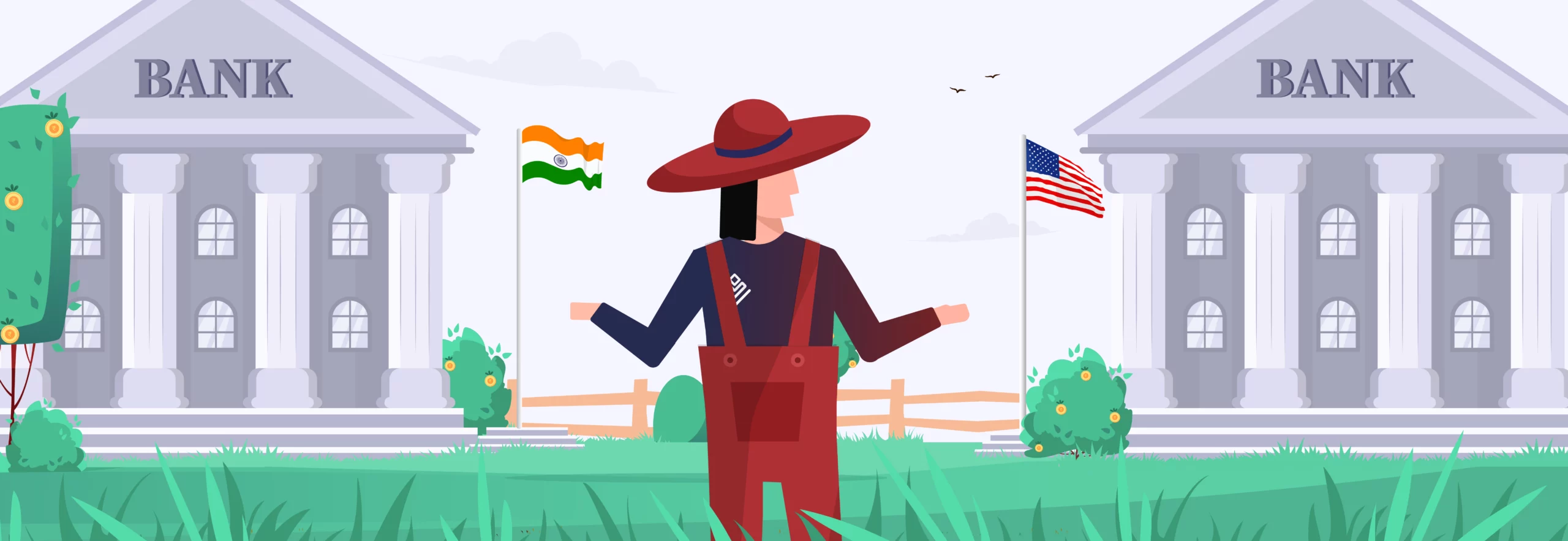
  • Banking Systems – Indian v/s American

    Banking Systems – Indian v/s American

    Introduction

    In today’s connected world, banks play a massive role in how money works in different countries. Think of them as the engines that drive a country’s money and economy. But these banks aren’t the same everywhere – take India and the United States, for example. Even though both want to help people and the economy by handling money, they do it in quite different ways.

    The banking sector plays a vital role in the economic development and stability of any country. With globalization and technological advancements, the banking systems of different nations have evolved differently. Each banking system reflects its own unique economic, cultural, and regulatory landscapes.

    In this blog, we will delve into and compare Indian and American banking systems, shedding light on their similarities, differences, strengths, and challenges.

    Historical Development

    The paths of Indian and American banking systems have developed differently.

    In India, modern banks started during British rule. At first, there were the Bank of Bengal (1806), Bank of Bombay (1840), and Bank of Madras (1843). They were known together as the Presidency Banks.

    In the United States, banking has a long history. Institutions like the Bank of North America (1781) and the First Bank of the United States (1791) played a big role in shaping the country’s money system.

    Regulatory Framework

    Both India and the United States have established regulatory bodies to oversee their banking systems. 

    Let’s understand the differences in the roles of the Reserve Bank of India (RBI) and the Federal Reserve System (the Fed). 

    Reserve Bank of India (RBI)

    The RBI is India’s central bank and plays a crucial role in regulating and supervising the country’s banking sector. Here’s how it operates:

    • Monetary Policy: The Reserve Bank of India (RBI) plays a crucial role in shaping and executing monetary policy. This involves regulating the flow of money, managing interest rates, and ensuring access to credit within the economy. The RBI undertakes these measures to effectively handle inflation, foster economic growth, and uphold overall stability.
    • Currency Issuance: The RBI is responsible for issuing and managing the Indian currency (rupee). It makes sure there’s enough money in the form of notes and coins for people to use
    • Banking Regulation: The RBI makes rules for banks and financial companies in India. It gives permission for new banks to start, watches how they work, and fixes things if they’re not doing well financially, to keep them strong and stable.
    • Financial Stability: The RBI monitors the financial system to identify and address risks that could destabilize the economy. It works to prevent banking crises and maintain confidence in the financial sector.

    Federal Reserve System (Fed)

    The Federal Reserve, often referred to as the Fed, is the central banking system of the United States. Its functions are similar to those of the RBI:

    • Monetary Policy: The Fed plays a critical role in shaping the U.S. economy by influencing monetary policy. It sets interest rates and uses various tools to control the money supply, aiming to keep inflation in check and promote sustainable economic growth.
    • Currency Issuance: Just like the RBI, the Fed is responsible for issuing and regulating the U.S. currency. It ensures that there’s enough money in circulation to facilitate economic transactions.
    • Bank Supervision and Regulation: The Fed keeps an eye on banks to make sure they are secure and stable. It checks them regularly, makes sure they follow the rules, and fixes things if there’s a problem to stop any financial troubles.
    • Financial Stability: Similar to the RBI, the Fed also monitors the overall stability of the U.S. financial system. It identifies systemic risks, works to prevent financial crises, and responds swiftly if problems arise.

    Both the RBI and the Fed have the same goal: to keep things steady and help their economies grow in a healthy way. But they’re different because their economies are of different sizes and at different stages of development.

    To reach their goal, they have different ways and plans. They use various tools and strategies to achieve these goals, considering factors such as inflation, unemployment, economic growth, and financial sector health.

    Popular Differences b/w banking in India & America

    Online Banking and Apps

    • India: In India, the Unified Payments Interface (UPI) has revolutionized digital payments. UPI apps like Google Pay, PhonePe, and Paytm allow users to instantly transfer money, pay bills, and even make purchases at local shops using QR codes.
    • America: While online banking is prevalent in the US, the use of mobile apps for payments and transfers isn’t as integrated as UPI apps in India. Digital wallets like Apple Pay and Google Pay exist, but their usage might not be as widespread for everyday transactions. They have to use third-party apps like Venmo to make bank transactions. 

    Cheque Usage

    • India: Cheques are not commonly used in India for everyday transactions. The focus has shifted more towards digital payments and mobile wallets.
    • America: Cheques are still quite prevalent in the US, especially for bill payments, rent, and other transactions. Many people and businesses use checks as a reliable payment method.

    Credit and Debit Cards

    • India: Credit cards and debit cards have become widely accepted in India, with a surge in card usage for online shopping, dining, and other transactions.
    • America: Credit and debit cards have been a standard payment method in the US for many years, and their usage is deeply ingrained in daily life.

    Branch Visits

    • India: In India, visiting a physical bank branch is still relatively common, especially for tasks like opening accounts or complex transactions.
    • America: Many banking activities in the US can be done online or through ATMs, reducing the need for frequent visits to physical branches.

    Account Types and Charges

    • India: Many Indian banks offer basic savings accounts with minimal charges to cater to a larger population. There are also specialized accounts for various demographics, like student accounts and senior citizen accounts.
    • America: Account types and fees in the US can vary widely between banks. While some banks offer fee-free accounts, others might have stricter fee structures or minimum balance requirements.

    Overdraft Protection

    • India: Overdraft protection is less common in India, and overdrawing an account can lead to penalties.
    • America: Many US banks offer overdraft protection, allowing transactions that exceed the available balance, often with associated fees.

    Interest Rates

    • India: Interest rates on savings accounts tend to be higher in India compared to the US.
    • America: Interest rates on savings accounts in the US are generally lower, but there are options for higher-yield savings accounts.

    These differences highlight different banking landscapes and financial behaviors between India and America.

    It’s also important to note that the banking sector is constantly evolving, and these differences might change over time.  

    Banking Structure

    The banking structures in India and the United States are fundamentally different. The American banking system is dominated by a mix of national banks, state-chartered banks, and credit unions. 

    Additionally, the U.S. has a significant presence of international banks due to its status as a global financial hub. 

    In India, the banking sector is categorized into scheduled commercial banks, cooperative banks, and regional rural banks. Public sector banks historically played a central role, but recent years have witnessed an influx of private sector banks, leading to increased competition and innovation.

    Services and Accessibility

    Both banking systems now work online and through phone apps, making things easier. But, there’s a difference in how easy it is to use these services in each country.

    • Banking Everywhere in the U.S.: In the U.S., you can find banks and ATMs all over, even in small towns. It’s easy for people in cities and rural places to get banking help.
    • Banking Challenges in India: In India, it’s a bit harder. Not everyone can easily access banking services, especially in faraway rural areas. The government is trying to change this with plans like Jan Dhan Yojana, which want to help more people have access to banking services.

    Technological Advancements

    The American banking system is known for quickly embracing new technologies. Things like mobile banking, online payments, and digital wallets are now a big part of how money moves in the U.S. They’re also using fancy things like artificial intelligence, data analysis, and blockchain technology.

    India is catching up with technology, but it’s not all easy. Some things like good internet and reliable systems are a challenge. However, they did something amazing called the Unified Payments Interface (UPI). This changed how people use tech to pay in India and made it much better.

    Loan and Credit Culture

    In the U.S., loans and credit work differently. They have a system that gives people and businesses credit scores. This helps eligible folks get loans easily. But in 2008, with people not being able to pay their home loans, there was a mortgage crisis.

    But in India, things are a bit different. We’ve always been careful about giving out loans. We usually need collateral to make sure people pay back the loan. Now, small money lending groups in India are helping out a lot. They’re giving credit to people who don’t usually get it from regular banks.

    Risk Management and Regulation

    The global financial crisis in 2008 led to important rule changes in many countries. In the U.S., they made the Dodd-Frank Wall Street Reform and Consumer Protection Act. This was done to make the financial system stronger and to protect people.

    In India, the Reserve Bank introduced something called Basel III norms. This made banks have more money saved and manage risks better. While both countries tried to make their rules stronger, they’re still figuring out how to handle risks that could affect big banks that are connected to many things.

    Customer Protection and Financial Literacy

    Customer protection and financial literacy are important aspects of any banking system. In the United States, regulatory bodies enforce consumer protection laws, and financial literacy initiatives are widespread. 

    India has also taken steps to enhance customer protection, with RBI implementing guidelines to address issues like unauthorized transactions and electronic fraud. Financial literacy programs like Pradhan Mantri Jan Dhan Yojana have aimed to improve financial awareness among

    In Conclusion

    The banking systems in India and America have taken shape under the influence of their distinctive historical, economic, and regulatory backgrounds. These differences offer us glimpses into the potential trajectories of banking evolution.

    In the area of technological advancement, the American banking system has set global benchmarks. Meanwhile, India’s banking system is engaged in a dynamic journey, striving to overcome hurdles related to both financial inclusion and the integration of technology.

    Despite their unique paths, both systems are united by shared aspirations of ensuring stability, fostering growth, and safeguarding customer interests.

    As they continue to progress, it’s highly likely that they will draw inspiration from each other’s successes, all while collaboratively addressing the challenges they individually face.