Tag: investing

  • Understanding the Power of Compounding

    Understanding the Power of Compounding

    In the world of finance, few concepts are as magical and impactful as the power of compounding. 

    Often described as the “eighth wonder of the world,” compounding has the potential to turn modest investments into significant wealth over time.

    In this blog, we’ll explore what compounding is, how it differs from simple interest, and most importantly, how you can harness its power to make your money grow.

    The Magic of Compounding Explained

    At its core, compounding is the process of earning interest not just on your initial investment (or principal), but also on the accumulated interest that your investment has generated over time.

    Think of compounding like planting a money tree. When you invest money, it’s like planting a small seed. Over time, that seed grows into a tree. It not only produces fruit but also sprouts new branches from the fruit it makes.

    In the first year, the tree grows a few pieces of fruit. The next year, these fruits not only get bigger but also lead to new branches that produce even more fruit. As years go by, the tree’s branches increase, and each one bears more fruit.

    This is how compounding works. Your starting money is the seed. The interest you earn is the fruit, and the accumulated interest is like new branches. The longer you let the tree (or your investment) grow, the more branches (interest on interest) it develops, resulting in a plentiful harvest of wealth over time.

    This is why experts say it’s super important to start investing as early as you can. The more time your money has to grow, the more it can multiply.

    Let’s understand this with an example

    Imagine you put ₹10,000 in a savings account that gives you 5% extra money every year.

    After the first year, you’ll get ₹500 extra, making your total ₹10,500. But in the second year, you won’t only get 5% on the initial ₹10,000; you’ll also get 5% on the new total of ₹10,500.

    So, in the second year, you’ll earn ₹525 extra, making your total ₹11,025.

    You’ll notice that the extra money you earn in the second year is a bit more than what you earned in the first year. This pattern keeps going as long as you keep your money in the account.

    Differentiating Compounding from Simple Interest

    While both compounding and simple interest are ways to calculate interest on an investment, they have significantly different outcomes.

    Simple Interest

    In the case of simple interest, you only earn interest on the initial principal amount. Using the earlier example of ₹10,000 at 5% annual interest, you’d earn ₹500 each year, regardless of how many years have passed.

    In simple interest, the interest remains constant, and you don’t earn interest on the interest you’ve already earned.

    Compounding

    Albert Einstein said, “Compound interest is the eighth wonder of the world. He who understands it, earns it … he who doesn’t … pays it.”

    Compounding, as mentioned earlier, involves earning interest on both the principal and the previously earned interest. Over time, this leads to exponential growth in your investment.

    Using the same example, in the second year, you earned ₹525, which is more than the ₹500 earned in the first year through simple interest. This difference becomes even more pronounced over extended periods.

    Putting Compounding to Work

    Now that we understand the concept of compounding, let’s delve into how to make it work for you.

    Start Early

    The most crucial factor in harnessing the power of compounding is time. The earlier you start investing, the longer your money has to grow. Even small amounts invested consistently can turn into significant sums over time.

    Starting early also gives you the flexibility to weather market fluctuations and take advantage of potential long-term growth.

    Choose the Right Investment Vehicles

    Not all investments offer the same compounding benefits. Investments that generate compound interest, such as savings accounts, fixed deposits, and certain types of bonds, are excellent options for compounding.

    Additionally, consider investing in stocks or mutual funds, which have historically provided higher returns than traditional savings avenues.

    Reinvest Your Earnings

    When you receive interest or dividends from your investments, consider reinvesting them. This allows your earnings to contribute to the compounding process, accelerating your growth.

    Avoid the temptation to withdraw or shift investments frequently. Let your money stay invested to maximize the compounding effect.

    Be Patient and Consistent

    Compounding is a gradual process that requires patience and consistency. It’s not about making quick gains, but about allowing your money to work for you over an extended period. 

    Avoid the temptation to withdraw or shift investments frequently. Let your money stay invested to maximize the compounding effect.

    Increase Your Investments Over Time

    As you earn more money, try to put more into your investments. Even a little extra can make a big difference in the end because of how compounding works.

    This is sometimes called “systematic investing” or “dollar-cost averaging.” It means putting in the same amount of money regularly. When prices are low, you get more shares or units, and when prices are high, you get fewer. This can help you lower the average cost of what you own over time.

    Take Advantage of Tax-Deferred Accounts

    In India, certain investment options like Public Provident Fund (PPF) and Employees’ Provident Fund (EPF) offer tax benefits along with compounding. These accounts allow your money to grow without being taxed until withdrawal. This tax-deferral can significantly boost your savings by allowing more of your money to compound over the years.

    Realizing the Power of Compounding: A Hypothetical Scenario

    To truly appreciate the potential of compounding, let’s consider a hypothetical scenario involving two individuals:

    Aanya and Bhuvan.

    Aanya starts investing ₹5,000 annually at the age of 25 in an investment vehicle that offers an average annual return of 10%. She continues this practice diligently until she turns 60. By the time she retires, her investments, due to the power of compounding, have grown to a staggering ₹34,37,515.

    On the other hand, Bhuvan delays his investment journey and starts investing the same amount, ₹5,000 annually, but only begins at the age of 40. He also chooses an investment with a 10% average annual return and continues investing until he turns 60. Despite investing for the same number of years as Aanya, Bhuvan’s investments amount to only ₹9,32,881.

    This example vividly demonstrates that even though Aanya invested for 15 more years than Bhuvan, her early start gave her investments significantly more time to compound, resulting in a substantially larger final amount.

    In Conclusion

    The power of compounding is a financial superpower that has the potential to transform your financial trajectory. It’s not about how much money you start with, rather it’s about starting early, being consistent, and allowing time to work its magic.

    With the many investment options and tax-advantaged accounts, there are ample opportunities to make compounding work in your favor.

    Whether you’re a young professional just starting your career or someone approaching retirement, understanding and harnessing the power of compounding can set you on a path to financial freedom and security.

    In the end, remember that compounding is not a get-rich-quick scheme. It’s a slow and steady process that rewards patience and discipline.

    So, start today, stay committed, and watch your money grow exponentially over the years, ensuring a brighter and more prosperous financial future.


  • What is a Public Provident Fund?

    What is a Public Provident Fund?

    In today’s fast-paced world, achieving financial security is a top priority for individuals seeking stability and peace of mind. 

    Amidst a sea of investment options, the Public Provident Fund (PPF) stands tall as a trusted and time-tested savings scheme. 

    We’re positive we have all been told by our parents, as soon as we got our first salaries, to open a PPF account. But, have you ever wondered why it is important?

    Offering a winning combination of attractive features and tax benefits, the PPF has become a beacon of financial stability for millions. 

    Whether you’re a salaried professional, a self-employed entrepreneur, or an investor, understanding the intricacies of the PPF can set you on the right path toward building a secure future. 

    In this comprehensive blog, we’ll take a deep dive into the fascinating world of the PPF, exploring its key features, benefits, and the process of opening and withdrawing from this popular investment avenue.

    What is PPF?

    The Public Provident Fund scheme (PPF) is a government-backed savings scheme designed to encourage individuals to invest a lump sum amount for the long term.

    Think of it as a special bank account that you can open with a bank or post office. When you open a PPF account, you can deposit money into it regularly, like putting money in a piggy bank. The good thing is that the government will pay you some interest on the money you put in your PPF account. It’s like a reward for saving!

    The money you deposit in your PPF account stays there for a fixed period, which is usually 15 years. During this time, you can’t withdraw all the money. However, you can take out a part of the money after a few years if you need it.

    For somebody wondering whether to invest, the PPF account is considered a safe investment because it is backed by the government.

    It offers an attractive interest rate, tax benefits, and government guarantee security, making it an ideal choice for individuals seeking stable returns and financial security.

    Features of a PPF

    Tenure

    The Public provident fund has a fixed tenure of 15 years, providing a long-term investment horizon that allows for wealth accumulation.

    However, investors have the option to extend the tenure in blocks of 5 years beyond the initial 15-year period, offering even more flexibility in planning for the future.

    Principal Amount

    You can invest a minimum of Rs. 500 and a maximum of Rs. 1.5 lakh per financial year towards their PPF account.

    This wide range of contribution options allows individuals to tailor their investments according to their financial capabilities and goals.

    Deposit Frequency

    Flexibility is a hallmark of the PPF. Deposits into a PPF account can be made either in a lump sum or in a maximum of 12 installments within a financial year.

    This versatile deposit frequency accommodates varying cash flow requirements and allows individuals to contribute at their own pace.

    Mode of Deposit

    Convenience is key when it comes to investing in a PPF. Deposits can be made through various modes, including cash, cheque, demand draft, or online transfer.

    This wide range of options ensures that individuals can choose the method that best suits their preferences and circumstances, making the investment process hassle-free.

    Risk

    The PPF offers individuals a low-risk investment avenue. As a government-backed scheme, the investment is considered safe, providing peace of mind and security for hard-earned money. This stability makes the PPF an attractive option for risk-averse investors looking to grow their wealth steadily.

    Nomination

    In the event of the investor’s demise, a PPF account allows for the nomination of a person who will receive the accumulated corpus. This important feature ensures that loved ones can benefit from the investment, providing financial support even in the investor’s absence. It offers a sense of security and protection for the investor’s family.

    Loan Against Investment

    A unique advantage of a PPF account is the option to avail of loans against the invested amount. After completing the third financial year, individuals can take a loan of up to 25% of the balance in their PPF account.

    This facility provides a safety net in times of financial need, allowing individuals to tap into their investment without liquidating it completely.F

    How to Open a PPF Account

    Opening a PPF account is a straightforward process that offers convenience and accessibility.

    Individuals can visit a designated bank or post office, fill out the necessary application form, submit the required documents, and start their PPF with the successful payment of the initial deposit.

    Alternatively, the account can also be opened online through selected bank websites, further streamlining the process and making it more user-friendly. It’s become easier to open a PPF account, with easy access to mobile banking app.

    The process to open a PPF account

    The process to open a Public Provident Fund account is pretty straightforward.

    The foremost thing to open a PPF account is a savings account. Another critical point is that this savings account must have mobile and banking facilities. 

    If it is not, ensure to activate it before you open a PPF. 

    • Log in to your Internet banking account.
    • Look for the option to open a PPF account and click on it.
    • Choose whether you want to open the account for yourself or a minor.
    • Fill out the application form with all the necessary information.
    • Pay a minimum of Rs 500 or more as an initial investment.
    • If you want, you can set up an automatic deduction from your bank account for future investments in the PPF account.
    • Submit your application and wait for an OTP (one-time password) for verification.
    • Enter the OTP to confirm your identity.
    • Once you’ve completed these steps, your PPF account will be created. You’ll receive a confirmation message on your mobile and email.
    • Remember, these steps may vary slightly depending on the specific bank or post office you’re dealing with, but the general process remains the same.

    Tax Benefits of a PPF

    When you’re filing your taxes, we’re sure you’re wondering how to cut down on taxes.

    Investing in a PPF account brings with it a host of tax benefits. Contributions made towards the PPF are eligible for tax deductions under Section 80C of the Income Tax Act, with a maximum limit of Rs. 1.5 lakh per financial year.

    Furthermore, the interest earned and the amount received on maturity are both tax-free, making the PPF a highly efficient tax-saving instrument.

    Let’s delve into how PPF offers tax advantages and how you can avail of them.

    Tax Exemption on Contributions

    Contributions made to the PPF account are eligible for tax deductions under Section 80C of the Income Tax Act. The maximum limit for claiming this deduction is Rs. 1.5 lakh per financial year.

    You can contribute any amount between the minimum limit of Rs. 500 and the maximum limit of Rs. 1.5 lakh in a single financial year. The contribution can be made in lump sums or a maximum of 12 installments.

    Tax-Free Interest

    The interest earned on the PPF account is completely tax-free. The interest rate on PPF is set by the government and is usually higher than other fixed-income investment options.

    The interest is compounded annually and credited to the PPF account at the end of each financial year.

    Tax Exempt Maturity

    The maturity amount received from a PPF account is entirely tax-free. The accumulated corpus, including the principal and interest, can be withdrawn without any tax liability.

    The maturity period for a PPF account is 15 years. However, it can be extended indefinitely in blocks of 5 years, providing an opportunity for long-term tax-free growth.

    Nominal Tax Implications for Premature Withdrawal

    In certain exceptional cases, premature withdrawals can be made from the PPF account before the completion of the maturity period. However, these withdrawals are subject to certain conditions and come with tax implications.

    If withdrawals are made before the completion of 5 years, the entire amount of the withdrawal will be taxable. If the withdrawals are made after 5 years, they will be tax-free.

    To avail of the tax benefits offered by the PPF scheme, follow these steps

    Open a PPF account

    Visit a designated bank or post office and submit the necessary documents (KYC, application form, etc.) to open a PPF account.

    Make regular contributions

    Contribute to your Public provident fund scheme regularly, within the prescribed limits, to maximize the tax benefits.

    Claim tax deduction

    While filing your income tax return, mention the Public Provident Fund contributions under Section 80C to claim the tax deduction.

    Maintain the account for the required period

    Keep the PPF account active for the full maturity period to enjoy tax-free interest and tax-exempt maturity.

    Consider extension

    If you wish to continue investing in PPF beyond the initial 15-year period, apply for an extension before the maturity date.

    It’s important to note that PPF has a lock-in period of 15 years and premature withdrawals are permitted only in exceptional circumstances.

    Therefore, PPF is most suitable for individuals with a long-term investment horizon and the goal of wealth accumulation along with tax benefits.

    What are the Benefits of Public Provident Fund? 

    We’ve seen what the tax benefits of PPF are, but let’s look at what other benefits PPF has to offer.

    Attractive Returns

    As a PPF account holder, you can avail tax-free returns compared to other fixed-income instruments. 

    The interest rate on PPF is set by the government. It is usually higher than that offered by banks on regular savings accounts or fixed deposits. 

    These rates are reviewed periodically and are known to be relatively stable, providing investors with a predictable source of income. 

    Over the long term, the compounding effect of the interest can significantly boost your savings, helping you achieve your financial goals.

    Long-Term Investment and Flexibility

    The PPF has a lock-in period of 15 years, which encourages disciplined long-term savings. 

    This extended duration allows your investment to grow steadily over time, maximizing the benefits of compounding. 

    However, it’s important to note that you can do partial withdrawals from the PPF account. This can be done after the sixth year’s completion. Being able to withdraw partially provides flexibility in case of financial emergencies or unforeseen circumstances. 

    This feature ensures that you have access to your funds when you need them, without jeopardizing the overall stability of your investment.

    Safety and Security

    The PPF is backed by the government, making it one of the safest investment options available. 

    Unlike market-linked investments that are subject to market volatility, the PPF guarantees the safety of your capital. 

    This factor is particularly attractive to investors who have a low-risk appetite. Those who prioritize capital preservation over potentially higher returns.

    Moreover, the PPF is not subject to attachment by any court order, ensuring that your investment remains secure even in times of financial distress.

    Retirement Planning and Wealth Creation

    The PPF serves as an excellent tool for retirement planning and long-term wealth creation. Just as life insurance is a safety net for your family, the public provident fund is a safety net for your retirement.

    By consistently contributing to your PPF account over the years, you can build a substantial corpus that can support you during your golden years. 

    The compounding effect, coupled with the tax benefits, ensures that your savings grow at an increased pace. 

    With a well-managed PPF account, you can enjoy a comfortable retirement and fulfill your aspirations without financial stress.

    Public Provident Fund Withdrawal

    Another common query often asked is about PPF withdrawal.

    While the PPF account has a lock-in period of 15 years, it does provide flexibility in terms of partial withdrawals. Individuals can make partial withdrawals from the seventh year on wards, subject to certain conditions.

    They can withdraw up to 50% of the balance at the end of the fourth year immediately preceding the year of withdrawal, offering liquidity when needed while still maintaining long-term financial goals.

    Conclusion

    The Public Provident Fund (PPF) serves as a secure and reliable avenue for individuals to save for the long term, providing attractive returns and tax benefits.

    The PPF stands as a strong instrument of financial security and long-term wealth creation. Its unique blend of safety, tax benefits, and attractive interest rates make it an ideal investment avenue for both salaried employees and self-employed individuals.

    By understanding the fundamentals of PPF, we have explored its key features and benefits. We discovered that the PPF offers a disciplined savings approach, encouraging individuals to contribute regularly and build a substantial corpus over time. 

    The tax benefits associated with PPF, including tax-free interest earnings and tax deductions under Section 80C of the Income Tax Act, further enhance its appeal.

    The long-term nature of the PPF makes it an excellent tool for retirement planning, ensuring a steady income stream even after one’s working years. 

    The fixed and competitive interest rates, announced by the government annually, provide stability and protection against market fluctuations, safeguarding the investor’s capital.

    Additionally, the PPF serves as a safety net during financial emergencies. This liquidity feature, coupled with the extended tenure of the scheme, is definitely helpful in achieving long-term goals. Long-term goals like higher education, expenses, purchasing a house, or starting a business

    By understanding the process of opening and withdrawing from a PPF account, you can make informed decisions and embark on a journey toward a brighter and more secure future. So, start exploring the benefits of a PPF account today, and let the PPF become your trusted partner in achieving financial security.

  • What are ETFs and How Do They Work?

    What are ETFs and How Do They Work?

    In the evolving landscape of investment opportunities, Exchange-Traded Funds (ETFs) have gained significant popularity among beginner and experienced investors. 

    ETFs offer a versatile and accessible way to diversify one’s portfolio while also providing exposure to various asset classes. 

    In this blog, we will delve into the world of ETFs, exploring what they are, how they work, their tax implications, and their benefits and potential risks.

    What are ETFs?

    ETFs are a special way to invest money that combines the goodness of mutual funds and equity. 

    They’re like a mix of mutual funds (spread your money out) and stocks easy to buy and sell).

    Imagine an ETF as a group of investments, like different types of money-making tools, such as owning a part of a company (stock) or lending money to a company (bond). When you put your money into an ETF, you’re actually investing in a bunch of these tools at the same time. 

    ETFs usually charge you less money for this compared to other similar ways of investing. Also, it’s easy to turn your ETF investments back into money whenever you want because they’re traded on the market.

    However, not all ETFs are perfect for everyone. You need to think about some important stuff before choosing one, like:

    1. How much they charge you to manage your money
    2. How easy it is to buy or sell them
    3. How well they fit with your other investments
    4. How good the investments they include are
      So, consider these things before jumping in!

    Unlike traditional mutual funds, which are typically priced at the end of each trading day, ETFs are traded throughout the day at market prices. 

    This real-time trading feature offers investors greater flexibility in executing buy and sell orders, allowing them to react promptly to market movements.

    Types of ETFs

    ETFs come in various types, catering to different investment preferences and strategies. Here are some common types of Exchange-Traded Funds:

    Equity ETFs

    These are like baskets of stocks. They let you own a small piece of many different companies. For example, if you buy an equity ETF, you’re getting a little bit of various Indian companies all at once. This helps spread out the risk.

    Gold ETFs

    These are a way to invest in gold without needing to buy physical gold. When you buy a gold ETF, you’re actually investing in the price of gold. It’s a convenient way to benefit from gold’s value changes.

    Sector ETFs

    Imagine the economy is like a big puzzle, and different sectors are like different pieces of that puzzle. Sector ETFs let you focus on specific parts of the economy, like technology, banking, or energy. You’re investing in companies that belong to a particular sector.

    Index ETFs

    Think of this as a copycat investment. Index ETFs track a particular index, which is like a list of the best-performing companies or assets. When you buy an index ETF, you’re copying the performance of that index.

    Debt ETFs

    These are like investing in loans. Debt ETFs invest in bonds, which are like IOUs issued by the government or companies. When you buy a debt ETF, you’re lending money, and they pay you back with interest over time.

    International ETFs

    Just like you can travel abroad, your money can travel too! International ETFs let you invest in companies from other countries. So, you can be a part-owner of foreign businesses.

    Commodity ETFs

    These are like investing in things we use every day, like oil, metals, or agricultural products. When you buy a commodity ETF, you’re investing in the prices of these everyday goods.

    Leveraged and Inverse ETFs

    These are a bit tricky. Leverage means making your investment more powerful, like using a magnifying glass. Inverse means doing the opposite, like looking in a mirror. Leveraged ETFs try to double or triple the gains or losses of an index. Inverse ETFs aim to make money when the index goes down. These can be riskier, so be careful.

    Multi-Asset ETFs

    Just like a buffet offers different types of food, multi-asset ETFs give you a mix of different investments in one package. It’s like getting stocks, bonds, and maybe other things all in one place.

    Remember, each type of ETF has its own pros and cons, and they suit different goals and situations. It’s like choosing different flavors of ice cream – some might be more suitable for you depending on what you like and what you’re looking to achieve with your investments. Always take time to understand what you’re investing in before you dive in!

    How Do ETFs Work?

    ETFs operate based on a unique structure that allows them to offer the benefits of both stocks and mutual funds. Let’s break down the mechanics of how ETFs work.

    Creation and Redemption

    To create or redeem ETF shares, you need an authorized participant, who is typically a large financial institution. 

    When you wish to create an ETF, the authorized participant will put together a bunch of securities that the ETF will be based on (to match a certain index). 

    The authorized participant then exchanges these securities with the ETF provider for a block of ETF shares. 

    If you want to redeem the ETF shares, they’ll exchange the shares back with the securities

    Arbitrage

    The creation and redemption mechanism of ETFs helps keep their market prices in line with their Net Asset Value (NAV), which represents the value of the underlying assets. 

    If the ETF’s market price deviates from its NAV, arbitrage opportunities arise. Institutional investors, including authorized participants, can exploit these opportunities by buying undervalued ETF shares or selling overvalued ones until the prices align.

    Market Trading

    Once created, ETF shares trade on stock exchanges just like individual stocks. Investors can buy and sell ETF shares throughout the trading day at prevailing market prices. This flexibility allows investors to react to market movements promptly.

    Transparency

    ETFs provide transparency in terms of their holdings. Most ETFs disclose their holdings daily, enabling investors to know exactly what assets they are invested in. This transparency is beneficial for investors seeking to understand the composition of their portfolios.

    As with any investment vehicle, ETFs come with their own set of advantages and disadvantages. Let’s explore these:

    Benefits of ETFs

    • Diversification: ETFs offer instant diversification by providing exposure to a wide range of securities within a single investment.
    • Liquidity: ETFs are traded on stock exchanges throughout the trading day, offering high liquidity and the ability to enter or exit positions quickly.
    • Lower Costs: ETFs generally have lower expense ratios compared to traditional mutual funds, which can lead to lower overall costs for investors.
    • Transparency: ETFs disclose their holdings daily, allowing investors to know exactly what assets they own.
    • Tax Efficiency: The unique structure of ETFs contributes to their tax efficiency, potentially reducing the tax burden for investors.
    • Flexibility: Investors can use ETFs for various investment strategies, such as long-term investing, trading, or hedging.

    Potential Risks of ETFs

    • Trading Costs: Though ETFs have lower expense ratios, investors may incur trading costs. Costs such as brokerage commissions when buying and selling ETF shares are common trading costs.
    • Tracking Error: Due to factors like expenses and market volatility, an ETF’s performance may slightly deviate from the performance of its underlying index.
    • Complexity: Some ETFs, particularly leveraged and inverse ETFs, can be complex and carry higher risks. Investors need to thoroughly understand these products before investing in them.
    • Market Fluctuations: Like all investments, ETF prices are subject to market fluctuations, which can lead to potential losses for investors.
    • Limited Control: While ETFs provide exposure to a diversified portfolio, investors have limited control over the selection of individual securities within the ETF.
    • Tax Implications: While ETFs offer tax advantages, investors should still be aware of the potential tax consequences, especially if they are in higher tax brackets.

    In Conclusion

    Exchange-Traded Funds (ETFs) have transformed the investment landscape by offering an accessible and efficient way for investors to gain exposure to various asset classes and market segments.

    These investment vehicles combine the benefits of stocks and mutual funds, providing diversification, flexibility, and potential tax advantages. 

    ETFs provide options for both beginners entering the market and experienced investors adjusting their portfolios. They offer a range of options to match your investment goals and risk tolerance.

    As with any investment, it’s essential to conduct thorough research before you invest in ETFs. Remember to understand the specific ETF’s objectives and holdings, and consider consulting with a financial expert like Vittae before making investment decisions.

    By doing so, you can harness the power of ETFs to enhance your investment strategy and work toward your financial goals.

  • Books & Movies for Investment Beginners

    Books & Movies for Investment Beginners

    Introduction

    Investing in today’s fast-paced world can seem overwhelming, but fear not!

    We’ve curated a list of must-read books that not only provide timeless wisdom but also align with the latest investing trends.

    There’s this old saying that books are man’s best friend. If you are an investment beginner or an experienced one, you can pick up valuable knowledge from these books.

    From the classics to the contemporary, these books will empower you to make good financial decisions.

    The Intelligent Investor by Benjamin Graham

    Investing Never Goes Out of Style

    Benjamin Graham’s “The Intelligent Investor” is like a fashion staple that never goes out of style. Known as the “Bible of Investing,” this timeless gem offers tried-and-true strategies that can withstand any market trend.

    Graham, the godfather of value investing, teaches us to approach investing with the mindset of a smart business owner, keeping our eyes on the long-term prize.

    In this influential book, Graham introduces the concept of “Mr. Market,” an allegorical figure representing the market’s irrational behavior. 

    He urges investors to view market fluctuations as opportunities rather than reasons to panic. By focusing on the intrinsic value of a company and seeking a margin of safety, investors can navigate through the ever-changing investment landscape with confidence and poise.

    Graham’s most famous protégé, Warren Buffett, credits much of his investment success to the teachings found in “The Intelligent Investor.” Like a timeless little black dress, this book remains an essential piece in every investor’s wardrobe.

    The Little Book of Common Sense Investing by John C. Bogle

    Embrace the Simplicity Revolution

    In a world where simplicity is the new black, John C. Bogle’s “The Little Book of Common Sense Investing” is a breath of fresh air.

    Bogle’s revolutionary approach to investing revolves around low-cost index funds that require minimal effort but deliver maximum returns. Embrace the simplicity revolution, and let the market work its magic while you focus on what truly matters.

    Bogle, the founder of Vanguard Group, was a pioneer in introducing index funds to individual investors. He debunked the myth that frequent trading and active management could consistently beat the market. Instead, he advocated for a passive, buy-and-hold strategy that tracks the overall market’s performance.

    The key to Bogle’s approach is minimizing fees, as they can eat into investment returns over time. By investing in broad-based index funds, you gain exposure to a diverse range of companies, reducing the impact of individual stock risk.

    This “set it and forget it” strategy allows you to relax and enjoy the ride. You can stay confident that you’re following a trend that never goes out of style.

    The Psychology of Money by Morgan Housel

    Investing is a Fashion Show of Emotions

    In the catwalk of investing, emotions take center stage. Morgan Housel’s “The Psychology of Money” explores the fascinating intersection of human behavior and finance. Learn to dance gracefully with your financial instincts, and you’ll avoid the pitfalls that can sabotage your runway to financial success.

    Housel, a prominent financial writer, takes readers on an engaging journey through the irrational world of money. He explains that while we may think of ourselves as rational beings. He also tells how our financial decisions are often driven by emotions like fear, greed, and overconfidence.

    The Little Book That Still Beats the Market by Joel Greenblatt

    Unleash Your Inner Trendsetter with the Magic Formula

    Joel Greenblatt’s “The Little Book That Still Beats the Market” introduces us to the Magic Formula – a trendsetting investment strategy combining value and quality investing.

    Stand out from the crowd with this unique approach that identifies winning stocks. This unlocks the potential for market-beating returns.

    Value investing is a strategy that involves looking for stocks that are priced below their intrinsic value.

    Greenblatt emphasizes the importance of buying stocks at a discount, which can provide a margin of safety and increase the likelihood of generating favorable returns over time.

    A Random Walk Down Wall Street by Burton Malkiel

    Navigating the Fashionable World of Investing

    Investing can often feel like a fast-paced, ever-changing fashion parade. Burton Malkiel’s “A Random Walk Down Wall Street” encourages us to embrace a diversified, passive approach to investing. By following the trends of the market, you can build a portfolio that stays in vogue through all seasons.

    Malkiel, a Princeton economist, challenges the notion that investors can consistently outperform the market. He argues that stock prices follow a random pattern, making it difficult to predict short-term movements. Rather than attempting to time the market, Malkiel suggests that investors focus on a long-term strategy of broad market exposure.

    For those who don’t read much, don’t worry! We’ve curated a list of movies around the same theme of finance and investing that’ll help you!

    For beginners in the financial world, there are several movies that can provide valuable insights into various aspects of finance, economics, and business. These films offer entertaining storytelling while also imparting important lessons about financial concepts, ethics, and decision-making.

    Here are some of the best movies and the lessons they can teach:

    The Big Short (2015)

    Lesson: Understanding the 2008 financial crisis and subprime mortgage collapse.

    The film explains complex financial instruments like collateralized debt obligations (CDOs) and credit default swaps (CDS) and how they contributed to the crisis. It highlights the importance of skepticism and critical thinking in the financial world.

    Wall Street (1987)

    Lesson: This classic film portrays the world of corporate raiders and insider trading.

    The iconic character Gordon Gekko delivers the famous line, “Greed is good.” The movie explores the ethics of financial decision-making and the consequences of prioritizing personal gain over ethical conduct.

    Margin Call (2011)

    Lesson: Set during the 2008 financial crisis, the movie follows an investment bank as it discovers the impending collapse of the market.

    It emphasizes the importance of risk management, transparency, and accountability in financial institutions.

    Moneyball (2011)

    Lesson: This film tells the true story of how the Oakland Athletics baseball team used advanced statistical analysis to build a competitive team on a limited budget.

    It demonstrates the power of data-driven decision-making and innovation in achieving success.

    The Wolf of Wall Street (2013)

    Lesson: Based on the life of Jordan Belfort, this film portrays excessive and unethical behavior in the world of finance and stock brokerage.

    It highlights the importance of integrity and the dangers of unrestrained ambition and greed.

    Boiler Room (2000)

    Lesson: The movie explores the world of pump-and-dump schemes and dishonest stock brokerage practices.

    It warns against falling for get-rich-quick schemes and the importance of conducting due diligence before making investment decisions.

    Inside Job (2010)

    Lesson: While not a traditional movie, this documentary dives deep into the causes of the 2008 financial crisis.

    It sheds light on the interconnectedness of the financial system and the role of regulators and policymakers.

    The Pursuit of Happyness (2006)

    Lesson: Based on the true story of Chris Gardner, this film shows the struggles of a single father trying to make it in the competitive world of stock brokerage while facing homelessness.

    It emphasizes perseverance, determination, and the value of hard work.

    These movies can serve as a great starting point for beginners in the financial world. They provide valuable lessons on financial concepts, ethics, decision-making, and the consequences of various actions in the financial industry.

    However, we want you to remember that while movies can be informative, it’s crucial to supplement your knowledge. with more comprehensive and up-to-date resources when delving into the world of finance.

    Conclusion

    Investing doesn’t have to be intimidating or old-fashioned. By blending timeless wisdom with the latest trends, you can create a modern, stylish approach to managing your finances.

    From Benjamin Graham’s classic elegance to Morgan Housel’s contemporary charm, these books provide valuable insights that can elevate your investment game to new heights.

    Remember, investing is a journey of self-expression. Embrace the strategies that resonate with your financial goals and risk tolerance.

    As you set out on this fashionable financial adventure, stay informed, diversify, and remain true to your unique style. Whether you’re a classic value investor or a trendsetter, you’ll be well on your way to a prosperous financial future.

    Happy investing!

  • Understanding Asset Classes & their types

    Understanding Asset Classes & their types

    Are you looking for a clear understanding of asset classes and how they work? If so, then you’ve come to the right place!

    In this blog, we’ll discuss the various asset classes available and the benefits of each, helping you make an informed decision on what makes the most sense for your personal finances.

    Whether you’re a beginner investor or a seasoned pro, understanding asset classes is the foundation of building a prosperous portfolio.

    Imagine a buffet of investment options, each with its own distinct flavor and potential. Asset classes are like different dishes on this investment feast, offering diverse opportunities to satisfy your financial appetite.

    From stocks to bonds, real estate to commodities, each asset class brings a unique set of characteristics and potential returns.

    What are Asset Classes?

    In simple words, asset classes are like different groups or categories of things you can invest in.

    Just as there are different types of fruits, there are different types of investments. Each asset class has its own unique characteristics and behaves differently in the investment world.

    Types of Asset Classes

    Equity (Stocks)

    Stocks represent ownership in a company. When you buy stocks, you become a part-owner of that company. 

    Investing in stocks means you bet on the company’s success and hope that its stock price will go up. 

    However, stock prices can also drop, so it’s important to carefully choose your stocks.

    For example, if you invest in shares of Tata Consultancy Services (TCS) or Reliance Industries, you can potentially benefit from their growth and receive dividends.

    Bonds

    Bonds are like loans. When you buy a bond, you are lending money to a government or a company. 

    In return, they promise to pay you back the original amount plus interest over a specified period. 

    Bonds are generally considered safer than stocks because the borrower has a legal obligation to repay the debt. 

    They are a popular choice for investors seeking stability and regular income.

    In India, investors can invest in government bonds, such as the Indian Government Treasury Bonds, or corporate bonds issued by companies like HDFC or ICICI Bank. These bonds provide regular interest payments.

    Real Estate

    Real estate refers to physical properties like houses, apartments, and commercial buildings. 

    Investing in real estate involves buying properties with the expectation of earning income through rent or selling them at a higher price in the future. 

    Real estate can be a long-term investment that provides both regular income and potential appreciation in value.

    Indian investors can invest in residential or commercial properties in cities like Mumbai, Bangalore, or Delhi.

    By renting out the property or selling it at a higher price in the future, investors can earn income or capital appreciation.

    Commodities

    Commodities are raw materials or primary goods like gold, oil, or agricultural products. 

    Investing in commodities involves buying and selling these goods. 

    Prices of commodities can be influenced by factors like supply and demand, global events, and natural disasters.

    Commodities can be a way to diversify your investment portfolio and potentially benefit from price fluctuations.

    For Indian investors, examples of commodities include gold, silver, crude oil, or agricultural products like wheat or rice. 

    Investing in gold can be done through physical gold or gold exchange-traded funds (ETFs), while commodities like crude oil can be accessed through commodity futures trading.

    Cash & Cash Equivalents

    Cash and cash equivalents include money you hold in savings accounts, certificates of deposit (CDs), or money market funds. 

    These are highly liquid assets that can be easily converted into cash.

    While they may not generate significant returns, cash, and cash equivalents provide stability. They are readily available for emergencies or other investment opportunities.

    Fixed deposits (FDs) and savings accounts offered by banks are popular investment options for Indian investors.

    Investors can deposit money in FDs for a fixed term and earn interest. Savings accounts provide liquidity and moderate interest rates.

    Investment Strategies for Asset Classes

    Investment strategies for asset allocation vary based on factors like growth, value, and income.

    Some common investment strategies for different asset classes are mentioned below:

    Strategic asset allocation

    This strategy involves investing in a balanced range of assets based on estimated rates of return for each asset class.

    The investment time frame and risk tolerance of the investor are also taken into consideration. The goal is to maximize returns while minimizing risks.

    Dynamic asset allocation

    With this strategy, the asset mix is periodically adjusted in response to market fluctuations or changes in the economic environment.

    Assets that are losing value are sold, while assets that are appreciating in value are purchased to maintain the portfolio’s overall returns.

    Integrated asset allocation

    This method considers an individual investor’s risk tolerance and economic expectations when determining the asset mix. Unlike other strategies, integrated asset allocation takes into account the investor’s risk profile.

    Diversification is a fundamental principle in investment management, and it plays a vital role in managing risk and maximizing potential returns. 

    By diversifying across different asset classes, investors aim to reduce their reliance on any single investment or asset class. This spreads their risk and increases the potential for positive outcomes. 

    Asset Class Diversification

    Asset class diversification is a strategy that involves spreading investments across different asset classes. The idea behind diversification is to reduce risk by not putting all your eggs in one basket. This means that in the event of a Market Crash, you’ll be prepared by reducing your risk.

    By investing in various asset classes, you can minimize the impact of any single investment’s poor performance on your overall portfolio.

    Diversification works on the principle that different asset classes tend to perform differently under various economic conditions. For example, during a recession, stocks may perform poorly, but bonds or gold might fare better. By having a mix of assets, you can potentially achieve more stable and consistent returns over the long term.


    Why is Asset Class Diversification Important

    Risk Reduction

    Different asset classes have varying levels of risk and respond differently to market events. 

    By holding a diversified portfolio across asset classes, investors can mitigate the impact of adverse events in any single asset class. 

    If one asset class experiences a decline, the losses may be offset or reduced by gains in other asset classes.

    Return Enhancement

    Each asset class has unique return characteristics. Some asset classes may perform well in certain market conditions while others may under perform. 

    By diversifying across asset classes, investors have the potential to capture opportunities for growth in various areas of the market, increasing the likelihood of overall portfolio performance.

    Opportunity for income generation

    Asset classes such as bonds and real estate often provide income in the form of interest payments or rental income. 

    By including these income-generating assets in a diversified portfolio, investors can benefit from regular cash flows, which can be especially valuable in times of market volatility or economic downturns.

    Preservation of capital

    Diversification helps protect the capital invested by reducing the exposure to any single asset class. 

    This can provide a buffer against severe losses and help investors preserve their wealth over the long term.

    To achieve effective diversification across asset classes, investors should consider the following:

    Asset allocation

    Determine the desired mix of asset classes based on investment goals, risk tolerance, and time horizon. This involves deciding how much of the portfolio should be allocated to equities, bonds, real estate, cash, commodities, and other asset classes.

    Correlation analysis

    Consider the historical and potential future relationships between different asset classes. Ideally, the selected asset classes should have low correlations with each other, meaning they do not move in lockstep. This helps ensure that losses in one asset class are not mirrored by losses in others.

    Regular monitoring and re-balancing

    Asset allocation targets may shift over time due to market performance. Regularly review the portfolio and re-balance it by selling or buying assets to maintain the desired asset allocation. 

    This ensures that the portfolio remains aligned with the investor’s goals and risk profile.

    Consider professional advice

    Investment professionals can provide valuable insights and expertise in determining the optimal diversification strategy based on individual circumstances and market conditions. Consulting with a financial advisor or wealth manager can help ensure a well-structured and diversified portfolio.

    Much like how to invest in mutual funds, you’d go to a fund manager. In a platform like Vittae, we understand your risk appetite and suggest funds that are most suitable to you.

    By allocating investments across a mix of equities, bonds, real estate, cash, commodities, and other asset classes, investors can build a resilient and well-balanced portfolio. This way, the portfolio is better positioned to weather market fluctuations and capitalize on opportunities for growth.

    Diversification across asset classes is a powerful tool in the hands of investors, offering the potential to reduce risk and maximize returns. 

    By combining different asset classes, investors can create portfolios that are resilient to market fluctuations, capturing opportunities for growth while mitigating the impact of any single investment. 

    The art of asset class diversification lies in carefully selecting investments that complement each other, much like the interplay of colors on a painter’s canvas or the harmony of instruments in an orchestra.

    In Conclusion

    Understanding asset classes is crucial for anyone interested in investing. Remember, as an investor, asset class diversification is an important strategy. It helps to reduce risk and increase the chances of achieving your investment goals.

    As discussed, asset classes are categories of investments that share similar characteristics. They include cash and cash equivalents, equity, fixed income, commodities, derivatives, and alternative asset classes. Each asset class has its own unique features and investment strategies.

    For example, holding cash for daily expenses and emergencies is a strategy for cash and cash equivalents, while investing in a diversified portfolio of stocks is a strategy for equity. Bonds and treasury notes are commonly used in fixed-income strategies, and commodities like gold can be used as a hedge against inflation.

    Asset class diversification is a strategy that involves spreading investments across different asset classes. By diversifying, you reduce the risk of relying solely on one investment and increase the potential for stable returns. Different asset classes tend to perform differently under various economic conditions, so diversification helps balance your portfolio and minimize the impact of poor performance in one area.

    In conclusion, asset classes are fundamental building blocks of investing. Understanding the different types of asset classes and their characteristics allows you to make informed investment decisions. By diversifying your investments across various asset classes, you can reduce risk and increase the likelihood of achieving your financial goals.

  • 5 Investing Mistakes to Avoid

    5 Investing Mistakes to Avoid

    Investing can be a daunting task, especially for beginners who are just starting out. With so many options out there, it’s easy to get overwhelmed and make investing mistakes that can cost you money. 

    But fear not, dear reader! In this blog, we’ll be discussing the five most common investing mistakes that beginners should avoid. 

    By learning from the experiences of others, you can avoid these pitfalls and start your investing journey on the right foot.

    Back to Basics – What is Investing? 

    Investing is essentially putting your money to work to make more money. When you invest, you’re buying something with the hope that it will increase in value over time. 

    This can include stocks, bonds, mutual funds, real estate, and many other things.

    We understand that investing can be confusing for beginners. There are so many options available, and each investment comes with its own risks and potential rewards. 

    We’ve seen that many beginner investors are not familiar with terms like asset allocation, diversification, or risk tolerance. This often leaves them feeling overwhelmed. But, don’t let that stop you from starting your investment journey.

    To make investing simple, it’s important to start with the basics and take things one step at a time.

    Begin by understanding your investment goals and risk tolerance. Risk tolerance is how much of a loss you are willing to handle when making an investment decision. Then, research different investment options that align with those goals.

    It’s also important to consider diversification and asset allocation, which means spreading your investments across different types of assets to reduce risk.

    Another way to simplify investing is to simply take help from Financial Expert. At Vittae, we’ll help you choose investments that align with your goals and risk appetite.

    This can take some of the guesswork out of investing and help you make more informed decisions.

    Remember, Investing doesn’t have to be overly complicated. By starting with the basics, taking things one step at a time, and seeking guidance when needed, you can navigate the world of investing. This was you can avoid making investing mistakes, and make your money work for you.

    So, let’s dive in and explore the world of investing, one mistake at a time.

    5 Investing Mistakes to Avoid

    Warren Buffett said, “After 25 years of buying and supervising a great variety of businesses, Charlie Munger and I have not learned how to solve difficult business problems. What we have learned is to avoid them.”.

    As advised by Warren Buffett, it’s always wise to start a journey by seeing which mistakes you can avoid. Let’s take a look at which investing mistakes you should avoid, on your investment journey.

    Failing to Develop a Plan

    One of the biggest mistakes that beginner investors make is failing to develop a plan. Many people jump into investing without thinking through their goals, risk tolerance, or investment strategies.

    This can lead to impulsive decisions that can be costly in the long run. Before you start investing, take some time to develop a plan.

    Consider your investment goals, your risk tolerance, and your investment time horizon. This will help you make more informed decisions about which investments to choose and how to manage your portfolio.

    For example,

    Rajendra is an investor who wants to save for retirement but doesn’t have a clear investment plan. Without a plan, he invests in a few stocks that he’s heard are performing well.

    This is a common investment mistake, as he didn’t consider the investment’s long-term potential or his risk profile. Without a clear plan, he is more likely to make decisions based on emotions or short-term market trends, rather than a long-term investment strategy.

    He may panic and sell his investments during a market downturn, or chase hot stocks without considering the risks.

    In contrast, let’s say Ramya, is an investor with a clear investment plan.

    She is more likely to make informed decisions that align with her long-term goals. She may have a diversified portfolio (that includes a mix of stocks, bonds, and other investments). Not only that, she can also regularly review and adjust her investments based on market conditions.

    By developing a clear investment plan, investors can avoid the mistake of making impulsive decisions and improve their chances of achieving their long-term investment goals.

    Not Diversifying Your Portfolio

    Another common mistake that beginner investors make is not diversifying their portfolios. This mistake occurs when an investor puts all or most of their money, into a single investment or asset class.

    Diversification is the practice of spreading your investments across different asset classes, industries, and geographies.

    This helps to reduce your overall risk by ensuring that your portfolio is not overly exposed to any one investment or market.

    By diversifying your portfolio, you can increase your chances of achieving your investment goals while minimizing your risk.

    For example,

    Rajendra, a beginner investor has heard about the potential earnings from the technology sector. He decides to invest all his money in a single technology stock. He does this with the belief that the stock will continue to perform well in the future.

    Let’s say the stock or the technology sector as a whole, takes a downturn. How would this affect Rajendra? Well, because he invested a major chunk of his money only in one sector, he has to face the losses.

    If he had diversified his money, into other assets, his loss would have been relatively less. This balances the overall returns from other investments.

    By not diversifying their portfolio, beginner investors are exposing themselves to unnecessary investing mistakes.

    Diversification can help to protect the portfolio against market fluctuations and unexpected events, improving the chances of achieving long-term investment goals.

    Focusing on Short-Term Gains

    Many beginner investors focus solely on short-term gains, rather than taking a long-term view.

    This common investment mistake leads to impulsive decision-making and a failure to consider the long-term prospects of an investment.

    In many cases, investors who prioritize short-term gains end up sacrificing long-term profitability, as they think they’re earning quickly in the short term.

    The stock market can be volatile in the short term, but over the long term, it tends to produce positive returns.

    By focusing on long-term growth rather than short-term gains, you can avoid the temptation to make impulsive decisions based on market fluctuations.

    For example,

    Rajendra purchases a stock solely because it has experienced a sudden surge in value over the past few days.

    He hopes to cash in on the current trend and make a quick profit. The mistake he is making is that he hasn’t carefully researched the company’s fundamentals and long-term prospects.

    This might lead to him losing money when the stock’s value eventually falls back to normal levels.

    It’s important to monitor your investments and make adjustments as needed. It’s also important to remember that investing is a long-term game.

    You need to take a long-term view of your investments and focus on companies with strong fundamentals and growth potential.

    This approach can help you achieve sustainable returns over time, rather than simply chasing short-term gains.

    Trying to Time the Market

    Timing the market is a beginner investment mistake because it involves trying to predict the future movements of the stock market to buy or sell investments at the most advantageous times.

    .This can be a difficult and risky strategy, even for experienced investors. Markets are unpredictable and there are a range of factors that can impact how the market performs.

    For example,

    Rajendra, a beginner investor decides to do stock investing and purchases shares in XYZ company that he believes will perform well.

    However, shortly after buying the shares, he begins to see news reports about a potential economic downturn and market correction.

    Fearing that his investments will lose value, Rajendra decides to sell his shares quickly to avoid losses.

    Unfortunately, what a beginner may not realize is that the market is highly unpredictable, and it can be difficult to accurately predict how it will perform in the short term.

    In this case, he may have sold his shares prematurely and missed out on future gains, if the market ultimately recovered and the company’s shares increased in value.

    By trying to time the market, Rajendra made a mistake that many beginners make.

    Instead of trying to predict the unpredictable, it’s often better to develop a long-term investment strategy based on your financial goals and risk appetite.

    This can help you make more informed investment decisions that are less influenced by short-term market fluctuations.

    Making Emotional Decisions

    Finally, one of the biggest mistakes that beginner investors make is decisions influenced by their emotions.

    The stock market can be unpredictable, and it’s easy to get caught up in the hype and panic of market fluctuations.

    However, making decisions based on fear or greed can lead to poor investment choices and missed opportunities. These emotions can cloud your judgment and lead to making decisions that are not practical.

    For example,

    Rajendra, a beginner investor, hears about a new company that is rumored to be on the verge of a breakthrough.

    He becomes excited about the company’s potential and decides to invest a huge amount of money without doing proper research or analysis.

    This emotional decision is a mistake, that makes him overlook potential risks. He fails to consider the company’s long-term prospects and ultimately has to deal with a loss.

    Similarly, Ramya is another investor who becomes fearful during a market downturn and may panic and sell all investments at a loss. What she should have done is hold on and wait for the market to recover.

    These two examples clearly show how emotional decisions can result in missed opportunities for long-term gains.

    As investors, it is important for you to remain calm and rational when making investment decisions. Make it a habit to base your choices on research rather than emotional reactions.

    By taking a disciplined and analytical approach to investing, you can avoid the pitfalls of emotional decision-making and increase your chances of achieving long-term success.

    How to Avoid These Mistakes?

    Here are some tips to avoid beginner investing mistakes.

    Do your research

    Before investing in a company, make sure you understand its business model, financials, and long-term prospects. This will help you make informed decisions and avoid stock investing in companies that may be risky or have limited growth potential.

    Diversify your portfolio

    Don’t put all your eggs in one basket. Instead, spread your investments across different asset classes, such as stocks, bonds, and real estate. Diversification can help minimize risk and maximize potential returns.

    Invest for the long-term

    Avoid the temptation to focus on short-term gains and instead take a long-term view of your investments. This can help you ride out market fluctuations and take advantage of compounding returns over time.

    Avoid emotional decisions

    Don’t let fear, greed, or excitement drive your investment decisions. Remain calm and rational, and base your choices on research and analysis.

    Start small

    If you’re new to investing, start small and gradually build up your portfolio over time. This can help you gain experience and minimize the risk of significant losses.

    The Bottom Line

    Whenever you start something new, it’s common to make mistakes.

    But, when you start your investment journey, remember to avoid these common investing mistakes.

    Investing is a great way to build wealth and achieve financial freedom, but it’s important to approach it with caution. The first step to this is to avoid common beginner investing mistakes.

    You can reach your financial goal over the long term by educating yourself on investing, ensuring to create a diverse portfolio, and avoiding emotional decision-making. Be it mutual funds, equity, or bonds, remember these pointers when you start investing.

    Staying disciplined in your investment strategy increases your chances of success.

    Stay focused on your goals and don’t let short-term market fluctuations derail your plan. With the right mindset and approach, anyone can become a successful investor.

    Remember, investing is a journey, not a destination, and it takes time, patience, and discipline to succeed.

  • Mutual Funds vs. Stocks: Which is Better for You?

    Mutual Funds vs. Stocks: Which is Better for You?

    Are you looking to start your investment journey? We’ll take a guess. You’re confused about which is the better option for you – mutual funds or stocks? Right?

    You’ve come to the right place. We’re here to educate you about both, so you can take an informed decision. 

    At Vittae, we want to empower everyone with financial growth and wellness.

    Every money story matters. We’re excited that you want to build your money story. 

    Be it mutual funds or stocks, it is the mindset of growth that is key to financial freedom. And you, my friend, are on the right track! 

    Read on to know in detail about mutual funds, stocks, how to invest in them, differences, risks involved about the same. 

    What are Mutual Funds? 

    A mutual fund is like a big basket of money that is collected from many people who want to invest their money. The money is then used to buy different types of investments like stocks, bonds, or other assets, depending on what the fund is trying to achieve.

    The goal is to make money for the investors by buying and selling these investments.

    When you invest in a mutual fund, you buy a small piece of that big basket of money. This means you are investing in various investments, which can help reduce your risk.

    A professional manager is in charge of deciding which investments to buy and sell, based on the fund’s goals.

    The value of your investment in the mutual fund goes up or down based on the performance of the investments in the fund.

    You can buy or sell your shares in the mutual fund at any time, and the price you get is based on the value of the investments in the fund at that time.

    Mutual funds are a way to invest your money in a diversified portfolio of investments, managed by professionals, to earn a return potentially.

    What are stocks? 

    Stocks, also known as shares or equities, represent ownership in a company. When you buy a stock, you are buying a small piece of ownership in that company.

    Stocks are bought and sold on stock exchanges. In India, the Stock Exchange Market is the NSE or BSE (National Stock Exchange or Bombay Stock Exchange).

    When a company sells stocks to the public, it is called an initial public offering (IPO). After that, the stocks can be bought and sold by anyone on the stock exchange.

    The price of a stock can go up or down based on many factors, such as the company’s financial performance, industry trends, and global economic conditions.

    Investing in stocks can be risky, as the value of a stock can be affected by many unpredictable factors. However, over the long term, stocks have historically provided higher returns than other types of investments, such as bonds or savings accounts.

    Investing in stocks requires knowledge, research, and a long-term perspective. It’s important to do your own research or work with a financial advisor to determine which stocks are right for you and your investment goals.

    As the below image shows, there’s been explosive growth in Demat accounts in the last decade. From 2020 to 2021, the number of Demat accounts has almost doubled. The information from SEBI shows how the public is aware of the long-term benefits of investing, to achieve their financial goals.

    Growth of Demat Accounts from FY10-11 to FY20-21
    Growth of Demat Accounts from FY10-11 to FY20-21

    Are Mutual funds and Stocks different? 

    Around this time, it’s all about cricket fever in India because of IPL (Indian Premiere League). Everyone roots for our favourite teams!

    Investing in stocks is like picking individual players for your fantasy sports team. You do your research, pick the players that you think will perform well, and hope that they do.

    If they do, your team succeeds and you make a profit. But if they don’t, your team might lose, and you might end up losing money.

    On the other hand, investing in mutual funds is like drafting an entire sports team for your fantasy league.

    Instead of picking individual players, you choose a team of players with different strengths and weaknesses. When combined, you create a well-rounded and competitive team.

    In the same way, a mutual fund is a collection of different stocks, bonds, and other investments that are managed by a professional fund manager.

    By investing in a mutual fund, you are essentially investing in a diversified portfolio of different assets, which can help expand your risk and potentially increase your chances of success.

    So, investing in stocks can be exciting and potentially lucrative. But, it is also risky and requires a lot of research and expertise.

    Investing in mutual funds, on the other hand, can offer a more diversified and potentially less risky approach to investing, while still providing the potential for growth and profit.

    Key differences between Mutual Funds and Stocks

    Ownership

    When you buy stocks, you own a share in a company. That means you have a direct ownership stake and the potential for capital gains and dividends.

    When you invest in a mutual fund, you own a share in a diversified portfolio of investments managed by a professional fund manager.

    This means you have indirect ownership and the potential for returns based on the performance of the underlying assets.

    Diversification

    Investing in stocks is typically more volatile and risky than investing in mutual funds. Mutual funds offer diversification across multiple stocks, bonds, or other asset classes.

    By holding a diversified portfolio of investments, mutual funds can help to reduce the risk of losses from the poor performance of any investment(s).

    Management

    Investing in individual stocks requires time and expertise to research and analyze companies, industries, and market trends.

    Mutual funds are managed by investment professionals who make decisions on behalf of investors, based on their expertise and analysis of market conditions.

    Fees and expenses

    Buying and selling individual stocks typically involves paying commissions and other fees to brokers. Mutual funds, on the other hand, charge fees for management and other expenses.

    The fees and expenses associated with mutual funds can vary widely. It’s important to research and compare different funds before investing.

    Liquidity

    Stocks are generally more liquid than mutual funds. This means they can be bought and sold quickly and easily on stock exchanges.

    On the other hand, mutual funds are priced once a day and can take several days to settle after a sale. This can limit their liquidity in certain situations.

    The main difference between stocks and mutual funds is that stocks offer direct ownership. They have the potential for higher returns but with greater risk and volatility.

    Mutual funds offer the diversification, professional management, and potentially lower risk and volatility but with slightly lower potential returns.

    Risk Factor in Mutual Funds v/s Stocks

    Investing in mutual funds and stocks carries different types of risks.

    When you invest in a mutual fund, you are essentially investing in a diversified portfolio of stocks or other assets that are managed by a professional fund manager.

    This means, when you invest in a mutual fund, you’re giving your money to a professional manager who invests it in a bunch of different companies.

    This can help reduce your risk because if one company does poorly, it won’t affect your investment too much. But, if the overall stock market does poorly, your mutual fund investment could still lose value.

    When you invest in a stock, you’re buying a piece of ownership in one company. This means that if the company does well, your investment could go up in value. But, if the company does poorly, your investment could lose value. 

    This is riskier than investing in a mutual fund because your investment depends on just one company instead of many.

    Investing in a mutual fund is considered safer than investing in individual stocks, but it may not offer as high of returns. The best choice for you depends on your goals and how much risk you’re comfortable with.

    Returns from Mutual Funds v/s Stocks

    The returns you can expect to get from mutual funds and stocks can vary widely, and it’s difficult to make a direct comparison because they are different types of investments.

    When you invest in a mutual fund, your returns will depend on the performance of the underlying assets held by the fund. 

    Mutual funds can invest in a variety of assets such as stocks, bonds, and real estate, and the returns will depend on how well those assets perform over time. 

    Mutual funds are considered to be a more conservative investment option than stocks, and they tend to offer more modest returns over the long term.

    When you invest in individual stocks, your returns will depend on the performance of the specific companies you have invested in. 

    If the company does well and its stock price goes up, your investment could also increase in value. 

    However, your investment could lose value if the company does poorly and its stock price goes down. Stocks can offer higher returns than mutual funds, but they are also considered to be a riskier investment option.

    Mutual funds are generally considered a more conservative investment option that can offer more modest returns over time, while stocks can offer higher returns but are also riskier. 

    The best choice for you depends on your investment goals and risk tolerance.

    In Conclusion

    We are sure you have financial goals that you want to plan for in the future. When you design your financial plan in line with these goals, remember to pick the investments that align with your goals.

    Now, that you understand the difference between mutual funds and stocks, we hope you make an informed decision.

    At Vittae, we learn about you, our client, and also conduct a risk assessment test to understand how much risk you can afford to take.

    These details help our certified Financial Experts give the perfect advice to achieve your financial goals, sustainably.

    We know it can seem a little overwhelming, but trust us. Take the first step towards investment and kick-start your journey to financial freedom.

  • Beginners Guide to start an SIP

    Beginners Guide to start an SIP

    Have you ever checked off a to-do list, and noticed how there’s always that one item still yet to be checked? In the finance world, it’s often to “start investing”. 

    Every year, you aim for a bigger hike and better savings, but a step often overlooked is to start investing. Focused solely on increasing your savings, you miss out on investment opportunities to grow your savings faster.

    Did you know a basic Systematic Investment Plan (SIP) can start with as little as ₹ 500? SIP is an investment option that enables you to invest small amounts regularly. It’s a simple step, that’ll help you finally tick off “start investing” on your finance checklist. 

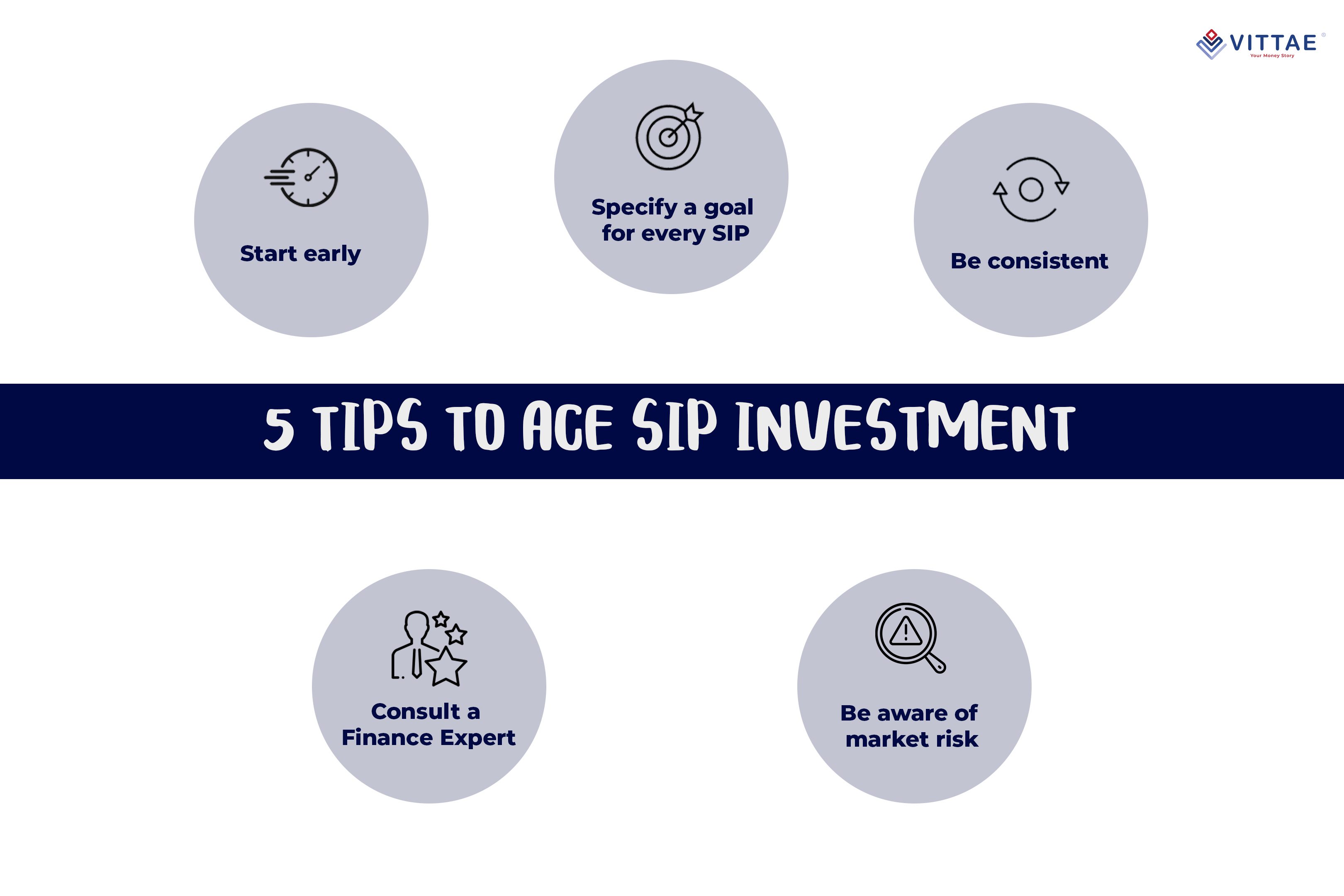
    Let’s understand what SIPs are, and how they can benefit you. We’ll also bust some common misconceptions about it and give 5 simple tips to start SIP. 

    What is a SIP? 

    Even the tallest wall is built brick by brick. SIP investments also work on the same fundamentals. A SIP allows you to invest a fixed amount in a mutual fund.

    The words mutual funds, compounding, fund schemes, debt funds, and investment plans often confuse an investment beginner. It’s also common that the popular disclaimer “Mutual Fund investments are subject to market risks” makes you question your SIP decision.

    So let’s break it down into even simpler terms. SIP stands for Systematic Investment Plan.

    While ‘systematic’ means being consistent about your investment, ‘plan’ keeps the consistency in check, for a fixed time.

    The letter S in SIP, according to us could also stand for “simple”. Cause, starting a SIP is exactly that. 

    It’s the investment you make in a “systematic” manner to reap maximum returns. 

    It’s totally up to you, the investor, to decide how regularly you want to invest. Either once in 7 days or once in 365 days. It’s these factors that show why SIP investments are not risk-free but risk-friendly.

    Every financial expert will tell you that any investment plan is not without risk, but they will strongly agree that an informed decision is a rupee well invested. Over a period of investing with discipline, you will be able to create wealth, from a sustainable mode of investment.

    A popularly known fact is that the rate of interest on SIP investments is usually higher than the rate of interest that you would be getting on a savings account in your bank.

    While the minimum balance amount for a savings account in a private bank is above ₹10,000, you can start investing in SIP for a minimum amount of ₹500. A SIP doesn’t require a lump sum amount but only a systematic approach. It’s highly likely you’ll benefit more from a small amount of systematic investment than saving a lump sum amount in a bank.

    It’s alright to feel confused at the beginning. For someone who is starting off with SIP investments, all the numbers and terms can seem like unfamiliar territory. Even Warren Buffett, an investment mogul, got reaps from his investments after he turned 50 years old. 

    That doesn’t mean you have to wait till you’re 50, It means you ought to be patient to reap phenomenal results. 

    Here are the simple steps on how to start a SIP in India:

    Keep the necessary documents ready 

    Make sure you have government-approved ID proof and address proof (Aadhaar card & PAN Card) in hand. Much like any formal/legal application, this too needs identity verification. You are also required to submit a Cancelled Cheque, which has your name printed on it.

    Keep all the necessary documents ready to save time. It’s important to save both, your rupees and your time.

    Get your KYC done

    Check with the updated norms of ‘Know Your Customer’ (KYC) and ensure you comply with them. Once you have all the above-mentioned documents, KYC is an easy step. The Know Your Customer process recognizes and verifies you as a customer. In this, your bank account is verified, while you have to also add a nominee. A nominee makes fund transfer easier in your absence. Be patient in this step.

    Register for a SIP 

    You need to register with an investment platform through a Financial Expert who is certified and follows

    the SEBI guidelines. This marks the beginning of your investment journey.

    Choose the right investment plan

    This is an important step that’ll depend on your saving capacity, which determines the returns you seek. As a beginner, it’s advised to rely on someone experienced. 

    Choose a SIP amount & date

    Once you have the SIP plan/scheme, choose the right amount that’s suitable for you. At Vittae, we believe that financial stability and freedom are unique to each individual. Opt for an amount that you’re comfortable with.

    Next, select a date that works for you. You can choose multiple dates within a month too.

    Submit the SIP form 

    Once all the above steps are finalized, submit the SIP form online/offline. This enables the investment platform to invest a certain amount regularly, on your behalf. This is the last step for you to begin your Systematic Investment Plan and start your SIP journey.

    The mathematical magic of any investment is that the amount you invest might be less, but the returns you get grow exponentially

    The best feature of SIP is that the majority of them don’t charge a penalty. All you have to do is sign into your account and opt out of the Systematic Investment Plan. Financial services like Vittae ensure that you’re on the right track, and continue to stay on that path. 

    Five simple tips to start an SIP

    Tips before starting an SIP

    The most crucial steps come not while investing through SIP but being consistent about it every month after it. 

    Wondering why we’re constantly reminding you to be consistent with your SIP investments?

    We wish you the best and want you to invest in regular intervals. This way, every month you will be by default converting your ‘money earned’ to ‘money saved’, even before it becomes ‘money spent’.

    This consistency brings your financial discipline and helps you get better returns in the future.

    Another wonderful advantage of investing in SIP plans is that you do not have to worry about the market. With SIP, you can avoid the stress that comes with “timing the market”.

    For example, when the stock market is low, you’ll be allotted say 30 units for ₹10,000. Similarly, when the stock market is high, you’ll get 20 units for the same amount.

    The SIP benefit is that on average, your net returns will be well-balanced. A bonus is that this allows you to diversify your portfolio, by starting multiple SIPs.

    5 Common Myths about SIPs

    SIPs are meant only for Investment Beginners

    As mentioned above, SIPs can be made even for a minimum amount of ₹500. It is a common misconception that SIPs are for beginners who want to start in a “small” and systematic way. The fact is, the amount of your monthly investment depends entirely on your saving capacity. So, irrespective if you start with a small or big amount, ensure to plan your investment wisely.

    SIP amount & tenure cannot be altered

    You, the customer have full control over how much money you want to invest, and for what time. If you are a full-time professional or a freelancer, your cash flow will be very different in both scenarios. Decide when and how much to invest in a SIP. Every rupee earned and saved is valuable, and you decide where it goes.

    SIP is a sure shot way to fast returns

    It’s a common mistake for investors to expect “guaranteed returns” on SIP as it’s the safest bet in mutual funds. The fact is, nobody can beat the market and the risks that come with it. However, if you stay invested for the long term, you do get the benefit of capital appreciation that in most cases, gives you net positive returns.

    SIP should be chosen in a bullish market

    When the market shows an upward trend, it’s known to be “bullish” in nature. Investment beginners don’t make any new investments assuming that they’ll be spending too much for too little.

    As explained, in SIP, consistent investments over a longer tenure result in top performance. It is likely that when you plan your SIP, you don’t factor in the nature of the market. Ensure to still be ‘systematic’ in your investment plan.

    SIP is a financial product

    SIP is an investment facility. It enables the investor i.e. you, to make regular investments. The amount you opt for will be deducted from your bank account and invested in the mutual fund scheme/plan chosen by you. The compounding effect will be calculated on your amount alone.

    In Summary

    If you are looking to start your money story and aiming to achieve financial freedom, now is the time to begin.

    Even with the market risks involved when you invest in SIPs regularly, we are positive your net returns will make you smile. Investment plans are not roller-coaster rides that are for the thrill of the moment, but like a sitcom with multiple seasons that you’ll enjoy over time.

    With Vittae Financial Experts, you’ll get personalized financial guidance that’ll lead you to grow financially. SIP is a first step, that’ll help you to look from a long-term perspective. For your savings to turn into wealth, you need to be both patient and wise. From understanding your own risk appetite to investing in your first SIP we wish you financial growth and wellness.

    In Warren Buffett’s words, “Someone’s sitting in the shade today because someone planted a tree a long time ago”.  A sapling takes time to grow into a tree. Similarly, your investments will also grow, provided you start early and are patient. There’s no better time than now, to start planning for your financial freedom.